
Congress clashes over Smithsonian history
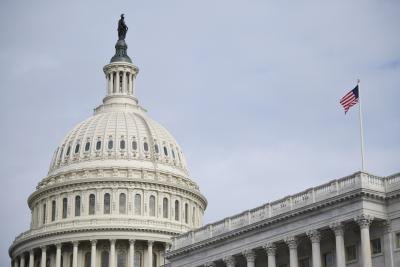
Washington, July 22 (IANS) Republicans and Democrats clashed sharply on Capitol Hill over the future of the Smithsonian Institution, with lawmakers accusing each other of attempting to rewrite American history during a combative hearing that underscored the widening US culture war during the country’s 250th anniversary celebrations.
During a Congressional hearing of the House Oversight and Accountability Subcommittee on Delivering on Government Efficiencies, Republican lawmakers asserted the ideological bias at the Smithsonian’s National Museum of American History, while Democrats accused the Trump administration of using political power to reshape historical scholarship.
Subcommittee Chairman Tim Burchett opened the hearing by alleging that the museum had drifted from its original mission of celebrating America’s history and had instead become “infected by a woke ideology” reflected in its exhibits, educational materials and institutional planning.
“The American story is the birth and growth of a great nation founded on powerful ideals,” Burchett said. “But in the museum’s current telling, history is just an ongoing power struggle between oppressors and the oppressed.”
Burchett cited a recent White House Domestic Policy Council report that criticised the museum’s exhibits and leadership, particularly director Anthea Hartig, accusing the institution of focusing excessively on issues including race, gender, sexuality, immigration and economic inequality.
Hartig rejected those allegations, telling lawmakers the museum remained committed to scholarship, accuracy, independence and non-partisanship.
“The museum does not take sides in America’s political debates,” she said. “We preserve and document the evidence of American life in all of its breadth so that the public can encounter the past and draw their own conclusions.”
She defended the museum’s approach of presenting a fuller account of American history.
“When historians talk about reframing a traditional narrative, we don’t mean erasing it,” Hartig said. “We mean adding the evidence, the voices, the objects that earlier tellings left out so that more Americans can see themselves reflected in the national story.”
“We honour the declaration, the revolution, the Constitution, our national symbols, and we tell the truth about the times that the country fell short of its own founding ideals.”
The hearing repeatedly turned into exchanges over museum exhibits addressing race, gender identity and sexuality.
Burchett questioned whether some exhibits were suitable for children, while Republican members Nancy Mace, Lauren Boebert and Brandon Gill pressed Hartig over displays involving LGBTQ themes, drag culture and museum educational materials. Hartig repeatedly maintained that the institution sought to represent all Americans while remaining historically accurate, declining to answer several questions framed in political or ideological terms.
Republican witness Michael Gonzalez of the Heritage Foundation argued that the Smithsonian had abandoned its educational mission in favour of social activism.
“Teaching lessons about American wickedness is now the mission of the Smithsonian,” Gonzalez testified.
He urged Congress to replace the institution’s leadership, saying, “This erasure of American culture must end now. You need to clean house and relieve all Smithsonian leadership of their duties.”
Matthew Spalding of Hillsdale College similarly argued that the museum had replaced America’s traditional historical narrative with what he described as an ideological framework focused on oppression and social transformation.
“The National Museum of American History should tell the American national story,” Spalding said. “Nothing integral to that history should be erased or whitewashed, but social transformation should not be the objective.”
Democrats countered that the hearing itself represented political interference in an independent institution.
Ranking Member Melanie Stansbury accused the Trump administration of attempting to exercise political control over historical scholarship.
“The Smithsonian Institution does not belong to the president. It does not belong to a political party. It belongs to the American people,” she said.
“When politicians begin deciding what facts are acceptable, scholarship ceases to be scholarship. It becomes propaganda.”
Stansbury announced legislation titled the Smithsonian Integrity and Historical Independence Act, saying it would prohibit federal officials from interfering in the historical interpretation of Smithsonian museums.
Several Democratic lawmakers defended the museum’s work and accused the administration of selectively removing parts of American history.
Representative Maxwell Frost said museums should present “the full story”, including slavery and segregation, while Representative James Walkinshaw criticised the administration over the temporary removal of military webpages honouring Jackie Robinson, the Tuskegee Airmen and Navajo Code Talkers.
Representative Ayanna Pressley described the administration’s campaign against museums as part of an “anti-freedom agenda”, while Representative Jasmine Crockett argued that efforts to challenge the Smithsonian amounted to attempts “to erase history”.
Yale historian David Blight, one of the witnesses, warned against allowing political leaders to dictate historical interpretation.
“The recent report by the White House Domestic Policy Council is nothing less than a declaration of political war on the historian’s profession,” he said.
“Historians are not voices of the state. We are keepers of memory.”
Blight cautioned that political interference in museums amounted to censorship, saying: “We do not serve the state. We serve the practice of the creation and dissemination of knowledge.”
The hearing comes months after President Donald Trump signed an executive order directing a review of exhibits at federally supported museums and historical sites as part of a broader effort to “restore truth and sanity to American history”. Earlier this month, the White House Domestic Policy Council released a detailed report criticising several Smithsonian exhibits and museum programmes, setting the stage for the congressional confrontation.
–IANS
lkj/dan


