FOCUS

FOCUSSOUTH ASIATOP STORIESWORLD

UN committee expresses concerns over coercive action by Pakistan against Afghan refugees
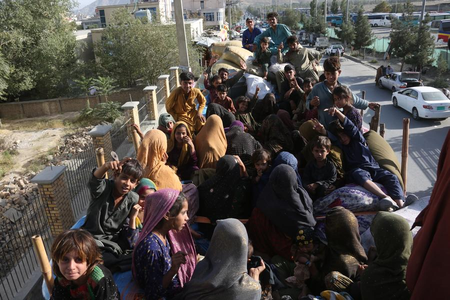
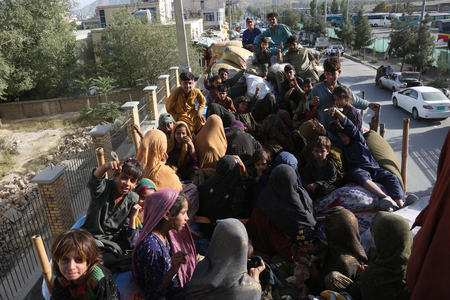
Geneva, May 2 (IANS) The United Nations Committee against Torture (CAT) expressed grave concerns over Pakistan’s mass deportation of Afghan refugees, including children, following the adoption of the 2023 Illegal Foreigners’ Repatriation Plan, citing the absence of individual assessment of protection needs and risks of refoulement.

In its recent findings on Pakistan’s implementation of the Convention against Torture and Other Cruel, Inhuman or Degrading Treatment or Punishment, the Committee raised alarm over the coercive measures adopted by the authorities against Afghan nationals, including registered refugees, to pressure them to return to Afghanistan, despite the risk of persecution, torture or ill-treatment.

“These coercive measures reportedly include harassment and intimidation, threats of deportation, police abuse, extortion, raids and arbitrary detention,” it noted.

The Committee urged Pakistani authorities to consider repealing or reviewing the Illegal Foreigners’ Repatriation Plan, warning of the serious risks it poses to non-citizens, particularly Afghan nationals.

It also called for a thorough investigation into allegations of police abuse against Afghan refugees, with those responsible to be disciplined or criminally prosecuted.

The Committee also highlighted reports of “torture and ill-treatment” and “other forms of retaliation” against human rights defenders, civil society activists, journalists, lawyers, political opponents, protesters and other critics of the government across Pakistan.

“These acts include intimidation, threats, harassment, excessive use of force, arbitrary arrest and detention, prosecution on politically motivated charges, including before military courts, enforced disappearance and extrajudicial execution,” it added.

The Committee further called on the Pakistani authorities “to take the necessary measures to ensure that these people are adequately protected from torture and ill-treatment and other forms of reprisals and that all human rights violations are thoroughly investigated, those responsible are brought to justice and victims are provided with effective remedies.”

Expressing concerns over the situation of former Pakistani Prime Minister Imran Khan and his wife Bushra Bibi, as well as other activists, including Idris Khattak, Ali Wazir and Mahrang Baloch, the Committee noted that their “arbitrary detentions” were confirmed by the United Nations Working Group on Arbitrary Detention, especially with regard to their lack of access to medical care.

It is recommended that Pakistan, as a state party to the Convention against Torture and Other Cruel, Inhuman or Degrading Treatment or Punishment, must review the situation of all individuals allegedly detained and imprisoned on political grounds or in retaliation for their work, while ensuring their access to adequate medical care during detention.

–IANS

scor/sd/

Read More
FOCUSINDIASPECIALSTATETOP STORIES

War rooms on high alert as DMK, AIADMK brace for tight counting day in Tamil Nadu

Chennai, May 2 (IANS) With Tamil Nadu having completed polling for all 234 Assembly constituencies on April 23 and counting scheduled for May 4, the State’s two principal political rivals — the Dravida Munnetra Kazhagam (DMK) and the All India Anna Dravida Munnetra Kazhagam (AIADMK) — have ramped up preparations, activating high-functioning war rooms to manage counting-day operations and contingencies.

According to senior functionaries, both parties have established centralised control systems to ensure seamless coordination with candidates, counting agents, and district-level officials across the 62 counting centres identified by the Election Commission of India.

These war rooms are expected to function as nerve centres, handling real-time updates and responding swiftly to any issues that may arise during the counting process.

AIADMK sources said extensive communication networks have been put in place. “We have circulated contact details of key officials, including Returning Officers, District Collectors and Superintendents of Police.

“If any issue arises at the counting centres, our candidates and agents can immediately alert the war room and receive quick assistance,” a senior party functionary said.

The DMK has adopted a similar strategy, but with an added legal layer. Party insiders revealed that legal experts and senior coordinators have been deployed to closely monitor proceedings and intervene in case of disputes, discrepancies or procedural concerns.

The aim, sources said, is to ensure that every vote is accounted for and that any irregularity is addressed without delay. The heightened vigilance reflects lessons learned from previous elections.

In the 2021 Assembly polls, several constituencies witnessed extremely narrow victory margins, with multiple seats decided by fewer than 1,000 votes. This has made parties wary of complacency, prompting them to maintain strict oversight until the final round of counting is completed.

The stakes appear even higher in the 2026 election, which has seen a multi-cornered contest with the entry of new political players and shifting voter dynamics.

Party strategists believe that vote splits could result in tighter races across several constituencies, increasing the possibility of close finishes and contested outcomes.

With counting day fast approaching, both DMK and AIADMK are leaving little to chance, ensuring that their organisational machinery remains fully geared to respond swiftly in what could be a closely fought electoral battle.

—IANS

aal/rad

Read More
FOCUSSOUTH ASIATOP STORIESWORLD

Earthquake in northern Afghanistan kills eight

Kabul, April 4 (IANS) At least eight people have been killed in a 5.9-magnitude earthquake that struck northern Afghanistan, Mohammad Yousuf Hammad, a spokesman for the Afghanistan National Disaster Management Authority, said.

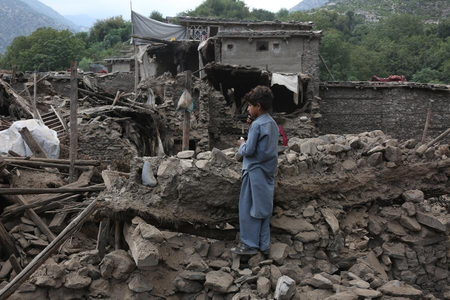
A house in Kabul province collapsed following the quake, killing eight residents and injuring a child, Hammad said late Friday night.

Strong tremors were also felt in the capital, Kabul. The epicentre, with a depth of 186.4 km, was initially determined to be at 36.55 degrees north latitude and 70.85 degrees east longitude, Xinhua news agency reported.

Earthquake tremors were felt across Delhi-NCR and several parts of North India on Friday night, triggering panic among residents who rushed out of homes and office buildings.

The tremors were reported from multiple locations, including Delhi, Noida, Gurugram, Ghaziabad and Faridabad, as well as parts of Uttar Pradesh, Haryana and adjoining regions.

Residents had reported feeling sudden jerks while seated, with furniture and hanging objects swaying. Many people said the shaking lasted for a few seconds but was strong enough to be clearly felt indoors.

In several residential areas, people stepped out of their homes as a precaution, while office-goers briefly evacuated buildings. People gathered in open spaces, waiting for further updates.

Afghanistan is prone to a range of natural disasters, but its earthquakes cause the most fatalities, killing about 560 people on average each year and causing annual damages estimated at $80 million. Studies indicate at least 355 earthquakes with a magnitude higher than 5.0 have hit Afghanistan since 1990.

Afghanistan is located on the edge of the Eurasian tectonic plate, which shares a transgression zone with the Indian plate – implying the two may converge or brush past each other – and is also influenced by the Arabian plate to its south, creating one of the world’s most tectonically active regions.

The northward movement of the Indian plate and its thrust against the Eurasian plate is usually responsible for Afghanistan’s numerous quakes.

Eastern and northeastern Afghanistan, especially regions along its borders with Uzbekistan, Tajikistan, and Pakistan, are particularly prone to earthquakes.

This includes heavily populated Kabul, which has the highest average estimated damage due to earthquakes, amounting to $17 million every year, according to a study.

Earthquakes are also particularly dangerous in Afghanistan’s mountains where they can trigger landslides, exacerbating loss of life and property.

–IANS

jk/

Read More
FOCUSSPECIALTOP STORIESWORLD

Trump says US ‘unaware’ of Israeli strike on South Pars, warns Iran on Qatar

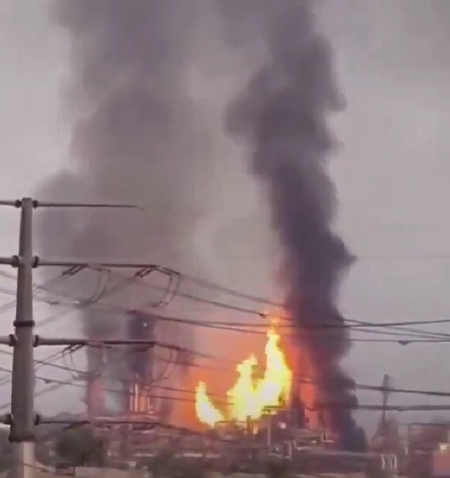
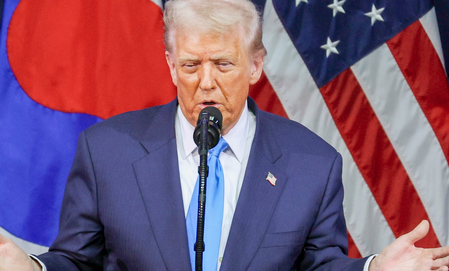
Washington, March 19 (IANS) US President Donald Trump said that the United States “knew nothing” about Israel’s strike on Iran’s South Pars gas field and warned Tehran of massive retaliation if it “unwisely” targets Qatar again, after Iran struck a portion of Qatar’s LNG facility following the attack.

Trump on Wednesday night (Local time) said Israel had “violently lashed out” at the South Pars Gas Field, “out of anger for what has taken place in the Middle East,” but stressed that “a relatively small section of the whole has been hit.”

He underlined that Washington had no prior role in the operation. “The United States knew nothing about this particular attack,” Trump said, adding that “the country of Qatar was in no way, shape, or form, involved with it, nor did it have any idea that it was going to happen.”

According to Trump, Iran responded without full knowledge of the circumstances. “Unfortunately, Iran did not know this, or any of the pertinent facts pertaining to the South Pars attack, and unjustifiably and unfairly attacked a portion of Qatar’s LNG Gas facility,” he said.

The US President issued a clear warning aimed at deterring further escalation involving critical energy assets in the Gulf. “No more attacks will be made by Israel pertaining to this extremely important and valuable South Pars Field unless Iran unwisely decides to attack a very innocent, in this case, Qatar,” he said.

Trump added that any future Iranian attack on Qatar would trigger overwhelming US action. “In which instance the United States of America, with or without the help or consent of Israel, will massively blow up the entirety of the South Pars Gas Field at an amount of strength and power that Iran has never seen or witnessed before,” he said.

At the same time, he signalled reluctance to escalate further. “I do not want to authorise this level of violence and destruction because of the long-term implications that it will have on the future of Iran, but if Qatar’s LNG is again attacked, I will not hesitate to do so,” Trump said.

According to The Wall Street Journal, escalating attacks on Persian Gulf oil-and-gas infrastructure are sending the US-Israeli war with Iran into a dangerous new phase that threatens to worsen the crisis over global energy supplies.

“Israel and Iran had already hit energy facilities throughout the nearly three-week-old war, but Wednesday’s attacks struck some of the world’s most important hubs and raised the prospect of tit-for-tat volleys against oil-and-gas facilities,” the financial daily said.

Already, the conflict has effectively closed the Strait of Hormuz, a strategic chokepoint between the Persian Gulf and the wider world that carries about 20 per cent of the global oil and liquefied-natural gas supply during normal times, it said.

The developments have heightened tensions across the Persian Gulf, with energy infrastructure emerging as a key flashpoint. Iran warned countries around the region that a number of energy assets are now “legitimate targets” following the strike on South Pars.

South Pars, located in southwest Iran, is the country’s largest natural gas field and a central pillar of its energy system. It accounts for roughly 75 per cent of Iran’s natural gas production, while natural gas fuels about 85 per cent of the country’s electricity grid.

The field is widely regarded as the world’s largest natural gas reserve and is shared between Iran and Qatar.

–IANS

lkj/sd/

Read More
FOCUSINDIASOUTH ASIATOP STORIES

Commerce Secretary to discuss India-US trade relations with Parliamentary panel

New Delhi, Nov 27 (IANS) Commerce Secretary Rajesh Agrawal will appear before the Parliamentary Standing Committee on Commerce on Thursday to share updates on the ongoing India–US trade negotiations, as discussions on a bilateral trade agreement gain momentum.

The meeting is scheduled for 2:30 PM at the Parliament Annexe, where the panel will review the “Assessment of India–United States Trade Relations” based on inputs from the senior official, according to sources.

The briefing comes at a crucial time, as India and the United States are moving closer to signing the first tranche of the proposed Bilateral Trade Agreement (BTA).

Earlier this month, Agrawal had indicated that both sides were “nearing closure” on the initial stage of talks.

He said that negotiations have been progressing swiftly through regular virtual rounds, although no fixed timeline has been set for the agreement.

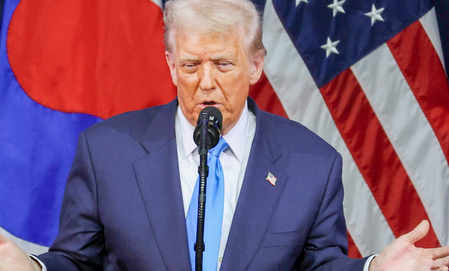
Positive signals from Washington have further boosted expectations. US President Donald Trump recently reiterated his intent to strengthen ties with India, noting that his discussions with Prime Minister Narendra Modi were “going great”.

He also hinted at lowering tariffs on India “at some point”, suggesting that a breakthrough in the talks may not be far away.

At a separate event, Trump had said that both countries were “pretty close to doing a deal” that would benefit all sides, fuelling optimism around the potential signing of the BTA.

His comments came during the oath ceremony of Sergio Gor, the new US Ambassador to India.

Back home, Commerce Minister Piyush Goyal has made it clear that while India is keen on a fair and balanced trade deal, it will not compromise on key domestic interests, including farmers, the dairy sector and workers.

He emphasised that the government is preparing for all scenarios, noting that the timing of the agreement depends on mutual readiness.

India has already taken steps to reduce its trade surplus with the US by expanding energy imports.

Petroleum Minister Hardeep Singh Puri recently announced a significant development — a one-year structured contract to import around 2.2 million tonnes per annum of LPG from the US Gulf Coast during 2026.

The deal accounts for nearly 10 per cent of India’s annual LPG imports and marks the country’s first such structured agreement with the US.

–IANS

pk

Read More
FOCUSSOUTH ASIASPECIALTOP STORIESWORLD

US Fed cuts interest rates as govt shutdown clouds economic outlook

Washington, Oct 30 (IANS) The US Federal Reserve on Wednesday lowered its benchmark lending rate by a quarter percentage point, bringing the target range to 3.75 per cent to 4 per cent, as policymakers grapple with limited economic data due to a federal government shutdown.

The rate cut marks the second reduction in borrowing costs this year.

The decision, approved by a 10-2 vote, comes as the US government’s funding lapse stretches into its fifth week.

The shutdown has forced agencies, including the Bureau of Labour Statistics, to suspend the collection and publication of key economic indicators, leaving the central bank with a partial view of the economy’s performance.

Wednesday’s rate cut brought borrowing costs below 4 per cent for the first time since late 2022. Policymakers cited uncertainty in the outlook, compounded by the lack of data on employment, inflation, consumer spending and other economic measures, as a factor in the decision to reduce rates.

The Fed’s move comes amid mixed signals from the broader economy, including steady job growth reported before the shutdown and inflation readings that have moderated from last year’s peaks.

Economists note that with government data delayed, the central bank is relying on alternative sources, including private sector surveys and financial market indicators, to gauge the economy’s strength.

Investors have closely watched the Fed’s policy stance for signs of its approach to balancing economic growth and inflation pressures.

The decision follows a quarter-point rate reduction in July, as the Fed sought to provide support to the economy in the face of slowing growth and financial market volatility.

The central bank has raised its benchmark rate several times since 2022 to combat inflation.

Wednesday’s actions underscore the Fed’s continuing effort to calibrate monetary policy amid uncertainty, while signalling a willingness to adjust rates as conditions evolve, even in the absence of complete economic data.

–IANS

scor/dan

Read More