Underwater Tricolour feat enters Guinness records; Bengaluru adventurer part of historic mission
Bengaluru: India’s largest Tricolour was unfurled deep beneath the sea at Swaraj Dweep, earning a place in the Guinness World
Read More

Bengaluru: India’s largest Tricolour was unfurled deep beneath the sea at Swaraj Dweep, earning a place in the Guinness World
Read More

Bengaluru, May 3 (IANS) India’s largest Tricolour was unfurled deep beneath the sea at Swaraj Dweep, earning a place in the Guinness World Records.
Bengaluru-based adventure sports professional Sharath R. Ashok was among the key participants in the historic underwater mission.
Sharath R. Ashok, who is the son of Leader of the Opposition in the Karnataka Assembly and senior Bharatiya Janata Party leader R. Ashoka, has drawn attention for his international accomplishment, which is being seen as an inspiration to youth in the state.
The large-scale operation, conducted on May 2, saw participation from more than 200 skilled scuba divers from across the country.
Organised with the support of the Andaman and Nicobar administration and Indian defence forces, the mission involved unfurling a massive 60×40 metre (2,400 square metre) national flag underwater, despite strong currents and high water pressure.
Recognising the achievement, Lieutenant Governor Admiral D.K. Joshi presented the team with the official Guinness World Records certificate.
Sharath R. Ashok, an automobile engineering graduate, has been active in the field of adventure sports for more than a decade.
A certified dive master and scuba instructor with international credentials, Sharath also has training in paragliding, paramotoring, motocross, and mountaineering. His diverse experience enabled him to take on the demanding underwater mission.
Speaking about the achievement, Sharath said the Indian Tricolour symbolises the strength and unity of 1.4 billion Indians.
He described unfurling the national flag beneath the ocean as a moment of immense pride, adding that his journey in adventure sports and wildlife conservation motivated him to be part of such a significant national effort.
Sharath Ashok has more than 10 years of experience leading and conducting adventure sports activities across diverse terrains and environments. He has conducted training sessions and led expeditions in scuba diving, motocross, paragliding, paramotoring, and mountaineering.
He is a certified dive master and instructor with extensive experience in training and mentoring aspiring divers and instructors. He is also active in politics and passionate about protecting wildlife and natural habitats.
–IANS
mka/khz
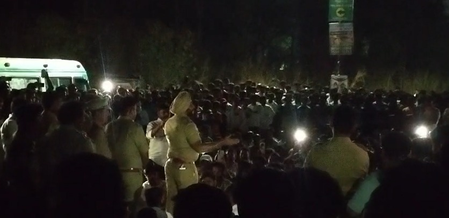
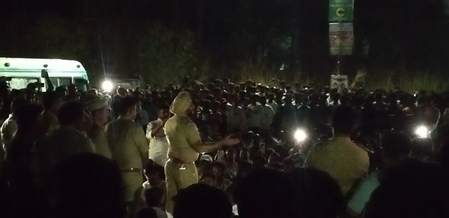
Pune, May 2 (IANS) In a chilling reminder of the growing insecurity being faced by the most vulnerable members of our society, the Bhor Taluka region of Pune has been rocked by a crime of unimaginable cruelty. A 65-year-old man stands accused of the sexual assault and brutal murder of a four-year-old girl, reportedly ending her life by crushing her with a stone.
The sheer depravity of this act, committed against a child who could barely speak, let alone understand the evil she was facing — has sparked a wave of justified fury.
In Nasrapur, outraged villagers have staged a blockade on the Pune-Bengaluru Highway. Despite the suspect being in police custody, the community’s demand is visceral and clear: They want immediate, uncompromising justice.
As per the initial information, the incident came to light when the girl went missing in the afternoon and her family started a frantic search. During the search her mutilated and bloodied body was discovered.
CCTV footage from the area reportedly showed the accused old man taking the toddler along, which helped police identify and detain him.
The gruesome crime has triggered a massive wave of anger among residents. On Friday evening, when the child’s body was brought near the local police station, emotional scenes unfolded, as grieving family members broke down and villagers gathered in large numbers demanding justice.
A social activist said, “I stand with this grief-stricken community. While we operate under a system of law, the recurring failure of fast-track courts to deliver swift verdicts has eroded public trust. When justice is delayed for years, the deterrent effect vanishes, and the cycle of violence continues.”
Sandip Singh Gill, Superintendent of Pune Rural Police said, within 15 days the chargesheet will be filed against the accused and the cases will be run in fast track court. Gill assured the protesters, that police will take very strict action in the matter.
The accused has been taken into custody and an investigation is underway.
This tragedy is not isolated. Just days ago on April 30, a 38-year-old man was arrested in Greater Noida for allegedly strangling his 14-year-old stepdaughter and dumping her body in a forest. Preliminary investigations suggest a history of sexual assault.
–IANS
jk/rad


Mumbai, May 2 (IANS) No adulteration was found in the food samples of four members of a family who passed away in Mumbai’s Pydhonie area after eating watermelon and biryani, officials said on Saturday.
Four members of a family, a 40-year-old husband, his 35-year-old wife, and their two daughters aged 16 and 13, died due to suspected food poisoning in Pydhonie on April 26.
The Mumbai Police are awaiting the toxicology report regarding the case.
In this matter, preliminary investigations by the Maharashtra Food and Drug Administration (FDA) have found no harmful substances in the food consumed, officials said.
The FDA found no evidence of adulteration in the 11 food samples collected from the family’s residence in Pydhonie. These samples included biryani, watermelon, water stored in earthen pots and from the refrigerator, raw and cooked rice, raw and cooked chicken, dates, and spices.
Meanwhile, according to the police, the post-mortem report indicated the presence of morphine (a painkiller). It revealed an abnormal green discolouration in certain body tissues — a phenomenon potentially caused by a toxic substance. However, the officials are currently awaiting the toxicology report to confirm these findings.
This case came to light on April 26, when 40-year-old Abdullah Dokadia was admitted to the hospital. He informed the doctors that he and his family members — his wife Nasreen (35) and daughters Ayesha (16) and Zainab (13) — had complained of a sudden deterioration in their health after consuming watermelon. Subsequently, all four individuals passed away.
The police have registered an Accidental Death Report (ADR) and have initiated an investigation into the matter.
An officer associated with the investigation stated, “We are examining the case from all angles. However, we have not yet reached a definitive conclusion and are awaiting detailed medical reports from the Kalina Forensic Laboratory, the FDA, and JJ Hospital.”
The toxicology report will clarify whether or not any form of poison was consumed in this case, and if so, determine the timeline of its ingestion, officials said.
According to the police, no suspicious financial transactions have surfaced in connection with this case thus far. Statements provided by family members describe the family as “happy”, and no information regarding any disputes or underlying concerns has come to light.
Call Detail Records (CDRs), digital communications, and other electronic data are currently being scrutinised; however, no concrete leads have been uncovered as of yet, police said.
Meanwhile, an official from the Kalina Forensic Laboratory has confirmed that preliminary examinations of the viscera samples revealed the presence of certain unidentified foreign particles.
The official stated that the initial report indicates the presence of “foreign substances within the samples”.
“However, it remains unclear at this stage whether these substances are toxic, medicinal, or of some other nature. A detailed investigation is currently underway,” the official added.
–IANS
sd/rad

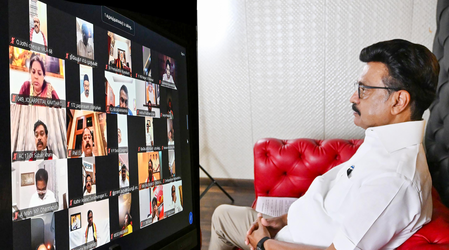
Chennai, May 2 (IANS) With Tamil Nadu having completed polling for all 234 Assembly constituencies on April 23 and counting scheduled for May 4, the State’s two principal political rivals — the Dravida Munnetra Kazhagam (DMK) and the All India Anna Dravida Munnetra Kazhagam (AIADMK) — have ramped up preparations, activating high-functioning war rooms to manage counting-day operations and contingencies.
According to senior functionaries, both parties have established centralised control systems to ensure seamless coordination with candidates, counting agents, and district-level officials across the 62 counting centres identified by the Election Commission of India.
These war rooms are expected to function as nerve centres, handling real-time updates and responding swiftly to any issues that may arise during the counting process.
AIADMK sources said extensive communication networks have been put in place. “We have circulated contact details of key officials, including Returning Officers, District Collectors and Superintendents of Police.
“If any issue arises at the counting centres, our candidates and agents can immediately alert the war room and receive quick assistance,” a senior party functionary said.
The DMK has adopted a similar strategy, but with an added legal layer. Party insiders revealed that legal experts and senior coordinators have been deployed to closely monitor proceedings and intervene in case of disputes, discrepancies or procedural concerns.
The aim, sources said, is to ensure that every vote is accounted for and that any irregularity is addressed without delay. The heightened vigilance reflects lessons learned from previous elections.
In the 2021 Assembly polls, several constituencies witnessed extremely narrow victory margins, with multiple seats decided by fewer than 1,000 votes. This has made parties wary of complacency, prompting them to maintain strict oversight until the final round of counting is completed.
The stakes appear even higher in the 2026 election, which has seen a multi-cornered contest with the entry of new political players and shifting voter dynamics.
Party strategists believe that vote splits could result in tighter races across several constituencies, increasing the possibility of close finishes and contested outcomes.
With counting day fast approaching, both DMK and AIADMK are leaving little to chance, ensuring that their organisational machinery remains fully geared to respond swiftly in what could be a closely fought electoral battle.
—IANS
aal/rad
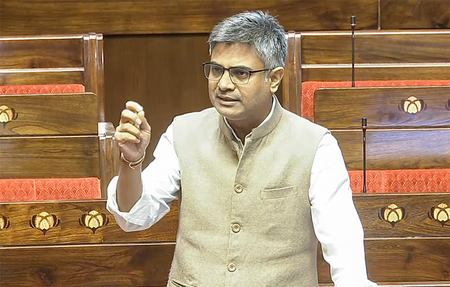
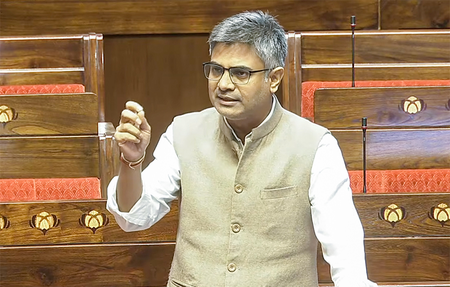
Chandigarh, May 2 (IANS) Rajya Sabha MP Sandeep Pathak, who last week switched loyalties to the BJP along with six other Aam Aadmi Party (AAP) MPs, may face arrest as two First Information Reports (FIRs) have been registered against him in Punjab, reports said on Saturday.
The FIRs in cases under non-bailable offences have been registered in two districts and police could take action at any time. Further details are awaited.
The registration of FIRs comes days after seven AAP Rajya Sabha members — Raghav Chadha, Sandeep Pathak, Ashok Mittal, cricketer Harbhajan Singh, Rajinder Gupta, Swati Maliwal and Vikramjit Sahney — announced their decision to quit the AAP and join the BJP.
Except for Swati Maliwal, six other MPs represent Punjab in the Upper House. Since seven out of 10 AAP Rajya Sabha MPs have jumped ship together with a strength of two-thirds, none of them is expected to attract disqualification under the Tenth Schedule of the Constitution, commonly known as the anti-defection law.
Had Raghav Chadha or any other MP acted alone, he would have risked losing his Rajya Sabha seat under the anti-defection law. However, it does not apply when at least two-thirds of the members of a legislative party merge with another one.
After the defection of Rajya Sabha MPs, Chief Minister Bhagwant Mann on Friday won the confidence motion in a special one-day Assembly session, sending a clear message that attempts to destabilise the government have failed.
Declaring the mandate in the 117-member House as a reflection of enduring public trust, Chief Minister Mann said that the AAP’s support base remains intact and will translate into an even bigger mandate in 2027.
Positioning AAP as a resilient national force unaffected by defections, the Chief Minister asserted that the party “represents people’s trust that cannot be broken”, while warning that institutions such as the Enforcement Directorate (ED) and the Central Bureau of Investigation (CBI) are being misused in ways that undermine the Constitution envisioned by Babasaheb Ambedkar.
During the proceedings, 88 AAP MLAs were present in the House, while two party MLAs were abroad and two were in jail. In addition, two MLAs were hospitalised.
The confidence motion secured unanimous support in the House, underlining the strength and unity of the AAP government.
Moving the confidence motion and addressing the Assembly, the Chief Minister said that attempts were being made to destabilise the government through misinformation, but the people of Punjab continue to stand firmly with it.
Meanwhile, CM Mann has announced that he will meet President Droupadi Murmu on May 5 to raise the issue of what he described as “illegal” and “unlawful defection” by seven Rajya Sabha MPs, including six from Punjab, while asserting that such “actions amount to a betrayal of the people’s mandate”.
Chief Minister Mann told the media here on April 29 that they have received confirmation from the Rashtrapati Bhawan and on May 5 “we will meet the President of India to raise the issue of illegal and unlawful defection by seven Rajya Sabha MPs”. These MPs who have disrespected the mandate of the people deserve no mercy as they are the traitors of Punjab and Punjabis, he was quoted as saying.
–IANS
vg/rad


Raipur, April 26 (IANS) Sukma district in Chhattisgarh, erstwhile affected by Maoist insurgency, is fast emerging as a bright spot of the region by opening doors for economic upliftment of women and also making them ‘Atmanirbhar’ under the Centre’s Lakhpati Didi scheme.
Hordes of women, after registration with the Self-Help Groups (SHGs), have subscribed to the government’s monetary assistance and are steadily progressing towards self-reliance.
Kartam Savita, a resident of Polampalli village in Konta development block of Sukma district, has emerged as an epitome of success.
By associating herself with the Chhattisgarh State Rural Livelihoods Mission and ‘Lakhpati Didi’ campaign, she has successfully transitioned from a daily wager to an entrepreneur.
Kartam shares that her family was earlier dependent on daily wage work and odd jobs, keeping their financial condition precarious, but after they got linked with the Self-Help Group, this drastically changed their condition and gave them a new sense of direction.
By securing a loan of Rs 60,000 through the group, she launched the ‘Kriti Kirana Store.’ Over a period of time, this became popular among the neighbourhood and is also providing employment to many locals.
This has strengthened her family’s financial status while also establishing her as one of the leading women entrepreneurs in the region.
Currently, Savita generates an annual income of Rs 1 to Rs 2 lakh from her grocery store. The steady stream of income also helped heighten her self-esteem.
Expressing her joy over her success, Savita remarked that government schemes have given wings to the dreams of rural women. Expressing her gratitude to Prime Minister Narendra Modi as well as the Chief Minister, she noted that initiatives such as the Chhattisgarh State Rural Livelihoods Mission and the ‘Lakhpati Didi’ campaign provided her with the opportunity to leave behind wage labour and establish her own business.
However, she is not alone to break stereotype and treading on an independent path. Many other women like her are following in her footsteps.
District Collector Amit Kumar told IANS that a coordinated and elaborate plan has been undertaken to empower the women economically — by exposing and educating them on self-employment opportunities.
He stated that, as part of an innovative initiative within the district, four ‘Seva Express’ vehicles have been launched to connect women in remote areas with the Self-Help Groups.
“Through this initiative, approximately 5,500 women have so far been empowered to become self-reliant under the ‘Lakhpati Didi’ scheme — a significant and historic achievement for the district,” he informed.
–IANS
mr/uk
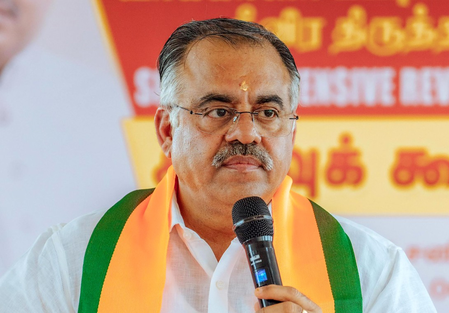
Chandigarh, April 26 (IANS) BJP National General Secretary Tarun Chugh on Sunday criticised the Punjab Police for failing to protect residences of Members of Parliament from alleged attacks by political goons linked to the Aam Aadmi Party.
Taking the state DGP to task, Chugh said in a statement that “if the Punjab Police cannot ensure the safety of representatives holding constitutional offices, it is time for central security forces to step in and take over the responsibility”.
He further alleged that the Aam Aadmi Party has completely collapsed in the state, with several prominent leaders deserting the party due to its “immoral and corrupt practices”. Chugh added that the developments involving Punjab’s Rajya Sabha MPs have exposed the party’s failure to deliver on its promises.
He claimed that under the AAP rule, Punjab has turned into a state dominated by mafias and gangsters, where anti-national elements are operating freely amid what he described as the party’s petty politicking.
Meanwhile, Punjab BJP president Sunil Jakhar has expressed suspicion of a scam in the purchase of old gunny bags by the government and has written to Union Food Supply Minister Prahlad Joshi, seeking an investigation.
He said old gunny bags available in the market for around Rs 22 each have allegedly been purchased by the Aam Aadmi Party government, which claims to be “fiercely honest”, at Rs 43.89 per bag. He said that allegations of a scam have surfaced in this matter, and therefore, it should be investigated.
In his letter, Jakhar wrote that under the Decentralised Procurement Scheme (DCP), the Punjab government is using old gunny bags for filling wheat. However, the expenditure on purchasing these old gunny bags raises serious concerns of corruption.
He further stated that old gunny bags are actually available in the market at about Rs 22 per bag, whereas the government is reportedly procuring them at approximately Rs 43.89 per bag. This indicates the possibility of large-scale commission taking and corruption in the entire process, Jakhar added.
–IANS
vg/uk
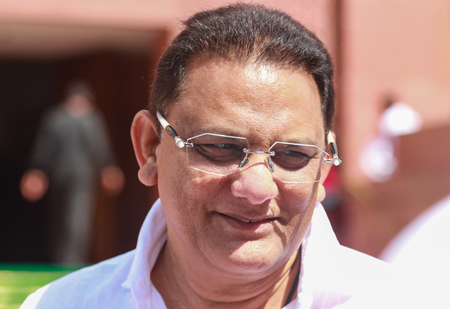
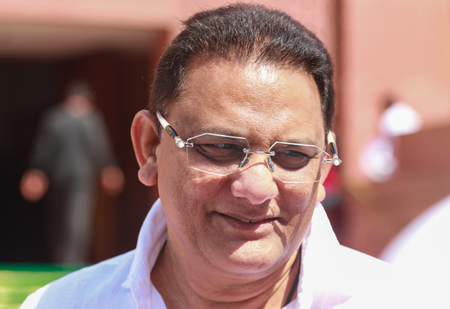
Hyderabad, April 26 (IANS) Telangana Governor Shiv Pratap Shukla on Sunday nominated state minister Mohammad Azharuddin and Prof. M. Kodandaram as members of the Telangana Legislative Council under the Governor’s quota.
However, the nominations will be subject to the final outcome of all the appeals pending in this regard, according to a notification issued by the state government.
According to the notification, Azharuddin and Kodandaram have been nominated in place of D. Rajeshwar Rao and Farooq Hussain, whose terms expired on May 27, 2023.
Azharuddin’s nomination as an MLC came as a huge relief for the former India cricket captain and the ruling Congress party.
Azharuddin, who was sworn in as a minister on October 31, 2025, is constitutionally required to get elected to either the Assembly or the Council by April 30 to continue in the Cabinet.
Chief Minister A. Revanth Reddy had met the Governor on April 19 to request approval of the pending nominations of Minorities Welfare Minister Mohammad Azharuddin and Prof. Kodandaram to the Legislative Council under the Governor’s quota.
The Telangana Cabinet had recommended the names of Azharuddin and Kodandaram for nomination to the Council under the Governor’s quota on August 30, 2025.
Last month, the Chief Minister had exuded confidence that the Governor would give the nod to their nominations.
He noted that the Supreme Court had recently observed that it had no objection in the matter and that the state government was free to pursue the issue with the Governor for clearance.
The Cabinet’s decision to nominate them as MLCs in August last year came two weeks after the Supreme Court stayed the appointment of Kodandaram and Amer Ali Khan as MLCs under the Governor’s quota.
Both Kodandaram and Amer Ali Khan were sworn in as MLCs in 2024. The apex court granted a stay on a petition filed by Bharat Rashtra Samithi (BRS) leaders Dasoju Sravan and Kurra Satyanarayana, challenging the nominations made by the state government.
The petitioners had challenged the appointments on the ground that they violated interim orders of the Supreme Court.
The Supreme Court observed that the swearing-in after the interim orders was improper and made it clear that any appointments made under the Governor’s quota would be subject to the outcome of the ongoing legal proceedings.
Both Kodandaram and Amer Ali Khan were nominated to the Council under the Governor’s quota after the state Cabinet again sent the recommendation to the Governor in August 2024.
They were nominated as MLCs in January 2024, but the High Court set aside the nominations in March on petitions filed by Dasoju Sravan and Kurra Satyanarayana, whose nominations as MLCs had been recommended by the previous BRS government in July 2023. The same was rejected by then Governor Tamilisai Soundararajan on the grounds that the two were “politically aligned persons”.
The High Court had quashed the Governor’s decision rejecting the nominations of Dasoju Sravan and Kurra Satyanarayana, and held that the Governor can only return the government’s recommendation for reconsideration.
Following the High Court order, the BRS leaders had requested the Governor to nominate them as MLCs. However, as the BRS had lost power to the Congress, the Governor rejected the request.
Sravan and Satyanarayana had challenged the Governor’s refusal in the Supreme Court. As the High Court had not passed any direction to the Governor to nominate them, they pleaded with the apex court to issue a direction to the Governor to appoint them. The Supreme Court declined to pass any such order.
–IANS
ms/pgh

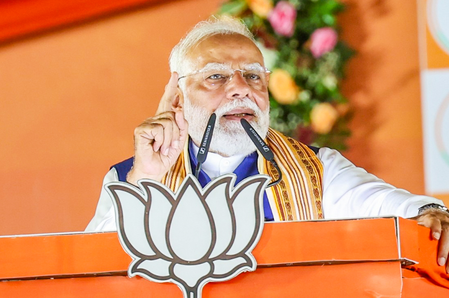
New Delhi, April 26 (IANS) Prime Minister Narendra Modi will visit Sikkim on April 27–28, during which he will participate in the closing ceremony of the state’s 50th year of statehood celebrations and unveil multiple development projects worth over Rs 4,000 crore, officials said on Sunday.
The Prime Minister will arrive in Gangtok on April 27 at around 3 p.m.
On April 28, he is scheduled to visit the Orchidarium in Gangtok, developed as a world-class Orchid Experience Centre to showcase the state’s rich ecological and floral heritage.
Later, at around 10 a.m., PM Modi will attend the concluding ceremony of the Golden Jubilee celebrations at Paljor Stadium, where he will inaugurate, launch, and lay the foundation stone of projects spanning sectors such as infrastructure, connectivity, healthcare, education, power, urban development, environment, tourism, and agriculture. He will also address the gathering.
In the healthcare sector, the Prime Minister will lay the foundation stone for a 100-bedded Ayurveda hospital at Yangang in Namchi district and inaugurate a 30-bedded Integrated Sowa Rigpa Hospital at NIT Deorali.
In education, he will inaugurate the permanent campus of Sikkim University at Yangang, the administrative block of Netaji Subhash Chandra Bose University of Excellence at Chakung, Helen Lepcha Medical College at Socheygang, and Dentam Professional College in Gyalshing district.
Model residential schools at Hee Gyathang, a new Model Degree College at Mangshila, and a monastic hostel-cum-classroom at Boomtar Gumpa will also be inaugurated.
Additionally, IT-enabled infrastructure projects across 160 schools will be launched.
To boost connectivity, PM Modi will lay the foundation stone for two double-lane steel arch bridges over the Teesta river at Sirwani and Lower Samdong, and inaugurate the upgraded road from Birdhang to Namchi via Kitchudumra.
In the power sector, he will inaugurate the revamping of the transmission and distribution network in Gangtok.
Under urban development, projects to be inaugurated include the Jan Seva Sachivalaya at Lumsey, the Civil Service Officers Institute in Gangtok, housing initiatives under the Sikkim Urban Garib Awas Yojana, and quarters for police personnel.
The foundation stone for a Sadhbhav Mandap at MG Marg will also be laid.
Environmental initiatives include laying the foundation stone for a sewerage system rehabilitation project at Singtam and inaugurating the River Rani Chu pollution abatement scheme.
In tourism, the Prime Minister will inaugurate the redevelopment of the Ridge Precinct in Gangtok, eco-tourism and pilgrimage infrastructure at Dodak, facilities related to the Kailash Mansarovar Yatra, and a Yatri Niwas at Krishna Pranami Mangaldham.
The foundation stone for an Eco-Pilgrimage Complex at Silnon will also be laid.
He will also inaugurate the Sikkim IFFCO Processing Plant aimed at boosting agro-processing and farmer incomes, along with indoor cricket facilities at Mining in Pakyong district.
The visit marks a significant milestone in Sikkim’s Golden Jubilee year and underscores the Centre’s continued focus on accelerating inclusive and sustainable development in the Northeast region.
–IANS
tdr/pgh
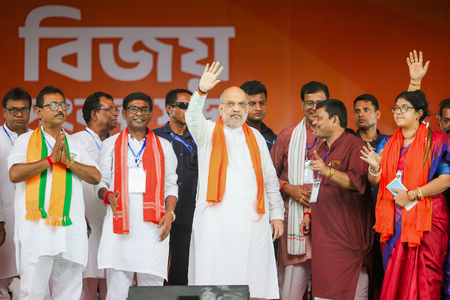
Kolkata, April 26 (IANS) Union Home Minister Amit Shah on Sunday praised Prime Minister Narendra Modi for his fight against terrorism, saying that since he came to power in 2014, India has responded decisively to terror attacks with actions such as surgical and air strikes.
Addressing an election rally at Tehatta in West Bengal’s Nadia district, the Home Minister accused Chief Minister Mamata Banerjee and the Congress of being soft on terrorists.
“When Mamata Banerjee and the Congress government were in power, they used to feed biryani to terrorists. In 2014, when the PM Modi government came to power, an attack happened in Uri, we carried out a surgical strike; an attack happened in Pulwama, we conducted an air strike, and an attack happened in Pahalgam, we carried out Operation Sindoor and wiped out the terrorists. PM Modi has freed this country from terrorism,” said HM Shah.
He once again asserted that once the BJP comes to power in West Bengal, the government would identify and remove all infiltrators or illegal citizens from the state.
“PM Modi has freed this country from Naxalism. Once the BJP government comes to power here, we will find out and drive out the infiltrators one by one. Didi (Mamata Banerjee) says, ‘Why are you removing the names of infiltrators through SIR?’ Didi, your time is up. On May 4th, the BJP government is coming. After the BJP’s Chief Minister takes office, we will not just remove infiltrators from the voter list, but expel them from Bengal,” said the Home Minister.
He also said that the new BJP government will form a separate squad to save cows and stop cow smuggling from Bengal.
“The BJP will end goonda raj and syndicate raj in West Bengal if the party comes to power in the state. We will create a separate squad to stop cow smuggling from West Bengal,” said HM Shah.
He also claimed that voters have wiped out the Mamata Banerjee government in the first phase of the Assembly polls itself.
“The BJP has already won 110 seats in the first phase of polls held on April 23. The rest of the work will be done by the people in the second phase,” he said.
The remaining 142 constituencies will go to the polls in the second and final phase of voting on April 29. Counting of votes will be held on May 4.
–IANS
sch/uk
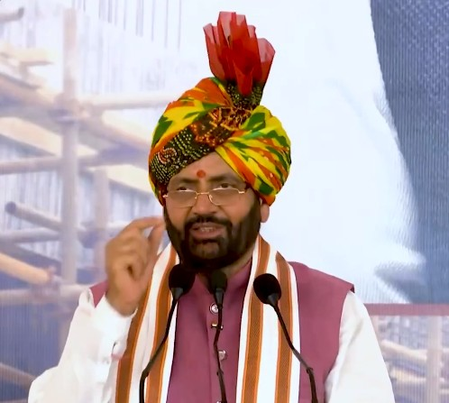
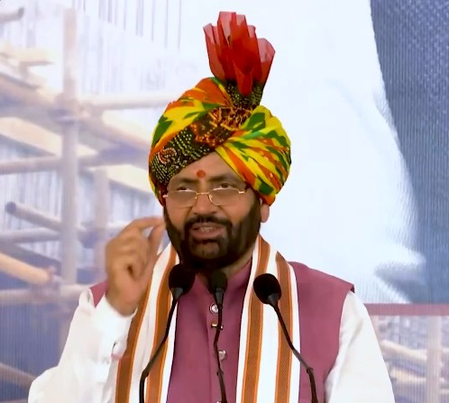
Chandigarh, April 26 (IANS) Haryana Chief Minister Nayab Singh Saini said on Sunday that the vision of a ‘Viksit Bharat’ by 2047, as envisaged by Prime Minister Narendra Modi, can only be realised through active participation and labour empowerment.
He emphasised the strength of both the national and state economies is fundamentally anchored in the hard work and dedication of workers, whose contribution continues to propel India towards becoming a developed nation.
The Chief Minister was addressing a state-level Labour Awareness and Felicitation Programme organised at the Tau Devi Lal Stadium in Gurugram.
Responding to a demand raised by the Bharatiya Mazdoor Sangh for the formation of a dedicated welfare mechanism for auto drivers and drivers, Chief Minister Saini announced that the state government would constitute a state social security board aimed at ensuring the social and economic upliftment of organised workers.
He said the board would extend the ambit of social security benefits to auto drivers and drivers as well.
Referring to the already announced service security framework, the Chief Minister added that the process of issuing appointment letters is currently underway and assured that all eligible workers would be provided appointment letters by June 15, thereby strengthening employment security and institutional transparency.
Highlighting a landmark reform, Chief Minister Saini said Haryana has become the first state in the country to implement a 35 per cent increase in minimum basic wages under the provisions of the Code on Wages.
Tracing the trajectory of wage growth, he noted that the minimum wage stood at Rs 2,903 in 2005 and rose to Rs 6,289 by 2014.
He said that under the current state government the minimum wages have now reached Rs 19,425.
While wages nearly doubled during the previous 10-year period, they have increased more than threefold over the past eleven years, reflecting the state government’s sustained commitment towards labour welfare and inclusive economic growth.
The Chief Minister added that the Centre has launched the ‘e-Shram’ Portal for the registration of workers in the unorganised sector.
More than 54.32 lakh workers in Haryana have been registered on the portal, while in the organised sector 33.58 lakh workers are registered across 4.5 lakh establishments.
–IANS
vg/khz