Pakistan should bear greater costs for allowing terrorism to persist: Report
Washington, Aug 1 (IANS) The United States has consistently made the mistake of believing it could buy Pakistan, but in reality Islamabad is not for sale but available for rent, a report has stated.
It argued that the advantage for Washington, however, is that it rents Pakistan by choice, whereas China does so out of necessity.
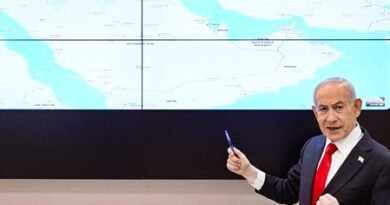
“The US-Iran conflict illustrated this dynamic. Trusted by both Tehran and Washington, Islamabad helped broker the ceasefire that briefly reopened the Strait of Hormuz. Traditional treaty allies such as France, Germany and the United Kingdom could not have played that role. A hedging power could,” a report in American magazine ‘The National Interest’ highlighted.
Highlighting that Pakistan’s balancing strategy extends beyond diplomatic mediation, the report cited a June 2025 agreement with Azerbaijan worth up to $4.6 billion, under which Islamabad is set to supply 40 JF-17 fighter jets to Baku.
“The aircraft is built on a Chinese airframe, powered by a Russian engine and sold by an American ally to a country Washington is actively courting. The transaction monetises Pakistan’s relationship with China within a Western-facing market. Pakistan’s strategy is to maximise its strategic value to both Washington and Beijing,” The National Interest mentioned.
“More recently, after helping broker talks during the Iran conflict, Islamabad reportedly asked Washington to establish a $10 billion exchange-stabilisation facility to strengthen its foreign-exchange reserves. Pakistan was again converting geopolitical relevance into economic support without abandoning its relationship with China,” it added.
The report argued that the US has failed to recognise the strategic value of Pakistan’s hedging policy, describing it as the cheapest “strategic asset” Washington can afford. It recommended that the US use its remaining leverage to tilt Pakistan to advance American interests.
“Pakistan’s longstanding reliance on international financial institutions such as the IMF and World Bank is one area where American influence remains decisive. Beijing, with its higher-interest bilateral loans and reluctance to finance the Pakistani state itself, cannot readily substitute for that role,” it mentioned.
According to the report, demanding that Pakistan withdraw from the China-Pakistan Economic Corridor (CPEC) is a “non-starter”, as a country pursuing a hedging strategy is unlikely to accept demands that force it to choose sides. Instead, it said Washington should assess Pakistan not by whether it scales back ties with China, but by whether it prevents Beijing from gaining a monopoly over those ties.
“If Washington is generous with prestige, pragmatic on conditionality, and focused on military and economic cooperation, it can turn Pakistan’s hedging strategy into an American advantage,” it added.
Stressing that Pakistan should bear greater costs for allowing terrorism to persist, the report said, “Terrorism should become too costly — not because America threatens punishment, but because it would destroy opportunities Pakistan itself values. The goal is to create so much to lose that terrorism spoils it all.”
–IANS
scor/as