Slow Korean courts present tough hurdle, but India ready for Davis Cup challenge: Rohit Rajpal
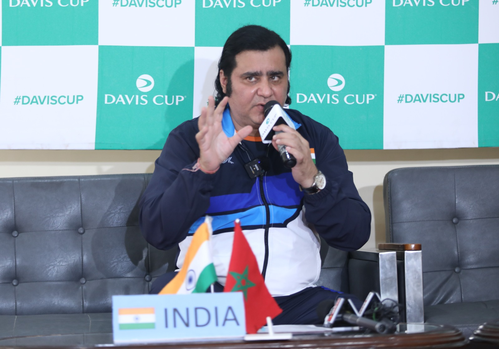
New Delhi, Sep 10 (IANS) Expecting a stern challenge on ‘slow courts’, India’s Davis Cup non-playing captain Rohit Rajpal believes his unified squad is well-prepared to counter South Korea’s home advantage when the two sides meet in the World Group Qualifiers Round 2 in Seoul on September 18 and 19.
The games will be at the Seoul Olympic Park Tennis Center and carry huge importance – the winner will advance to the prestigious Davis Cup Final Eight, to be played in Bologna, Italy, in November. India, ranked 19th, last met 16th-ranked South Korea a decade ago in 2016 and secured a 4-1 victory on grass in Chandigarh.
India, who trails 6-5 in the head-to-head between the two nations, booked its place at this stage in similarly dramatic fashion, beating the Netherlands with a Dhakshineswar Suresh-inspired comeback.
“As a captain obviously, I have very high expectations. But I do sort of recognize that this is going to be a very tough tie because Koreans are playing in Korea and I’m sure being the hosting team, they’re preparing the courts to be very slow, which are not in our favour and much more in their favour and that is the home advantage the home team gets to exercise.
“So, that will make it tougher. But the Koreans are known to be very tough to beat in Korea. So, but we are preparing accordingly. We are getting there early and trying to get as much as possible used to the local conditions that have been prepared for us,” Rajpal told IANS in an exclusive conversation, facilitated by subscription-free OTT platform VETO.
India have retained the core of the squad that stunned the Netherlands 3-2 in Bengaluru in February to reach the second round of the qualifiers for the first time since the current competition format was introduced in 2019.
The five-member team in Seoul comprises Sumit Nagal, Dhakshineswar Suresh and a maiden call-up given to Manas Dhamne. Doubles duty rests with specialists Yuki Bhambri and N. Sriram Balaji, while Sidharth Rawat and junior Grand Slam campaigner Arnav Paparkar join as reserves.
Addressing the inclusion of Dhamne, Rajpal said it was done with an eye for the future. “So, Manas is young and energetic and what we are trying to do is also so that there is no transition in the team as we go because some of the best teams in the world go through a transition period.
“We want to make sure that we have a good mix of younger and experienced player so that the transition period, whenever it does happen, we are through with it and Manas, from that point of view, brings a lot of value to the team and he is playing well. He is transitioning at the moment from being a junior into the men’s area.
“So, I think it will do him a lot of good by being there. He has been there earlier in the squad. But now, for the first time he has made it to the team. He is improving a lot and so, I think it will be a very good experience to see and to play under these kind of pressure situations.”
Managing player availability amid a demanding professional calendar can be tricky, but Rajpal praised the commitment of the Indian players. “Well, we are here, which itself shows that all the players are here. The Indians are known to be very emotional about their country and it is my job as a captain to make sure that the team is unified.
“In this team, all the energies are together and we are firing as one machine. So, we try to push each other and a lot of the team building exercises are put into place in the last few years and that is paying rich dividends now. There is a lot of leg pulling and a lot of fun jokes are directed at each other.
“All those things which are necessary to take the pressure off right before a tough match, they do happen. We eat breakfast, lunch and dinner together all the time, as they are all coming from different places in the world. So, the idea to get there early as well is to get everybody together and synergize and fire as one firing good machine.”
India have historically thrived in doubles rather than singles, something which Rajpal agrees with. “I mean, the format itself offers you four singles and one doubles. So, it clearly shows that you need to win many more singles and there is only one doubles. But doubles does play an important role.
“Every point is important there because you need to get to three matches first to win. Sometimes doubles does change the momentum of teams as well . Sometimes, you have seen teams down love two and then the minute the doubles is in your favour, the next day, you get off to a better start.
“So, Indians have had a good history with Leander (Paes), Mahesh (Bhupathi), Rohan (Bopanna), all these guys really playing and making a career out of doubles, which frankly is fantastic. After you’re done with your singles, it does give you many more years to be able to continue on the tour and still survive. So, they showed the world that you could all be a doubles specialist and still do very well for yourself on the tour.”
Both teams enter the contest on the back of stunning upset wins – while India stunned the Dutch, South Korea fought back to eliminate 2016 champions Argentina 3-2 in Busan. Asked about the ideal benchmark for success in Korea, Rajpal stressed a pragmatic, match-by-match approach over distant targets.
“Benchmarks are difficult to pinpoint. I mean, I set very high benchmarks for myself and for the boys. Only if you aim for the top, do you reach somewhere near the top. But if you don’t aim for the top, you’re nowhere, you know, because everything is target-oriented.
“So, if you set a target, then your body and mind and everything else works in tandem to be able to get you there or close to that. Sometimes you fall short, maybe for skill, stamina, for whatever reasons and you can fix that and come back again. But at the same time, I’d like to be realistic and we take it one match at a time.
“I tell the boys that please take it one match at a time. Don’t think of the next match and don’t think what’s going to happen after because we need to first cross that hurdle to be able to then look and prepare for the next one. So, realistically speaking, we’re not thinking ahead. We’re just going to be focused on getting this tie home and bringing it home.”
–IANS
nr/bc