SOUTH ASIA

SOUTH ASIATOP STORIESWORLD

Baloch youth forcibly disappeared by Pak-backed death squad day before his wedding
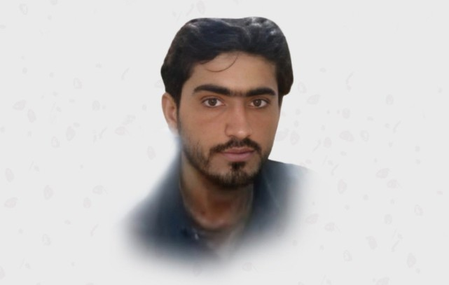
Quetta, Nov 27 (IANS) Two more Baloch civilians were forcibly disappeared by Pakistani forces in Balochistan amid a growing wave of enforced disappearance across the province, a leading human rights organisation said on Thursday.

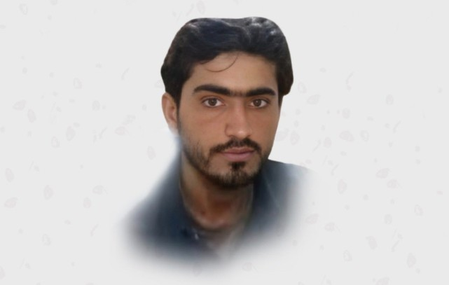
Paank, the Baloch National Movement’s Human Rights Department, mentioned that Imran, a resident of Tump region in Kech district, was forcibly disappeared on November 26, during a raid in his home.

Citing family sources, the rights body stated that a local death squad conducted the raid in coordination with Pakistan Army personnel. Imran was taken into custody, and his whereabouts remain unknown. His family stated that he was set to be married on Thursday.

Additionally, the rights body stated that on November 24, 18-year-old Ghulam Qadir was forcibly disappeared from the Coast Hospital in Gwadar district by the Pakistan Army.

Highlighting the atrocities in Balochistan, another human rights body, Baloch Voice for Justice (BVJ), on Wednesday stated that 24-year-old Allaudin Sasoli, a personnel of provincial paramilitary Levies force from Kharan district, was taken on November 23 from Kili Qambarani in provincial capital Quetta by personnel of Pakistan’s Counter Terrorism Department.

His family stated that no authority has shared any information about his condition, raising serious concerns about his safety.

“Families in Kharan and Quetta have voiced concern over the growing number of cases involving state institutions. The silence from responsible departments has deepened fear among many households,” the BVJ stated.

Condemning the incident, the rights body stated that enforced disappearances continue because of ongoing impunity. It added that no mechanism ensures accountability, and no transparent process exists to address these violations in Balochistan.

“The case of Allaudin Sasoli demands immediate action from relevant authorities and attention from human rights organisations,” the BVJ asserted.

Additionally, the rights body revealed the enforced disappearance of 23-year-old Jasim, a cleric from Chitkan in Panjgur district of Balochistan.

According to BVJ, Jasim was abducted on November 24 by individuals identified by locals as a Pakistan-backed death squad. His family said no authority has provided any information about his condition or location.

The rights body called for an immediate investigation and urged the responsible institutions to disclose his whereabouts.

“Continued disregard for basic rights damages trust between communities and state authorities. Forced disappearances in Panjgur require urgent attention and action to prevent further violations,” the BVJ emphasised.

–IANS

scor/sd/
Read More
FOCUSINDIASOUTH ASIATOP STORIES

Commerce Secretary to discuss India-US trade relations with Parliamentary panel

New Delhi, Nov 27 (IANS) Commerce Secretary Rajesh Agrawal will appear before the Parliamentary Standing Committee on Commerce on Thursday to share updates on the ongoing India–US trade negotiations, as discussions on a bilateral trade agreement gain momentum.

The meeting is scheduled for 2:30 PM at the Parliament Annexe, where the panel will review the “Assessment of India–United States Trade Relations” based on inputs from the senior official, according to sources.

The briefing comes at a crucial time, as India and the United States are moving closer to signing the first tranche of the proposed Bilateral Trade Agreement (BTA).

Earlier this month, Agrawal had indicated that both sides were “nearing closure” on the initial stage of talks.

He said that negotiations have been progressing swiftly through regular virtual rounds, although no fixed timeline has been set for the agreement.

Positive signals from Washington have further boosted expectations. US President Donald Trump recently reiterated his intent to strengthen ties with India, noting that his discussions with Prime Minister Narendra Modi were “going great”.

He also hinted at lowering tariffs on India “at some point”, suggesting that a breakthrough in the talks may not be far away.

At a separate event, Trump had said that both countries were “pretty close to doing a deal” that would benefit all sides, fuelling optimism around the potential signing of the BTA.

His comments came during the oath ceremony of Sergio Gor, the new US Ambassador to India.

Back home, Commerce Minister Piyush Goyal has made it clear that while India is keen on a fair and balanced trade deal, it will not compromise on key domestic interests, including farmers, the dairy sector and workers.

He emphasised that the government is preparing for all scenarios, noting that the timing of the agreement depends on mutual readiness.

India has already taken steps to reduce its trade surplus with the US by expanding energy imports.

Petroleum Minister Hardeep Singh Puri recently announced a significant development — a one-year structured contract to import around 2.2 million tonnes per annum of LPG from the US Gulf Coast during 2026.

The deal accounts for nearly 10 per cent of India’s annual LPG imports and marks the country’s first such structured agreement with the US.

–IANS

pk

Read More
INDIASOUTH ASIATOP STORIESWORLD

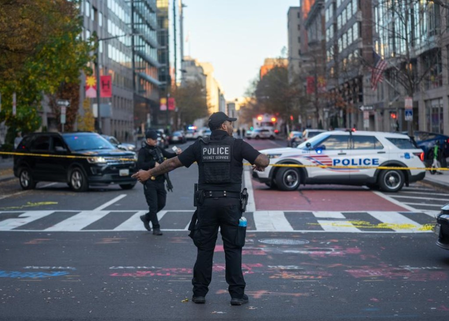
US suspends Afghan immigration requests after attack on National Guardsmen in Washington

Washington, Nov 27 (IANS) The US Citizenship and Immigration Services (USCIS) on Thursday announced an immediate suspension of all immigration requests from Afghan nationals, just hours after a targeted attack, allegedly by an individual from Kabul, on National Guard members in Washington, close to the White House.

In a post on X, the agency stated, “Effective immediately, processing of all immigration requests relating to Afghan nationals is stopped indefinitely pending further review of security and vetting protocols.”

“The protections and safety of our homeland and of the American people remains our singular focus and mission,” the statement further read.

Meanwhile, US President Donald Trump called the attack an “act of terror”.

“This heinous assault was an act of evil and an act of hatred, and an act of terror. It was a crime against our entire nation. It was a crime against humanity,” Trump said while addressing the nation on Wednesday evening (local time).

He added that the suspect in custody is a “foreigner who entered our country from Afghanistan, a hellhole on earth”, and blamed the previous Biden administration for allowing the attacker to enter the country under refugee status.

Trump also promised to “re-examine every single alien” from Afghanistan who entered the US under the Biden administration.

“We must now re-examine every single alien who has entered our country from Afghanistan under Biden, and we must take all necessary measures to ensure the removal of any alien from any country who does not belong here, or add benefit to our country if they can’t love our country, we don’t want them,” he added.

He also announced deployment of an additional 500 troops to “help protect our capital city.”

The shooting happened less than 500 metres away from the White House. Trump was not in the capital and is visiting Florida for the Thanksgiving holiday.

While addressing the media, FBI Director Kash Patel said that the case will be prosecuted at the federal level since “this is an assault on federal law enforcement officers.”

Multiple states have sent Guard personnel to Washington in recent months as part of President Trump’s public-safety crackdown. The mission has since expanded to several other major US cities.

There are approximately 2,400 National Guard troops currently deployed in Washington, which includes around 958 from the DC National Guard and about 1,300 from eight other states.

–IANS

sd/svn

Read More
SOUTH ASIATOP STORIESWORLD

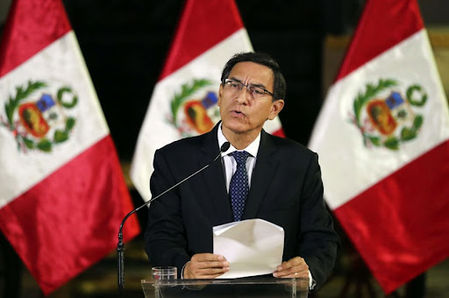
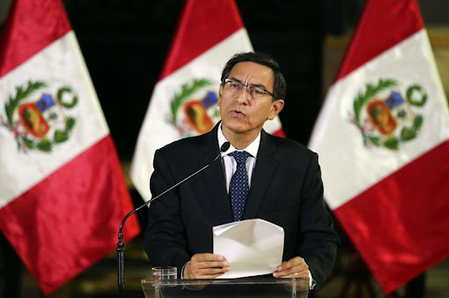
Ex-Peru President Martin Vizcarra gets 14-year jail term in bribery case

Lima, Nov 27 (IANS) A Peruvian court has handed former President Martin Vizcarra a 14-year prison sentence after finding him guilty of accepting bribes years before he assumed the nation’s highest office, adding another name to the list of Peru’s former leaders convicted in corruption scandals, local media reported.

The court on Wednesday (local time) ruled that Vizcarra took bribes amounting to $676,000 from construction companies in exchange for awarding public works contracts while he was governor of the southern Moquegua region between 2011 and 2014.

The judge stated that Vizcarra received approximately 2.3 million soles (around 690,000 US dollars) in unlawful contributions from the companies Obrainsa and Contratistas Generales SAT through commissions and staggered payments.

In addition to the prison sentence, the court prohibited Vizcarra from holding any public office for a period of nine years and mandated that he pay 94,900 soles in civil damages.

After the ruling, Vizcarra expressed on social media that he was a target of “revenge” for opposing what he referred to as a “mafia pact.”

During the trial, which began last October, Vizcarra repeatedly denied any wrongdoing and insisted that he was being targeted for political reasons.

He rose to the presidency in 2018 following his predecessor’s resignation but was removed by Congress two years later amid ongoing graft investigations.

His older brother, Mario Vizcarra, is preparing to contest the April 2026 presidential election under the ‘Peru First’ banner, a party in which the former president remains a key advisor.

In the 2021 polls, Vizcarra secured the highest number of votes among congressional candidates but was later barred by Congress from holding public office for ten years after he dissolved the legislature in 2019.

Peru continues to grapple with deep political instability, having cycled through six presidents since 2018 due to resignations and impeachment proceedings often rooted in corruption allegations.

Three other former presidents are also behind bars. Alejandro Toledo and Ollanta Humala are serving sentences for corruption, while Pedro Castillo remains detained as he faces rebellion charges.’

–IANS

sd/

Read More
SOUTH ASIATOP STORIESWORLD

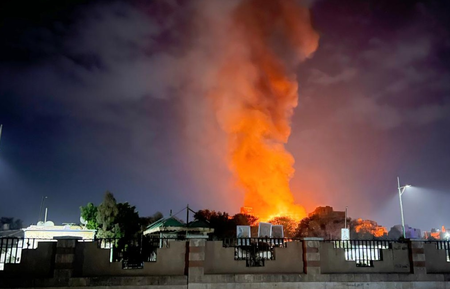
UAE pledges $1 billion to support Yemen’s energy sector

Aden (Yemen), Nov 27 (IANS) The United Arab Emirates (UAE) has pledged 1 billion US dollars to support electricity and energy projects across war-ravaged Yemen, according to a report by the state media.

The announcement was made on Wednesday (local time) following a meeting in Aden between Presidential Leadership Council chief Rashad Al-Alimi and UAE Ambassador Mohamed Hamad Al Zaabi, who reaffirmed Abu Dhabi’s intention to help restore Yemen’s battered power network.

Yemen has faced chronic electricity outages for more than two decades, with southern provinces like Aden experiencing blackouts that can stretch up to 12 hours a day. Damage to power plants, limited fuel supplies and fragmented authorities have left millions relying on private generators and small-scale solar systems.

The UAE’s new pledge coincided with the First National Energy Conference held in Aden, where government officials, investors, and renewable energy experts gathered to discuss long-term reforms aimed at stabilising the grid and attracting financing to the country, reports Xinhua, quoting the state-run Saba news agency.

Additionally, Yemen has been mired in a civil war since late 2014 when the Houthis seized several northern provinces, forcing the internationally recognised government out of the capital Sanaa. Over the past decade, the country’s humanitarian crisis has steadily deepened as multiple pressures converge.

The conflict has damaged infrastructure, disrupted transport and markets, and limited access to health and nutrition services. Prolonged instability has also weakened state institutions and driven a sharp economic decline. As the local currency loses value and food prices climb, essential goods have become increasingly unaffordable for ordinary families. Together, these factors have deepened food insecurity nationwide, leaving millions struggling to meet their daily needs.

The worsening economic hardship is pushing many families to desperate measures. In public markets across Aden, a growing number of families are resorting to selling household goods to pay for food and medicine.

–IANS

int/sd/

Read More
SOUTH ASIATOP STORIESWORLD

Pakistan’s civilian govt seeks to build ties, military damages it: Taliban

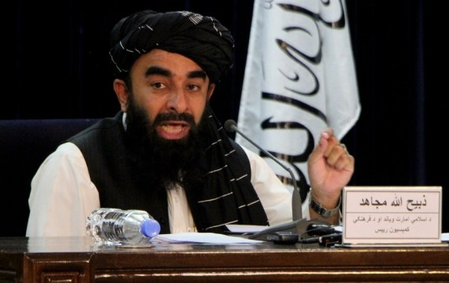
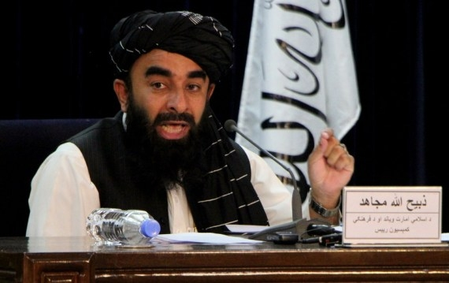
Quetta, Nov 2 (IANS) Taliban spokesperson Zabihullah Mujahid said that Pakistan’s civilian government wants to build ties with Afghanistan based on mutual interests; however, the military does not allow it, local media reported on Sunday.

Mujahid stated that elements within Pakistan’s military are making efforts to damage ties between Pakistan and Afghanistan, Afghanistan-based Tolo News reported, citing Khyber TV. He further said, “Pakistan’s special envoy for Afghanistan, Sadiq Khan, was in Kabul and had positive talks with Afghan officials, but during the same period, Pakistan carried out attacks on Afghan soil. The civilian government seeks to build relations, but the military damages them.”

He stated that traders from both nations were facing losses due to Pakistan’s closure of crossings along the Durand Line and stressed that such issues should be kept out of politics. Mujahid noted that relations between Pakistan and Afghanistan were strong during Imran Khan’s tenure as Pakistan’s Prime Minister.

Zabihullah urged Pakistan to share information regarding terrorist activities taking place on Afghan soil with the Taliban so that action can be taken.

He said, “The Pakistani side wants us also to prevent incidents happening inside Pakistan, but that is beyond our control. The Islamic Emirate does not want insecurity in Pakistan and remains committed to ensuring that no threat arises from Afghan territory.”

His statement comes amid a recent escalation of tensions after Pakistani forces carried out cross-border operations in Afghanistan and the failure of talks between the delegations of the two countries in Turkey on Monday.

Mujahid hoped that the next round of talks between Pakistan and Afghanistan, scheduled to take place on November 5, would involve honest and substantive discussions to find lasting solutions to bilateral issues, Tolo News reported.

When asked about Pakistan’s concern regarding reports of a dam being built on the Kunar River, a Taliban spokesperson stressed that construction and other activities on Afghan soil are Afghanistan’s right.

He said, “If a dam is built on the Kunar River, it won’t harm Pakistan. The water will continue to flow in its natural direction; it will just be used along the way,” he said.

Earlier in October, Afghanistan announced its plans to build dams on the Kunar River “as soon as possible.”

In a statement shared on X, Taliban’s Deputy Information Minister Muhajer Farahi stated, “His Eminence Amir al-Mu’mineen, (referring to Taliban Supreme Leader Mawlawi Hibatullah Akhundzada), has instructed the Ministry of Water and Energy to begin construction of dams on the Kunar River as soon as possible and to sign contracts with domestic companies and not wait for foreign companies.”

–IANS

int/akl/dan

Read More
SOUTH ASIATOP STORIESWORLD

South Korea’s Finance Minister vows efforts to boost domestic consumption

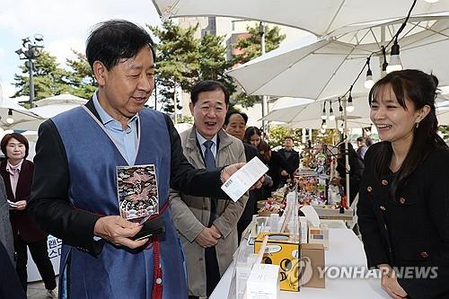
Seoul, Nov 2 (IANS) South Korea’s Finance Minister Koo Yun-cheol on Sunday pledged to step up efforts to promote domestic consumption as the country’s annual nationwide shopping event is being held on the largest-ever scale, his office said.

The Korea Grand Festival, the country’s equivalent of Black Friday, is taking place both online and offline nationwide from Wednesday till Nov. 9, with around 37,000 companies participating, according to the Ministry of Economy and Finance.

Major department store chains, discount retailers, traditional markets and convenience stores, as well as various online platforms, are offering large discounts, while the government is organising a range of promotional events nationwide, Yonhap News Agency reported.

“Private consumption has risen at the fastest pace in years. This festival is expected to help boost the economy and support small business owners,” Koo said, calling for the public’s active participation in the event.

“The government will continue efforts to make sure that livelihood-related policy measures are properly implemented and make necessary improvements,” he added.

Earlier on Friday, the South Korean government unveiled a plan to promote recycling of critical minerals by easing regulations and expanding financial and tax incentives, as part of its wider goal to stabilise supply chains, the industry ministry said.

The measures were announced during a supply chain meeting chaired by Finance Minister Koo, amid rising global uncertainty in raw material supply chains due to rising tech rivalry and escalating geopolitical tensions.

“The Asia-Pacific Economic Cooperation (APEC) summit in Gyeongju has become a meaningful turning point amid ongoing global economic uncertainty,” Koo said, noting that the government expects the outcomes to positively contribute to South Korea’s supply chain stability.

Critical mineral recycling refers to the process of reprocessing materials recovered from waste to produce critical minerals, which are essential for advanced industries.

The domestic critical mineral recycling market is expected to expand from 6.7 trillion won ($4.7 billion) in 2024 to 21.1 trillion won by 2040.

Despite the growth potential, high technological and capital barriers have hindered private sector expansion, with many companies lacking the resources for new investments, officials said.

The government aims to raise the recycling rate of 10 strategic critical minerals to 20 per cent by 2030 through regulatory reforms and industry support.

First, the government plans to reduce tariffs, considering global rates, the ministry said. Currently, major economies, such as Japan, the United States and the European Union, apply zero tariffs to key materials used in critical mineral recycling.

The government will also establish a joint council comprised of representatives from both the public and private sectors to identify promising recycling projects and provide direct investment through a supply chain stabilisation fund.

Additionally, the government plans to ease regulations on recycling material distribution by classifying some materials as “recyclable resources” rather than waste, reducing restrictions on transport and storage.

Separately, the government will operate a response team to support the supply of rare earth elements. Initiatives will include promoting investment in overseas resource development, developing technologies to reduce rare earth use and expanding public reserves.

–IANS

int/akl/vd

Read More
SOUTH ASIATOP STORIESWORLD

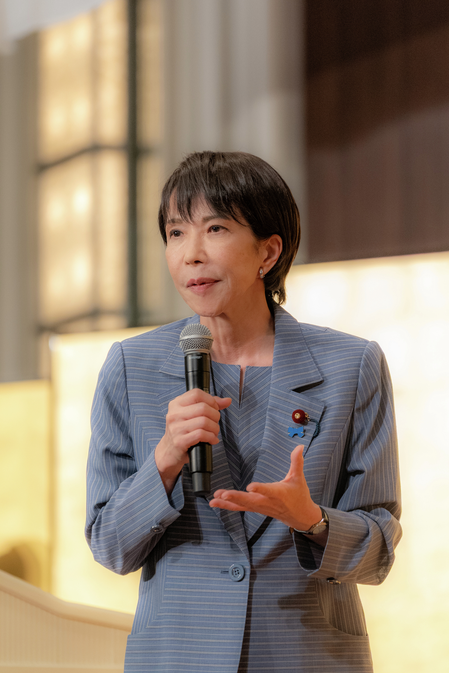
Japan’s Takaichi arrives in South Korea, set for summit talks with Lee

Gyeongju (South Kore), Oct 30 (IANS) Japan’s new Prime Minister Sanae Takaichi arrived in South Korea on Thursday for a much-awaited summit meeting with South Korean President Lee Jae Myung on the margins of an Asia-Pacific Economic Cooperation (APEC) gathering in the southeastern city of Gyeongju.

Takaichi’s visit comes amid rising uncertainty in Seoul-Tokyo relations following her election as Japan’s first female leader, who is widely known for her hawkish stance on past history issues stemming from Japan’s 1910-45 colonial rule of the Korean Peninsula.

She landed at Gimhae International Airport in the southeastern port city of Busan at 2:48 p.m. after departing Tokyo earlier in the day.

Takaichi is scheduled to meet Lee later in the day for the two leaders’ first in-person summit since the prime minister took office last week.

It will be closely watched as the talks will serve as a key barometre for the future of the two neighbours’ relations, which had improved significantly under her two predecessors. The summit also draws keen attention over whether the two leaders will reaffirm efforts for trilateral cooperation with the United States to discuss shared concerns, including North Korea.

Takaichi has described South Korea as a key partner and expressed her fondness for Korean seaweed and dramas during a press conference on the day of her inauguration, in what was seen as a move to ease Seoul’s concerns.

She also refrained from visiting the controversial Yasukuni Shrine, which honors war criminals and has long drawn criticism from South Korea and China for glorifying Japan’s militaristic past. Instead, she sent an offering to Yasukuni during the recent fall festival just ahead of her election, Yonhap news agency reported.

Lee was quick to offer a congratulatory message on Takaichi’s election, expressing hope for further strengthening “future-oriented, mutually beneficial cooperation” between the two nations.

During her three-day visit, Takaichi will also attend the main APEC Economic Leaders’ Meeting, slated for Friday and Saturday, to discuss issues related to trade and investment as well as emerging challenges, such as artificial intelligence and demographic changes, according to Japan’s foreign ministry.

She plans to hold summit talks with other world leaders to exchange views on bilateral ties, it added.

Takaichi, who also maintains a hard-line stance on China, is arranging her first summit meeting with Chinese President Xi Jinping on the sidelines of the gathering on Friday, Japan’s Kyodo News reported Wednesday, citing government officials.

–IANS

int/jk/rad

Read More
SOUTH ASIATOP STORIESWORLD

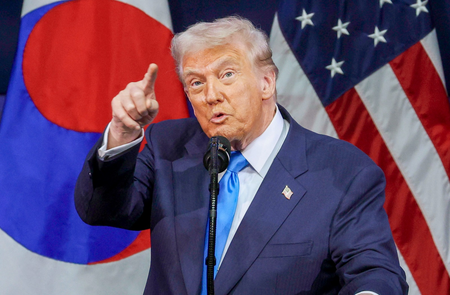
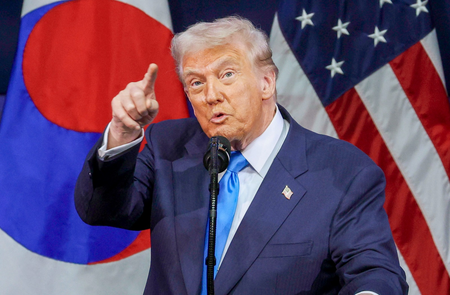
Trump, Xi agree on one-year rare earth supply deal amid easing trade tensions

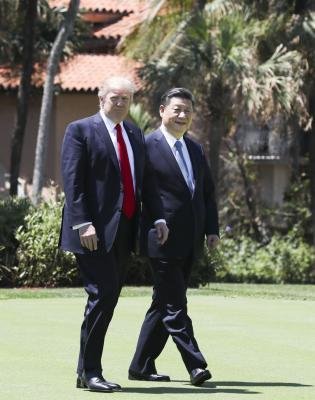
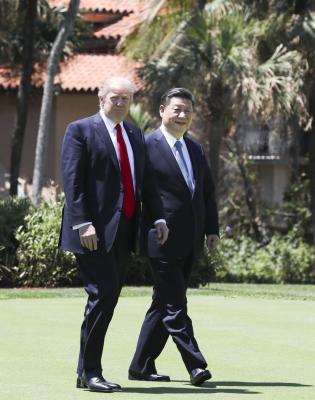
Busan, Oct 30 (IANS) In a major step towards easing ongoing trade tensions, US President Donald Trump on Thursday announced that he and Chinese President Xi Jinping have agreed on a one-year deal for the supply of crucial rare earth materials.

The announcement came after the two leaders met in Busan, South Korea, on the sidelines of the 32nd APEC Economic Leaders’ Meeting — their first in-person meeting in six years.

Trump said the agreement will be renewed annually and represents significant progress in the countries’ strained trade relationship.

“All the rare earths have been settled, and that’s for the world,” Trump told reporters aboard Air Force One after the meeting.

He added that he had also agreed to reduce fentanyl-related tariffs on China from 20 per cent to 10 per cent, describing the meeting with Xi as “a 12 out of 10.”

Trump said, “A lot of things we brought to finalisation,” and praised the Chinese President as “a tremendous leader of a very powerful country.”

He also revealed that he will visit China in April, while Xi is expected to travel to the US later, either to Florida, Palm Beach, or Washington, D.C.

Chinese President Xi Jinping, meanwhile, struck a conciliatory tone, saying that China’s growth complements Trump’s vision to ‘Make America Great Again.’

Speaking during the meeting, Xi said China and the United States are capable of helping each other “succeed and prosper together.”

“China and the United States should be partners and friends. That is what history has taught us and what reality needs,” Xi said, adding that he is ready to continue working with Trump to strengthen bilateral relations and create a positive environment for the development of both nations.

The rare earth deal is seen as a breakthrough amid a prolonged trade standoff marked by tit-for-tat tariffs.

The two sides had earlier been working on a framework agreement that would allow China to delay stricter export controls on rare earth materials for a year, in exchange for the US dropping plans to impose an additional 100 per cent tariff on Chinese goods from November 1.

–IANS

pk/rad

Read More
SOUTH ASIATOP STORIESWORLD

China targets manned moon landing by 2030, outlines testing tasks ahead

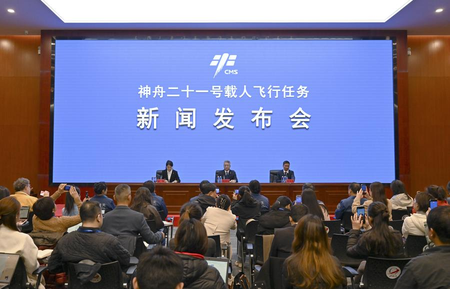
Beijing, Oct 30 (IANS) China is advancing its goal of landing astronauts on the moon by 2030 and has outlined a packed schedule of development and testing for its ambitious crewed lunar programme, the China Manned Space Agency (CMSA) said on Thursday.

A series of crucial upcoming tests include integrated testing for the Lanyue lunar lander, thermal tests, and maximum dynamic pressure escape tests for the Mengzhou manned spacecraft, and low-altitude and technology verification flights for the Long March-10 carrier rocket, Xinhua news agency reported.

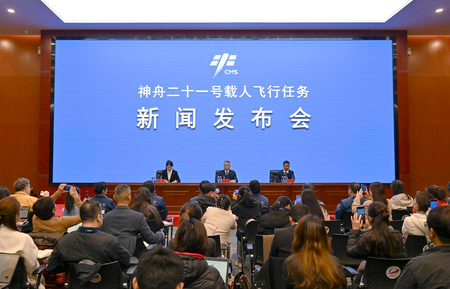
At a press conference held at the Jiuquan Satellite Launch Center in northwest China, CMSA spokesperson Zhang Jingbo announced that the Mengzhou-1 spacecraft mission will be included in the public logo solicitation campaign alongside missions to China’s space station.

This spacecraft is primarily designed for lunar missions while also supporting the space station missions in low-Earth orbit.

All development and construction work for the crewed lunar mission is proceeding as planned, said Zhang. Primary preliminary prototyping of key flight hardware, including the Long March-10 rocket, the Mengzhou spacecraft, the Lanyue lander, the Wangyu lunar extravehicular suit, and the Tansuo crewed lunar rover, has been completed, the report said.

Also, payload designs for scientific research and applications have been finalised, and ground-based infrastructure, such as the launch site, tracking network, and landing site on Earth, is under accelerated development, according to Zhang.

The mission has seen a string of successful tests this year, including the second-stage propulsion system test and the captive firing test for the Long March-10 rocket, the zero-altitude escape test for the Mengzhou spacecraft, and the comprehensive landing and takeoff verification test for the Lanyue lander.

Zhang noted that numerous new technologies still require validation, and the upcoming workload is heavy, given the high-quality standards and a tight timeline for flight tests.

Meanwhile, the CMSA also announced the crew for the Shenzhou-21 crewed spaceflight mission — Zhang Lu, Wu Fei, and Zhang Hongzhang.

The Shenzhou-21 crewed spaceship is scheduled to be launched at 11:44 p.m. Friday (Beijing Time) from the Jiuquan Satellite Launch Center in northwest China, Jingbo said.

The mission is the sixth manned flight mission since the space station entered the application and development phase, and the 37th flight of China’s manned spaceflight programme.

The Shenzhou-21 astronauts will complete in-orbit rotation with the Shenzhou-20 crew, and stay in the space station for about six months, according to the spokesperson.

–IANS

rvt/

Read More
SOUTH ASIATOP STORIESWORLD

Bangladesh: NCP says elections impossible without implementation of July Charter

Dhaka, Oct 30 (IANS) As political tensions escalate in Bangladesh ahead of next year’s elections, the National Citizen Party (NCP) asserted that polls cannot be held in the country without the implementation of the July Charter, local media reported.

NCP convener Nahid Islam made these remarks while addressing journalists after a party program in Rangpur district.

“We want quick elections. But for those elections, stability and trust are needed. The people’s expectation was to establish an effective and accountable government after the mass uprising. Now it is our responsibility to fulfill that expectation,” Bangladesh’s Bengali daily ‘Jugantor’ quoted the NCP leader as saying

Nahid further said, “We believe that if elections are held without taking into account the minimum aspirations of the people, reforms and justice, then those elections will not be sustainable.”

He also stated that after August 5, a new politics of “corruption, extortion and occupation” has started, and the country is witnessing the rise of “social fascism”.

“For durable and stable change, we want to implement minimum reforms, including some constitutional amendments. If obstacles arise or the government delays the process, both the government and the obstructing forces will have to face the people,” Nahid stressed.

Meanwhile, amid growing political rift over the July Charter, the Bangladesh Nationalist Party (BNP) accused the country’s National Consensus Commission of “deceiving” the people and political parties with its final recommendations on the July Charter, calling for its immediate correction by incorporating the notes of dissent.

On the other hand, the radical Islamist Party Jamaat–e–Islami demanded that the referendum on constitutional reforms outlined in the July charter be held before the polls, even if it required postponing the election.

These developments followed the submission of the NCC’s recommendations to Chief Advisor of the interim government Muhammad Yunus on ways to implement the July Charter.

Bangladesh continues to face growing uncertainty and political turmoil ahead of next year’s election.

The parties that earlier collaborated with Yunus to overthrow the democratically-elected government of the Awami League, led by Sheikh Hasina, are now at loggerheads over reform proposals.

–IANS

scor/rad

Read More
SOUTH ASIATOP STORIESWORLD

Trump, Xi meet in South Korea to focus on strategic, economic, geopolitical issues

Washington, Oct 30 (IANS) US President Donald Trump and Chinese President Xi Jinping meeting on Thursday in the South Korean port city of Busan, marking their first in-person encounter since Trump’s return to office in January, is expected to cover key strategic, economic and geopolitical issues, setting the stage for possible de-escalation of bilateral tensions between the world’s two largest economies.

Before the meeting President Trump posted on Truth Social: “Very much looking forward to my meeting with President Xi of China. It will take place in a few hours! President DJT.”

Trump arrived in South Korea on Wednesday following a stop in Japan, part of an Asia tour focussed on strengthening regional partnerships and addressing trade and defence issues. The meeting with Xi follows renewed tensions over tariffs and technology controls, as well as China’s recent export restrictions on rare earth materials.

Earlier, speaking to reporters aboard Air Force One, Trump revealed that he may speak to Xi about Nvidia’s advanced Blackwell chips.

“I think we may be talking about that with President Xi,” Trump said. The statement caused an alarm in Washington as experts argued that the removal of export controls on advanced semiconductors would allow Beijing to close the technology gap on AI and hurt the American leadership.

Rush Doshi, a Senior Fellow at the Council on Foreign Relations and former National Security Council official under the previous Biden administration, wrote on X, “…seems we are effectively going to dismantle the export control regime on AI chips just as Beijing builds out its regime on rare earth minerals and magnets.”

China and the United States agreed to a “framework” of a trade deal on October 20 after talks between Treasury Secretary Scott Bessent, US Trade Representative Jamieson Greer and China’s Vice Premier He Lifeng and trade negotiator Li Chenggang in Malaysia.

According to Bessent, the agreement involved a ‘final deal’ on TikTok, China’s purchase of soybeans and the delay of export controls on rare earths for one year.

Li Chenggang termed the talks “candid and in-depth discussions” and said they covered topics such as export controls, tariffs, US probe into Chinese shipbuilders and expansion of bilateral trade while revealing that the two sides had reached a “preliminary consensus.”

Days after the framework agreement, Chinese Foreign Minister Wang Yi held a phone call with US Secretary of State Marco Rubio, with both sides reaffirming the importance of bilateral ties.

Trump, on his first visit to Asia in the second term, also announced trade agreements with Malaysia and Cambodia and framework deals with Thailand and Vietnam, which included commitments on critical minerals.

On October 27, the US and Japan also signed a critical minerals and rare earths agreement, as the two sides vowed to take bilateral ties into a “new golden age.”

–IANS

scor/rad

Read More