SOUTH ASIA

FOCUSSOUTH ASIASPECIALTOP STORIESWORLD

US Fed cuts interest rates as govt shutdown clouds economic outlook

Washington, Oct 30 (IANS) The US Federal Reserve on Wednesday lowered its benchmark lending rate by a quarter percentage point, bringing the target range to 3.75 per cent to 4 per cent, as policymakers grapple with limited economic data due to a federal government shutdown.

The rate cut marks the second reduction in borrowing costs this year.

The decision, approved by a 10-2 vote, comes as the US government’s funding lapse stretches into its fifth week.

The shutdown has forced agencies, including the Bureau of Labour Statistics, to suspend the collection and publication of key economic indicators, leaving the central bank with a partial view of the economy’s performance.

Wednesday’s rate cut brought borrowing costs below 4 per cent for the first time since late 2022. Policymakers cited uncertainty in the outlook, compounded by the lack of data on employment, inflation, consumer spending and other economic measures, as a factor in the decision to reduce rates.

The Fed’s move comes amid mixed signals from the broader economy, including steady job growth reported before the shutdown and inflation readings that have moderated from last year’s peaks.

Economists note that with government data delayed, the central bank is relying on alternative sources, including private sector surveys and financial market indicators, to gauge the economy’s strength.

Investors have closely watched the Fed’s policy stance for signs of its approach to balancing economic growth and inflation pressures.

The decision follows a quarter-point rate reduction in July, as the Fed sought to provide support to the economy in the face of slowing growth and financial market volatility.

The central bank has raised its benchmark rate several times since 2022 to combat inflation.

Wednesday’s actions underscore the Fed’s continuing effort to calibrate monetary policy amid uncertainty, while signalling a willingness to adjust rates as conditions evolve, even in the absence of complete economic data.

–IANS

scor/dan

Read More
SOUTH ASIATOP STORIESWORLD

Head-on collision in north Afghanistan kills one, injures 11

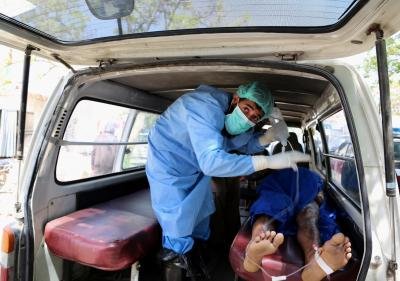
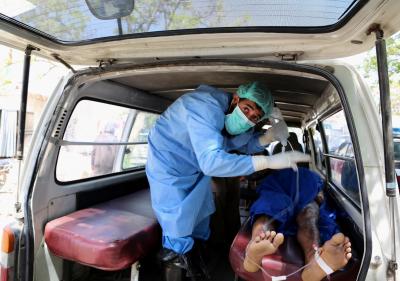
Kabul, Sep 26 (IANS) A commuter lost his life and 11 others sustained injuries in a head-on road collision in northern Afghanistan’s Jawzjan province, according to the provincial police on Friday.

The collision took place between two passenger cars in the Qarabuyen Olya region, along the highway connecting Jawzjan to neighbouring Balkh province, leaving one dead on the spot and 11 others injured, said a police statement, Xinhua News Agency reported.

Blaming reckless driving for the accident, the statement noted that the injured were promptly transported to a nearby health center for treatment, where most remain in critical condition.

On Thursday, one traveller was killed and three others injured when their car overturned in eastern Afghanistan’s Laghman province, the provincial police office said in a statement.

Blaming reckless driving for the deadly mishap, the statement noted that the accident occurred in the Kakakh region, along the highway linking the capital Kabul to eastern Nangarhar province, resulting in the immediate death of one passenger and injuries to three others.

Earlier, on September 17, seven travellers lost their lives and two others were injured in a collision between a car and a passenger bus in eastern Wardak province.

The main highway traversing Laghman province frequently witnesses fatal accidents due to driver negligence, with highway traffic officials urging motorists to adhere to traffic rules and regulations to prevent such tragedies.

The deadly accident took place on a road linking the country’s capital city, Kabul, to southern Kandahar province, the statement said.

The road, which crosses Wardak province, often sees deadly road accidents due to the carelessness of the drivers, it added.

On the same day, at least three people were killed and two others injured when their vehicle veered off the road and plunged into a deep ravine in northern Afghanistan’s Badakhshan province, a provincial police spokesman, Ehsanullah Kamgar, said.

The accident occurred in the Argo district after the vehicle lost control on a steep path, resulting in the immediate deaths of three commuters, including the driver, and injuries to two children, said Ehsanullah Kamgar.

Deadly road accidents remain a persistent issue in war-torn Afghanistan, often attributed to deteriorating road conditions, reckless driving, and inadequate safety measures amid challenging terrain and limited infrastructure.

–IANS

int/akl/as

Read More
SOUTH ASIATOP STORIESWORLD

Namibia unveils strategy to achieve food sovereignty, cut agricultural imports

Windhoek, Sep 26 (IANS) Namibia has unveiled a comprehensive national strategy to transform its crop sector, enhance food sovereignty, and reduce dependence on agricultural imports.

The strategy was formalised on Friday in the Namibian capital of Windhoek, where Minister of Agriculture, Fisheries, Water, and Land Reform Inge Zaamwani introduced the Namibian Agronomic Board’s annual report, Five-Year Integrated Business Plan, Five-Year Crop Value Chain Development Strategy, and Potato Development Scheme, Xinhua News Agency reported.

“Together, these milestones are not simply documents; they are a renewed commitment to transform the crop subsector and accelerate food self-sufficiency,” she said.

According to Zaamwani, the new strategic direction is encapsulated in the Five-Year Integrated Strategic Business Plan and the Five-Year Crop Value Chain Development Strategy.

She noted that the strategy directly responds to the country’s national goals under the Sixth National Development Plan, where agriculture has been declared a number one priority.

“The Crop Value Chain Development Strategy is designed to take a holistic value chain approach, addressing all segments of the crop subsector from inputs (seeds, fertilizers, equipment), production, processing, storage, and marketing,” she explained.

The minister added that the most immediate high-impact initiative is the Potato Development Scheme, which is expected to boost local production, create jobs across the potato value chain, and reduce reliance on imports. It will also promote agro-processing such as chips, crisps, and starch production, while serving as a model for similar schemes in other priority crops.

Zaamwani said that by unveiling these plans, the country is charting a course toward a future where the crop sector is sustainable, resilient, and globally competitive.

About 70 per cent of Namibia’s population depends on agricultural activities for livelihood, mostly in the subsistence sector.

Earlier in August, Namibian Prime Minister Elijah Ngurare pledged to accelerate efforts to address rural development challenges, including lack of clean water, feeder roads, and digital connectivity, as part of the government’s commitment to building a more inclusive nation.

Speaking in northern Namibia, Ngurare said many rural households still lack basic services, decades after independence.

“The lack of reliable access to clean water is a fundamental challenge that affects not only your health but also your ability to thrive,” he said, stressing the government’s resolve to expand potable water supply, rural roads, and electricity to underserved areas.

He noted that infrastructure development remains central to Namibia’s growth strategy, adding that good infrastructure is vital for economic development as it connects communities, enables farmers to bring their produce to market, and ensures children can get to school safely.

Ngurare also highlighted plans to bridge the digital divide, pointing out that young people in rural constituencies need reliable internet to study and compete in the global economy. He said new information and communication technology towers were recently launched to extend coverage to previously underserved communities.

He urged communities to work with the government by turning present challenges into opportunities for future generations.

–IANS

int/akl/as

Read More
SOUTH ASIASPECIALTOP STORIESWORLD

South Korean President returns home from New York, highlights new peace initiative at UN

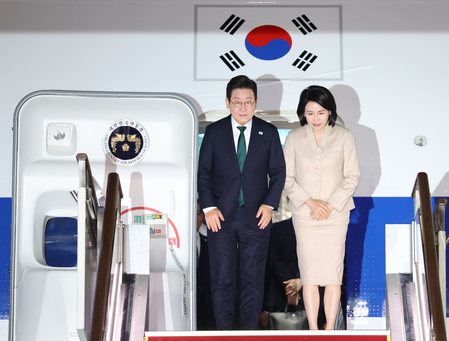
Seoul, Sep 26 (IANS) South Korean President Lee Jae Myung returned home Friday from a trip to New York, where he unveiled a new peace initiative on the Korean Peninsula at the UN General Assembly.

In his first UN address since taking office in June, Lee also declared South Korea’s full return to the global stage after months of political turmoil following former President Yoon Suk Yeol’s failed martial law attempt, Yonhap News Agency reported.

Under the so-called “END” initiative, Lee told the United Nations that South Korea will focus on “exchange,” “normalization” and “denuclearization” to promote peace on the Korean Peninsula.

During a meeting with US Treasury Secretary Scott Bessent, Lee said he expects to make progress in trade talks with Washington based on “commercial rationality.”

The meeting between Lee and Bessent came as Seoul and Washington have made little progress on details of South Korea’s US$350 billion investment pledge in the United States.

On Thursday, Lee hosted the “Korea Investment Summit” at the New York Stock Exchange to attract fresh capital inflows and strengthen the Korean stock market.

Earlier this week, Lee met BlackRock CEO Larry Fink to discuss cooperation in artificial intelligence (AI) and renewable energy, leading to the signing of an agreement to build AI data centers under Seoul’s vision of becoming Asia’s AI hub.

On Wednesday, South Korean President Lee Jae Myung met with Polish President Karol Nawrocki and discussed ways to expand cooperation in the defence industry, Lee’s office said.

Lee held his first talks with Nawrocki on the sidelines of the UN General Assembly, as Poland has become a key destination for South Korea’s defence exports in recent years amid Russia’s invasion of Ukraine.

“The leaders recognized that defence industry cooperation, centered on tanks and other areas, has continued to advance, and agreed to further expand cooperation so that companies from both countries can achieve mutually beneficial results,” the office said in a release.

Lee expressed hope for closer collaboration on Poland’s submarine acquisition program, the office said.

Hanwha Group has been actively pursuing Warsaw’s Orka project, which envisions the purchase of three to four 3,000-ton submarines worth more than 3 trillion won (US$2.25 billion).

The two leaders also exchanged views on regional security issues, including the Korean Peninsula and Ukraine, according to the office.

–IANS

int/akl/as

Read More
SOUTH ASIASPECIALTOP STORIESWORLD

Denmark: Aalborg airport shut for second time after suspected drone incursion

Copenhagen, Sep 26 (IANS) Aalborg airport in Denmark was shut for a second time in just 24 hours on Friday after suspected drone incursion. The drone incursion forced the airport used for commercial and military flights to close between 11 pm-12 am in the early hours of Friday after an object was detected in the sky.

It is the latest drone activity that has been reported in Denmark, termed by the authorities as a well-organised hybrid attack, sparking concerns regarding security in northern Europe.

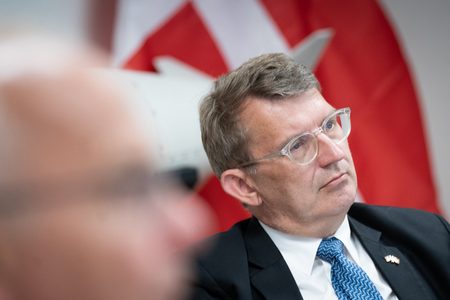
While addressing a press conference on Thursday, Danish Deputy Prime Minister and Defence Minister Troels Lund Poulsen said that a “professional actor” was responsible for the “systematic operation” that was difficult to fight against, Euro News reported.

“This is an arms race against time because technology is constantly evolving,” Poulsen said, while expressing optimism that those behind the drone activity will be brought to book.

He stated, “We are going to find the people who are behind this.”

Danish Minister of Justice Peter Hummelgaard said on Thursday that the drone incursion was aimed to create fear and division, adding that Denmark will seek additional ways to neutralise drones, including proposing law to allow infrastructure owners to bring them down.

Danish intelligence officials warned that the risk of Russian espionage and sabotage in Denmark is high. In a news conference on Thursday night, Danish Security Intelligence Service chief Finn Borch stated, “We have seen this in other parts of Europe, and we must also expect to see it in Denmark.” Authorities mentioned that there was no imminent danger to people.

On Thursday, Denmark contacted the North Atlantic Treaty Organisation (NATO) and the European Union (EU) after shutting Aalborg airport and placing three others airports on alert following the unauthorised drones carrying out what the authorities termed as coordinated attacks.

Earlier also, drone incursion were reported in Denmark that officials suspect may involve Russian interference. On Monday, the Copenhagen airport was affected by a similar incident. Authorities said the drones at Aalborg followed a similar pattern to the ones that paused operations at Copenhagen. Danish Prime Minister Mette Frederiksen had described the drone attack as the “most serious yet on Denmark’s infrastructure.”

Norwegian authorities also closed the airspace at Oslo airport for three hours on Monday due to possible danger from unauthorised drone activity, Euro News reported. On Wednesday, Norway’s Foreign Minister said that authorities of Denmark and Norway are working together on the incidents that occurred in Copenhagen and Oslo, however, their probe has not yet established a connection.

–IANS

akl/as

Read More
INDIASOUTH ASIASPECIALTOP STORIES

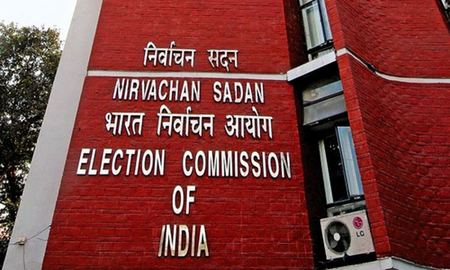
Migrant workers from Bengal to fill separate column in form ahead of SIR rollout in October

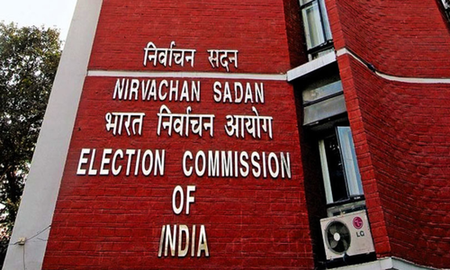
Kolkata, Sep 26 (IANS) As West Bengal is heading for the rollout of special intensive revision (SIR) after Bihar next month, the form for the voter list verification process will have a separate column for the migrant workers from the state, who are currently working in other states.

The separate column, an insider from the office of the West Bengal Chief Electoral Officer (CEO), said will be the one where the migrant workers from the state will have to make a self-declaration that barring from the voters’ list their names are not enlisted for the same list for any other state and more specifically the state they have migrated to earn their livelihood.

“This is to ensure that none of the migrant workers are enlisted in more than one state,” the CEO’s office insider added.

Already, the process for printing the SIR forms has started in West Bengal.

Each voter will be allotted two copies of the SIR form.

While one will be retained by the voter concerned, the other will be retained by the booth-level officer (BLO) concerned.

The basis of the SIR this time will be the last similar voter list revision conducted by West Bengal in 2002.

According to initial estimates, the number of migrant workers in West Bengal is around 22 lakh.

According to many, the number could be much higher.

The CEO’s office has reportedly taken all possible measures to make the SIR process foolproof in West Bengal.

Understanding that the BLOs, as grassroots-level electoral officials, will be playing the most crucial role, the CEO’s office is giving special emphasis to both their conduct as well as their security while they are deployed on the ground level during the SIR process.

BLOs have been given strict instructions that in case they face any interference, resistance, or deliberate non-cooperation while performing their job, whether it is from any political outfit or anyone from the state administrative machinery, such matters should be immediately brought to the notice of the CEO’s office.

–IANS

src/khz

Read More
HEALTH & LIFESTYLESOUTH ASIASPECIALTOP STORIES

US pharma tariffs a headline risk for Sun Pharma: Report

New Delhi, Sep 26 (IANS) The United States’ decision to impose a 100 per cent tariff on imports of patented drugs from October 1 has raised concerns for Sun Pharma, a new report said on Friday.

The data compiled by HSBC Global Investment Research noted that while the move poses a headline risk, the actual financial impact on the Indian pharma major is likely to be limited.

The new US policy applies only to patented or branded medicines and excludes generic drugs, which form the bulk of Indian pharmaceutical exports.

This means most Indian drug makers will not be affected. However, Sun Pharma, which earns about 17 per cent of its revenue from patented products in the US, could face earnings pressure if it does not realign its supply chain.

HSBC estimates that 8–10 per cent of Sun Pharma’s FY26–FY27 earnings per share are exposed to downside risk in the worst-case scenario.

The company currently relies on global contract manufacturing partners for its patented products, with key components sourced from South Korea and Europe.

Crisil Ratings also said the impact of these tariffs on the Indian pharma sector would remain modest, as exports to the US are dominated by generics.

Anuj Sethi, Senior Director at Crisil Ratings, said that many domestic players have only a small share of patented drugs in their portfolio, and in most cases, the cost burden of tariffs is likely to be passed on to customers.

He added that strong balance sheets and existing manufacturing units in the US further support the sector’s resilience.

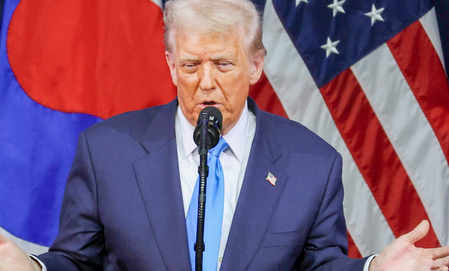
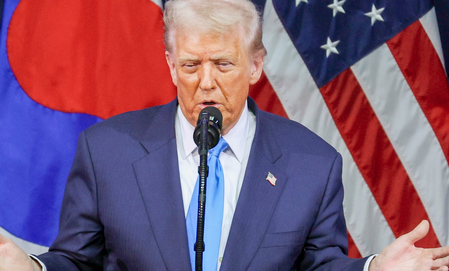
Meanwhile, experts also echoed the same sentiment and said that the 100 per cent tariff on pharmaceuticals, imposed by the US President Donald Trump, will cause harm only to the US, and not India.

The 100 per cent tariff by Trump, to be implemented from October 1, targets the import of branded and patented pharmaceutical drugs and does not apply to generic medicines.

–IANS

pk

Read More
INDIASOUTH ASIATOP STORIES

Kolkata Police forms SIT led by assistant commissioner-level officer to probe law college student rape case

Kolkata, June 28 (IANS) The Kolkata Police, on Saturday, announced the formation of a five-member Special Investigation Team (SIT), with an Assistant Commissioner-level officer leading it, to probe the case of the rape of a law student within the college premises at Kasba in Kolkata, officials said.

The head of the SIT is Pradip Kumar Ghosal, an Assistant Commissioner posted with the south suburban division of the city police.

The city police have already appealed to record the confidential statement of the victim as well as her parents.

A total of four persons are in police custody now in connection with the case, the latest of whom is a 55-year-old security guard who was identified as the “sole helpless witness” in the matter.

The main accused in the rape case namely — Monojit Mishra, Zaib Ahmed and Pramit Mukhopadhyay, were presented at a city court on Friday and they all were remanded to police custody till July 1.

All the accused trio were reportedly linked to Trinamool Congress’s students’ wing — Trinamool Chhatra Parishad.

The pictures of Mishra with several top Trinamool Congress leaders have already flooded the social media.

Meanwhile, the father of Mishra, who is considered the main accused in the rape case, told a section of the media persons on Saturday, that his son had virtually no connection with his family since he passed out of the law college and claimed to have started practicing as an advocate at a city, besides working as a temporary staff at the same college.

He also said that he would not be participating in the legal process on behalf of his son.

I have done my bit in getting my son educated. Now if at this age he gets booked in such a case, nothing is there that I can do now. If he is proven guilty in the matter he will be punished. But I am not in a position to stand by him. I am not even in a financial position to do that,” Mishra’s father added.

–IANS

src/khz

Read More
SOUTH ASIATOP STORIESWORLD

Bangladesh: Inhumane condition at Chittagong Central Jail sparks outcry

Dhaka, June 28 (IANS) The Chittagong Central Jail of Bangladesh is reportedly housing inmates more than three times its capacity, forcing them to live in overcrowded conditions.

In an effort to address the situation, an initiative was undertaken by the local authorities to construct a new prison. However, no land has been allocated despite repeated appeals by the Prisons Department, local media reported on Saturday.

Citing prison sources, leading Bangladeshi daily Prothom Alo reported that the jail, which can accommodate 1853 prisoners, detains an average of 6000 prisoners daily.

“Currently, there are more than three times as many prisoners in the Chittagong Prison. Despite repeated requests, we are not getting land for a new prison. If there is a new prison, it can be developed as a correctional facility, where there will be arrangements for training prisoners as workers in the fishing and garment industries,” the newspaper quoted Mohammad Motahar Hossain, Director General of the Prisons Department, as saying.

Earlier, the Chittagong district administration stated that lands in Jangal Salimpur remain under illegal occupation, and have yet to be recovered before it can be handed to the prison authorities.

Bangladesh Nationalist Party (BNP) leader and the current Mayor of Chittagong City Corporation, Shahadat Hossain, who is imprisoned in the jail in connection with a political case, described the conditions as “inhumane”.

“There is excessive pressure on prisoners. I have seen that instead of 30-40, as many as 100 people are kept in a limited area. This is inhumane. The prisoners suffer in various ways due to a lack of adequate space and washrooms. It is necessary to build a new prison in Chittagong to ensure minimum basic rights and healthcare,” the BNP leader told the Bangladeshi daily.

In October 2024, a data released by the Department of Prisons revealed that Bangladesh’s 68 prisons had a capacity of 42,887 but were housing 53,831 inmates.

Jyotirmoy Barua, a human rights activist and senior lawyer at the Supreme Court of Bangladesh, stated that overcrowded prisons constitute a serious violation of human rights.

“A person is presumed innocent until proven guilty by law, and it is the state’s responsibility to uphold their rights. The government should consider temporary measures to ensure constitutional equality for the accused, except for those who have been convicted,” he added.

–IANS

int/scor/as

Read More
SOUTH ASIATOP STORIESWORLD

Pakistani authorities slammed for illegal detention of Baloch leader, other activists

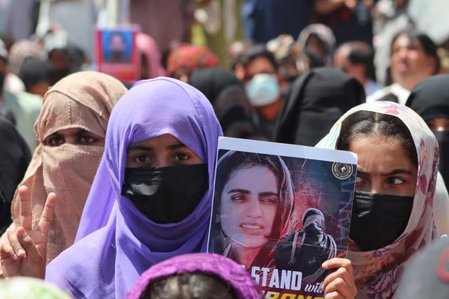
Quetta, June 28 (IANS) Nadia Baloch, sister of Baloch Yakjehti Committee (BYC) Central Organiser Mahrang Baloch, on Saturday appealed to lawyers, human rights organisations, the Baloch public, and all political leaders to raise their voice for the immediate release of the BYC leader and other activists who have been “illegally detained” by the Pakistani authorities.

“My sister, Dr. Mahrang Baloch, and her companions were illegally detained on March 22 under the black law of 3MPO or the Maintenance of Public Order. Since then, we’ve knocked on every legal door, exhausted every lawful means to secure their release,” Nadia said in a video message released by the BYC.

“According to the law, their detention period ended on June 22. Bibarg Baloch was due to end on June 25. Under 3MPO, a Review Board including the Chief Justice and senior judges must convene, review their case, and personally hear them. But no such board was ever formed,” she stated.

On repeated queries regarding the legal grounds on which they were still imprisoned she said, “the only response we received was baseless excuses that the ‘situation outside isn’t suitable’, so they are being held for 15 more days”.

Nadia challenged that no individual has the authority to extend their detention and only a formal Review Board can decide, adding that no official notification was provided.

“We went to the jail and waited the entire day. When we insisted, they finally brought a document but strictly forbade us from copying or photographing it. We were shown nothing official. No Review Board ever met. This is a completely illegal act,” she mentioned

Raising concern she said that under such lawlessness, even breathing has become unsafe, and “these black laws are suffocating us all”.

Earlier in the day, in a letter to the Civil Society Friends and Media, Nadia expressed deep concern about her sister, stating that Mahrang is under immense psychological pressure in prison.

She highlighted that the health of the BYC leader has deteriorated dramatically, and she has been sick for the past three days without access to proper medical care.

“Last night, she became severely unwell and experienced repeated vomiting. A doctor was finally called this morning, but the delay in medical attention is unacceptable. I fear that she is being deliberately kept in conditions that are worsening her health, and I am deeply concerned that her food may be contaminated. This morning, I visited the jail to meet her. My sister, Iqra, wasn’t allowed to meet her. I met her only for a couple of minutes. She looked extremely weak, sick, and fragile,” Nadia stated.

Besides that, Nadia mentioned that Mahrang has repeatedly complained about surveillance cameras, the lack of proper beds, food, and the violation of her rights as a political prisoner.

“Despite these hardships, she remains strong in her spirit. But she is sick and we fear for her life. Internet services were shut down in Quetta today so that we can’t amplify her voice. I urge you all to continue raising your voices for her and all detained Baloch prisoners,” Nadia concluded.

–IANS

int/scor/as

Read More
SOUTH ASIATOP STORIESWORLD

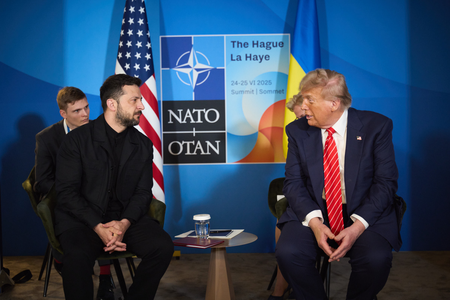
More setbacks than breakthroughs for Ukraine at NATO Summit

New Delhi: Ukraine’s efforts to join the North Atlantic Treaty Organisation (NATO) and the European Union (EU) suffered a jolt this week as the NATO Summit at The Hague wrapped up without any mention of the same in the official declaration.

The member countries of NATO, however, agreed to invest five per cent of their GDP, which includes 3.5 per cent GDP into core defence requirements, and 1.5 per cent on defence and security related to investments in infrastructure and industry by the year 2035.

The Summit gave the green signal for more defence equipment manufacturing by the European defence contractors, with the NATO leaders agreeing to ramp up and increase their defence budgets.

US President Donald Trump, while describing this as “a monumental win”, made it clear that NATO members should not rely on the US for any military support.

Driven by Trump, the defence budget of the NATO members is expected to pressurise Russian President Vladimir Putin to stay away from Kyiv.

Europe is trying to inflict maximum damage to Russia, not to contain, but to defeat it. Germany is providing assistance to Ukraine via money, weapons as well as setting up facilities for weapon production. The EU has adopted 17 sanction packages, the most recent being on May 14.

For the first time, Trump’s views were supported and accepted by the NATO member countries, all wanting to keep Europe “safe” from Putin. This summit brought into light a lot of fissures and factions between the US and Europe on Russia’s military might and intentions.

However, a rather laidback response was noted between Trump and the Ukrainian President Volodymyr Zelensky.

Analysts reckon that Russia could mount a large-scale military attack on Ukraine in the coming months. While Russia is building up its forces with the aid of North Korea, Ukraine on the other hand is relying on the EU and NATO for more high tech defence equipment, including drones. Zelensky discussed the US Patriot Air Defence Systems (ADS) and joint weapons production with Trump. It has been reported that Trump might consider selling to Kyiv the US Patriot ADS and missiles, to bolster Ukraine’s ADS along with their European partners.

Ukraine would make a payment of USD $ 30-50 billion directly to the US, or via the fund under the US-Ukraine mineral deal, for the ADS. Ukraine has also upgraded its naval drone, Katran, with strike capabilities reaching targets up to a 100 kms away.

The fight against Russian reconnaissance and drones remains a top priority for Ukraine. Ukraine’s drones and missile strikes destroyed up to one-third of Russia’s Black Sea Fleet from 2022 to 2024.The Ukrainian drones are a force multiplier. After manufacturing more than a million drones last year, there have been plans made to cross the number and bring it to over two million this year.

Zelensky called the recent drone attack on the Tupolev nuclear-capable bomber fleet by Ukraine, which targetted five Russian air bases located 3000 km north-South and 5000 km West-East, on June 1, with 117 drones in a single operation called ‘Spider’s Web’, the longest range operation.

The drones were targetted towards Murmansk, Irkutsk, Ivanovo, Ryazan and Amur regions. The Russian ADS failed in the Murmansk and Irkutsk regions, with the destruction of at least 41 Russian heavy bombers.

Russia attacked Ukraine with Iranian-designed drones, most of which are now made in the Yelabuga drone factory in Tatarstan, Russia. It is believed that Iran transferred software and expertise to Russia.

Putin mentioned about his aim to annex Ukraine at the St. Petersburg International Economic Forum (SPIEF).

“I have said many times that the Russian and Ukrainian people are one nation, in fact. In this sense, all of Ukraine is ours,” said Putin on June 20.

The Europeans fear that Trump’s plan to put an end to the Russia-Ukraine war might never happen with the increasing intensity of the Russian attacks.

It is believed by the Ukrainians that Trump might not be too consistent or strong when it comes to Putin. Based on figures from Statista, the EU and its institutions provided € 52.1 billion euros in regard to the Russian invasion on Ukraine, from January 24 to 28, 2025.

The US provided 114 billion Euros, the highest value of allocations till now.

The US and the other member countries of NATO agreed to accelerate Ukraine’s membership in NATO in July 2024. However, the same commitment was found to be missing from the NATO Summit at The Hague this year. Zelensky, not pursuing the Minsk-I and II Agreements in September 2014 and February 2015, made his commitment to end the war look ‘remote’.

As agreed in a meeting in Istanbul on June 2, the exchange of prisoners of war still continues.

Turkish President, Recep Tayyip Erdogan, hopes to find a settlement by bringing Putin and Zelensky together, along with Trump, in Turkey.

Although Russia laid out two options for complete ceasefire, it had not provided the memorandum for peace settlement to Ukraine before the meeting, which prolonged the negotiation process further. Russia also rejected Ukraine’s proposal for a 90-day ceasefire.

With the troubled bilateral ties between the US and the EU member states, the trans-Atlantic unity has been possible because of Ukraine.

Ukraine’s entry into NATO and the EU has stalled, with Trump replacing Joe Biden as the US President. Putin’s key condition is that NATO should be placed back from Russia’s borders to the position that existed in the 1990s.

Russia will not support or allow the eastward expansion of NATO at any cost.

The Trump administration has worked well to accommodate Russia in Ukraine and Putin’s Russia is happy with Trump returning to the White House.

(The writer is an expert on South Asia and Eurasia. He was formerly with Manohar Parrikar Institute for Defence Studies and Analyses. Views expressed are personal)

–IANS

Read More
SOUTH ASIATOP STORIESWORLD

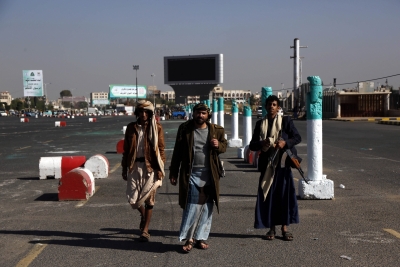
Yemen’s Houthis claim ballistic missile strike on ‘sensitive’ target in Israel

Sanaa/Jerusalem, June 28 (IANS) Yemen’s Houthi group announced Saturday that it had launched a ballistic missile targetting a “sensitive” site in southern Israel, activating air defence sirens in Israel for the first time since a ceasefire for the Israel-Iran conflict went into effect on Tuesday.

The strike, using a Zulfiqar ballistic missile, had “successfully hit its target,” Houthi military spokesperson Yahya Saree said in a televised statement aired by the group’s al-Masirah TV channel.

Saree added that earlier in the week, Houthi forces carried out “several military operations” targetting “sensitive” sites and military facilities in three Israeli cities: Beer Sheva, Jaffa (Tel Aviv), and Haifa, using a number of ballistic missiles and drones. All of the operations, he said, were “successfully executed.”

He said the operations were “a form of support for the oppressed Palestinian people,” vowing that the group would continue its “supportive military operations until the aggression on Gaza ceases and the blockade is lifted.”

Meanwhile, the Israel Defence Forces (IDF) said in a statement that a missile fired from Yemen towards Israel on Saturday morning was “most likely successfully intercepted.”

Israel’s national emergency service, Magen David Adom, said that there were no immediate reports of hits or casualties, Xinhua news agency reported.

Following the launch, air defence sirens sounded across large areas of southern Israel, including the cities of Beer Sheva and Dimona as well as the Dead Sea region, sending hundreds of thousands of residents to shelters.

On Thursday, Yemen’s Houthi leader Abdul-Malik al-Houthi said that his forces have launched 309 ballistic, hypersonic missiles, and drones at Israel since mid-March, as part of what the group calls the second phase of its military campaign.

In a televised speech marking the Islamic New Year, broadcast by the Houthi-run Al-Masirah TV, al-Houthi said 25 missiles and drones were launched this month alone in what he described as “qualitative military operations in support of Gaza.”

He reaffirmed that the Red Sea remains closed to Israeli-linked maritime traffic and accused Israel of continuing its offensive in Gaza with US backing.

Yemen’s internationally recognised government, meanwhile, accused Iran’s Islamic Revolutionary Guard Corps (IRGC) of directly controlling the missile systems used by Houthi forces.

Information Minister Moammar al-Eryani said Tehran was using Yemen as “an advanced missile platform” to threaten regional and international security while avoiding direct confrontation.

The Houthis, who control much of northern Yemen, began targetting Israel in November 2023, weeks after the outbreak of the Israel-Hamas conflict in Gaza, in what they say is an act of solidarity with the Palestinian people.

–IANS

int/as

Read More