Wages credited directly under VB–G RAM G scheme: Centre
New Delhi, July 24 (IANS) To ensure timely wage payments under the VB–G RAM G rural employment scheme, the Rural Development Ministry has implemented the National Electronic Fund Management System (NeFMS) and Direct Benefit Transfer (DBT), under which wages are directly credited into the bank accounts of beneficiaries, Parliament was informed on Friday.
The Ministry has also issued detailed Standard Operating Procedures (SOPs) prescribing timelines and responsibilities at various levels for timely processing of wage payments for the scheme, which has been operational since July 1 this year.
Further, technology‑enabled Management Information Systems (MIS) are used for real‑time monitoring and tracking of wage payments, pendency at different stages, and regular review with the states and J&K to facilitate timely resolution of issues.
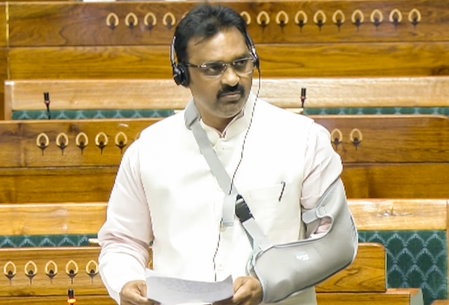
In addition, the Ministry regularly releases funds to the states and J&K based on actual demand and fulfilment of statutory and financial requirements, to ensure smooth implementation of the programme, Minister of State for Rural Development Kamlesh Paswan said in a written reply to a question in the Rajya Sabha.
The Government has made adequate budgetary provision for effective implementation of the programme. For the financial year 2026–27, a Central share of Rs 95,692.31 crore has been provided for the scheme, representing the highest‑ever Budget Estimate for rural employment. With the corresponding estimated State share, the total programme outlay is expected to exceed Rs 1.51 lakh crore, the minister said.
The Government has enacted the Viksit Bharat – Guarantee for Rozgar and Ajeevika Mission (Gramin): VB–G RAM G Act, 2025, which came into force on July 1, 2026 across all rural areas of the country. The Act strengthens the rural employment guarantee framework by enhancing the statutory employment guarantee from 100 days to 125 days per rural household in a financial year, the minister further stated.
The Act accords high priority to livelihood‑related infrastructure as one of its core thematic areas. It adopts a whole‑of‑Government approach through convergence with agriculture, allied sectors and other Government programmes. It permits the creation of rural infrastructure such as Skill Development Centres, Rural Libraries, Digital Learning Centres and other community assets that promote skilling, learning and sustainable livelihoods, the minister explained.
He said the Government continuously reviews the implementation of the programme in consultation with the States and J&K and takes appropriate measures to address implementation‑related issues. The Ministry has also deputed a large number of officers to the States to review its implementation and provide handholding support, he added.
–IANS
sps/dan