FOCUS

FOCUSINDIASPECIALTOP STORIES

The Third Eye: Happiness, exploring its paradigms

New Delhi, Sep 21 (IANS) Can there be a meaningful discussion on happiness per se, and can a recipe of sorts be framed for anybody who was seeking it?

Poverty is the biggest curse, and body illness another killer of joy, but beyond these debilitating factors, it can be seen that sources of unhappiness lie in the ‘past’, the ‘present’ and even in the perceived ‘future’.

One cannot erase memories of one’s past, particularly if they recall what appeared to be “sinful acts” on one’s part. Generally, one tries to sublimate them by adopting “cause and effect” logic for diverting the blame, but the overhang of the past is a reality that impacted one’s happiness in the long term.

Now, no two human beings are totally identical because their past, present, and future are full of inevitable variables.

An individual is known for one’s own qualities of ‘head’ and ‘heart’ in the present, and he or she cannot be in the frame of another person on that count.

As regards the future, it becomes relevant to happiness as a phenomenon because fear, anxiety, aspiration, expectation of the result of an effort and the degree of self-confidence with which one would face a contingency- all belong to that realm producing its own set of differentials.

Happiness has been rightly associated with the ‘sense of peace’ and ‘well-being’ prevalent at any point of time in one’s life- it is all in the mind, and linking it to measurable physical and physiological terms does not complete the story.

It is not without reason that all religions attribute happiness to an enlightened or awakened state of mind; they imply that lasting bliss originates from the spiritual realm, while happiness, as traditionally understood, belongs to ‘moments’.

As indicated earlier, ‘poverty’ and body ‘illness’ destroyed happiness, but outside of these limitations, it can be easily seen that a combination of “awareness” and “acceptance” is a powerful tool for reaching that “sense of peace” and feeling of ‘well-being’ that have been mentioned earlier as the foundational requisites of happiness.

If there is a minimal awareness that everybody was not “born with a silver spoon”, that one could not be prevented from making his or her best efforts in pursuit of an objective and that even peak performers would not get to the same goal because of nature-driven imponderables, there would be an easier ‘acceptance’ of what spiritual traditions tended to term as “destiny”.

Fulfilling the call of “duty”, making effort without entertaining any “fear of failure” and not letting greed, envy and ill-will come in the way of one’s pursuit are powerful aids to providing self-satisfaction that creates mental “peace” and a sense of “well-being” – the hallmarks of happiness.

Can there be a measuring scale to determine the degree of one’s happiness? Happiness is a state of fulfilment, and it is either there or not there. There is no state like being ‘half happy’. There could be lifestyle tips for being ‘happy all the time’, but happiness of any sane person would have physical, temperamental and spiritual components that belonged only to him or her, limiting the utility of a common prescription.

It cannot be denied that only a thinking mind would produce that rare combination of ‘awareness’ and ‘acceptance’ that generated a sense of peace and well-being – the ultimate foundations for happiness. There can be no ‘medicine’ for producing happiness, beyond some kind of hormonal ‘correction’ to be administered where required -and while lifestyle improvements were in order, it was difficult to switch on the ‘happiness button’ just like that.

Indian tradition recognised the value of spiritual preaching that tried to spell out what value system one could adopt to get on to the path of peace and self-satisfaction, but this was not the same thing as providing a sure shot for happiness. A guide to purposeful living is always valid, but it is not necessarily a guarantee for happiness.

Happiness is a state of mind that was marked by sanity, belief in values and preparedness to own the situation when things seemed not to be working out for no reason- in short, these are the attributes that made it possible to achieve the right combination of ‘awareness’ and ‘acceptance’. Today, we live in the era of Artificial Intelligence.

AI provides new tools of business, new products and services and new methods of knowledge creation, but it also brings out the importance of ‘imagination’ that is a gift nature has given to the human mind, not to the machine.

‘Machine learning’ did not involve imagination. The Nobel Peace Prize for Physics was given last year for research in AI, and the two professors who got it did not hesitate to warn that AI could even lead to ‘apocalypse’ if humanity became overly dependent on it.

It is ironic that today’s highest achievement in science could open up the route to disaster if misused. It perhaps implies that happiness lies in doing something that was for the larger human good. The concept of ‘Vasudhaiva Kutumbakam’ (‘Earth is one family’) preached and practised by our thinking sages, suggested a caring attitude towards others to spread happiness.

The idea of happiness is best preserved as a thought and is brought closer to real life when it becomes a continuum lived through on a day-to-day basis. One has to learn to ‘eliminate’ unhappy thoughts to make this continuum.

Time spent usefully largely helps in this. This is why the call of the Gita for remaining engaged in ‘Nishkama Karma’ (duty without seeking a reward) is a philosophy of life that promises innate happiness. There is a certain simplicity about the idea of happiness- academically researching it is fine, but this had to be done with an understanding that human life was so individualistic and the perceptions and beliefs on happiness are so scattered that only certain parameters of a “happy” life could be identified without fear of contradiction.

‘Good deeds’ emerge as a fairly well-established source of happiness, and so do norms like being kind-hearted, helpful to others and devoted to one’s duty. What you achieve in life through legitimate means is, of course, a primary instrument of happiness, but it is also true that what others think of you as a human being becomes an equally important validation.

Happiness is a sense and a feeling, and it is strengthened by the qualities one brings to bear upon the treatment given to others. You do not have to be a ‘saint’ to feel happy-it is enough if you have no regrets about what you did in life as a lesser mortal, had the larger awareness that life had a beginning and an end and carried a conviction that karma was a guarantee of where you would stand in the scale of happiness.

It is all about what you feel at the end of the day, based on a recall of what you did at any point in time in between.

Happiness comes in moments- the longer these can be strung together, the better the prospect of sustaining it.

(The writer is a former Director of the Intelligence Bureau)

–IANS

dc pathak/svn

Read More
FOCUSINDIASPECIALSTATETOP STORIES

Four Sudanese, one Bolivian national nabbed in Bihar, had sneaked in via Nepal border

Motihari, Sep 21 (IANS) Five foreign nationals were apprehended in a joint operation by the police and the Sashastra Seema Bal (SSB) from the Ghodasahan area of East Champaran district of Bihar.

They are currently being questioned. The apprehended foreign nationals had reached Bihar via Nepal.

It is reported that late on Saturday night, the SSB received information that some suspected foreigners were trying to go to Patna and had left a village here.

The SSB officials immediately informed the police. A joint team of SSB and Bihar Police reached the Ghodasahan bus stand and launched a search, an official said.

The police then detained four occupants of the passenger bus. One person was later caught.

Four of the foreigners arrested are Sudanese, and one is a Bolivian national. Notes written in Urdu, some books and documents have been recovered from them.

The Motihari Police have also informed their top officials at the headquarters. The police said that they were interrogating all five.

All those arrested are said to be between 30 and 40 years of age. The police are examining the documents found in their possession.

The arrested have been identified as Abdul Fitah (44) from Sudan, Rama Siddiqui (38), Ali Abdul Ghaffar (27), Ahmed Dafaala (37), both residents of Sudan and Miguel Solano Chavez, a resident of Bolivia; East Champaran Superintendent of Police Swaran Prabhat told IANS.

He said that during the interrogation, the Sudanese citizens had admitted to studying in Hyderabad. However, they were not able to provide any clear information about coming to Bihar via Nepal.

The Intelligence Bureau has also been informed about the arrests, said the police officials.

Recently, the SSB apprehended five prisoners who had escaped from a jail in Nepal and were attempting to cross into India. The prisoners were caught along the India-Nepal border in Uttar Pradesh’s Siddharthnagar district while attempting to infiltrate into Indian territory.

India and Nepal share an open, 1,751-km-long border across five Indian states — Uttarakhand, Uttar Pradesh, Bihar, West Bengal, and Sikkim.

–IANS

mnp/dpb

Read More
FOCUSINDIASPECIALTOP STORIES

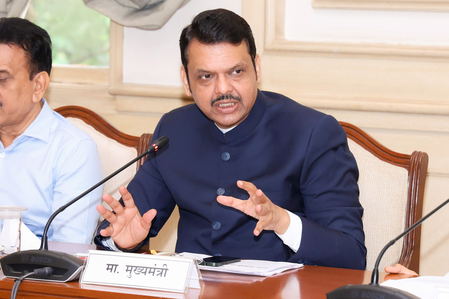
Rahul Gandhi has insulted voters of Maharashtra by making baseless remarks: CM Fadnavis

Mumbai, June 7 (IANS) Chief Minister Devendra Fadnavis on Saturday criticised Leader of Opposition in Lok Sabha and Congress MP Rahul Gandhi over his write-up in a daily in which he alleged that Maharashtra Assembly elections in 2024 were a blueprint for rigging democracy.

CM Fadnavis in his reaction said: “Rahul Gandhi has accepted his defeat in Bihar! As long as Rahul Gandhi keeps giving himself false assurances, his party can never win. By making such baseless remarks, Rahul Gandhi has insulted the voters of Maharashtra, and for this, I strongly condemn him.”

On the other hand, Shiv Sena MP Milind Deora also targeted Rahul Gandhi. He said: “Blaming the Election Commission or EVMs months after losing reeks of sour grapes. Instead of peddling conspiracy theories, the Opposition should take a long, hard look in the mirror. After all, a bad carpenter always blames his tools.”

Earlier, Congress in-charge (Maharashtra) Ramesh Chennithala claimed that the state’s democracy was not defeated but it was butchered.

Strongly defending Rahul Gandhi’s observations in his write-up, he said that with irrefutable facts and unflinching clarity the leader of opposition has exposed a chilling truth. “The mandate of the people in Maharashtra was hijacked — not by the will of the voters, but through manipulation, deceit, and a systematic assault on democratic institutions,” he alleged.

“Rahul Gandhi’s powerful expose is not merely an article — it is a wake-up call. It exposes how Maharashtra, once a proud torchbearer of democratic values, has become a cautionary tale of how institutions can be compromised, how power can be snatched instead of earned, and how silence can become complicity. This is no longer about one state or one election. It is about the soul of our democracy,” said Chennithala.

“We urge the Election Commission to break its silence. The people of Maharashtra — and of India — deserve answers.We call upon every citizen to stay vigilant, stay informed, and stay united. For if we allow such subversion to go unchecked, we may soon lose not just elections — but the very freedoms that define us,” he added.

Further, Maharashtra Pradesh Congress Committee president Harshwardhan Sapkal said that Rahul Gandhi’s article sparked a political earthquake and asked why there is no probe into Maharashtra Assembly election fixing.

“Why are BJP leaders Amit Shah and Devendra Fadnavis answering questions meant for the Election Commission? Why is the Commission silent? The ‘Maharashtra Pattern’ of vote tampering is a conspiracy to be used in Bihar, Mumbai civic polls, and upcoming local body elections,” he alleged.

He announced that the Congress would hold torchlight protests across Maharashtra on June 12.

–IANS

sj/pgh

Read More
FOCUSSOUTH ASIATOP STORIESWORLD

US Supreme Court denies Tahawwur Rana’s request to stop extradition to India

Washington, April 7 (IANS) The US Supreme Court on Monday rejected a petition by Tahawwur Rana to stop his extradition to India to face legal consequences for his role in the 2008 terrorist attacks in Mumbai that killed 157 people.

“Application (…) denied by the Court,” read the Supreme Court docket as updated Monday.

Rana had tried to stop his extradition, citing fears of torture, citing a UK case.

“A man convicted of money laundering was prevented from being extradited by a London court upholding his fears of torture. If that person could not be extradited to India because he was likely to be tortured, the petitioner is even more likely to be tortured and similarly should not be extradited,” Tillman J. Finley, counsel to Rana, said in the application.

The application was rejected by Justice Elena Kagan in March. Rana went on appeal to Chief Justice John Roberts, and the matter was posted for conference on Friday.

The justices’ verdict was posted on Monday.

Rana is wanted in India for helping David Coleman Headley, a Pakistani-American found guilty by a US jury of scoping out the targets hit by the Lashkar-e-Tayyeba terrorists in 2008.

Although he was acquitted by a US jury of providing material support for the attacks, he was found guilty of two other charges for which he was sentenced to more than 10 years in prison.

Due to failing health in the aftermath of the COVID-19 epidemic, he was ordered to be released from jail. But he was rearrested for extradition to India.

Headley had secured himself a guarantee against extradition in a plea deal with US authorities.

Rana appealed against his extradition and had now exhausted his legal options with his appeal to the chief justice being denied.

President Donald Trump had announced his extradition to India during Prime Minister Narendra Modi’s visit to the White House in February.

Rana had subsequently gone to the Supreme Court to stop his extradition.

It could not be immediately ascertained how soon he will be on a flight to India.

–IANS

yrj/dan

Read More
FOCUSINDIASPECIALTOP STORIES

JU crisis: Fresh petition in Calcutta HC claims police excesses against students

Kolkata, March 10 (IANS) A fresh petition at a division bench of the Calcutta High Court was filed on Monday alleging police excesses against the students of Kolkata’s iconic Jadavpur University (JU) in the March 1 ruckus case.

Two students were hospitalized after being “allegedly and deliberately” hit by the vehicle of West Bengal Education Minister Bratya Basu on the university premises.

The fresh petition has been filed at the same single judge bench of Justice Tirthankar Ghosh, which had last week, while hearing a similar case on the Jadavpur University crisis, expressed ire over the alleged “biased and one-sided” investigation by the Kolkata Police. The court had also directed the city police to register FIRs based on the complaints filed by the university students instead of just addressing the complaints filed by the Trinamool Congress-affiliated West Bengal College & University Professors’ Association (WBCUPA).

The fresh petition was filed by Uddipan Kundu, an activist of CPI(M)’s student wing, the Students’ Federation of India (SFI). The matter is likely to be heard on Tuesday.

In the petition, Kundu has accused the police of “repeatedly” and “unnecessarily” summoning the university students in the name of an investigation.

He accused the police of harassing the students when the latter refused to hand over their mobile phones to the cops during the earlier interrogation of March 7. Thereafter, Kundu alleged, the same students were summoned again by the cops for interrogation.

On March 1, a ruckus broke out within the university campus when the Minister’s car was allegedly stopped after it entered the campus, and a scuffle followed. The students were demanding immediate elections for the university’s students’ council.

The agitating students alleged that while Base decided to leave the campus in the face of the protests, his vehicle deliberately hit the two agitating students, following which they were severely injured and had to be hospitalized.

Amid the protests, the Minister received minor injuries and fell sick. He was taken to the state-run S.S.K.M. Medical College & Hospital and was discharged later.

During the hearing on another case in the same matter last week, Justice Ghosh made some observations on the intelligence failure of the Special Branch of the Kolkata Police, saying that they did not have prior information about student agitation while the Education Minister was there.

Drawing a reference to the recent students’ movement in Bangladesh, Justice Ghosh also observed that if such intelligence failures continue, the situation in the state might become serious in the future, like that in the neighboring country.

–IANS

src/dpb

Read More