WORLD

TOP STORIESWORLD

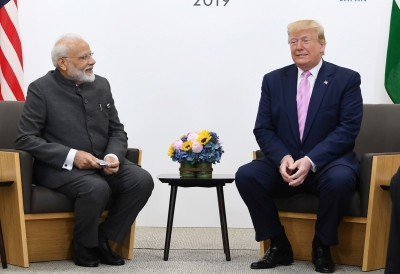
‘US-India defence ties strong, political ties at low point’
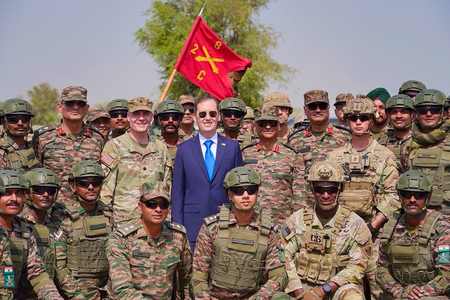
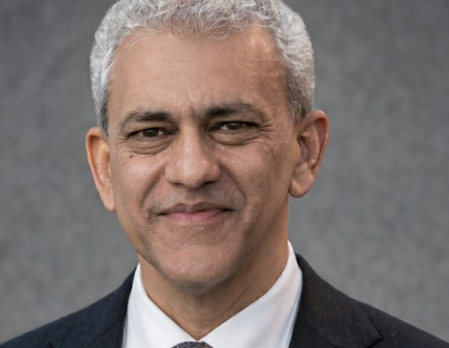
“The defence-to-defence ties are really strong and growing, but the executive-to-executive ties are at a bit of a low point,” Hultquist said, according to the details of the meeting released by the US Army.

“The military instrument for competition is really important, and it’s really the only one that’s working well. But you can’t replace all of the instruments of national power,” he added.

The assessment came during a wider discussion on how the United States can build and sustain alliances and partnerships as strategic competition intensifies across the Indo-Pacific.

Hultquist described India as the focal point of influence in South Asia and said Washington has adopted a hub-and-spoke approach aimed at developing India as a long-term, values-based partner.

India sits at the hub of that approach, reflecting its desire to remain a central regional power, according to the discussion.

“The US has dealt with this by deciding to trade access to the smaller states in the region for a chance at an India partnership,” Hultquist said.

The strategy, according to the presentation, places India at the centre of regional influence and gives Washington a “strategic counterweight” to China.

But China has expanded its economic influence among smaller South Asian countries through its Belt and Road Initiative, complicating US efforts to build partnerships in the region.

The panel said the US-India relationship has nevertheless begun to thaw over recent decades, reflected in an increase in military exercises and collaboration between the two countries’ defence industrial bases.

The discussion also examined the changing role of BRICS and its potential impact on the strategic and economic balance in the Indo-Pacific.

Dr Mahir Ibrahimov, director of the Cultural and Area Studies Office, said the grouping’s expansion had increased its economic weight.

BRICS “represents a collective GDP of more than $31 trillion, accounting for approximately 27 per cent of global GDP, according to recent estimates. This substantial share makes BRICS one of the most influential economic groups in the world,” Ibrahimov said.

“Although some experts note that this organisation might not be unified and efficient in achieving its stated results, however, it’s very important to note that BRICS is increasingly attempting to position itself as a counterweight to US-led financial dominance, and the petrodollar sits at the centre of that shift,” he said.

The panel also examined Japan and the Association of Southeast Asian Nations as Washington and Beijing compete for influence.

Lt. Col. Jason LeVay, an instructor at the Command and General Staff College, said Southeast Asian governments place particular importance on maintaining their freedom of choice rather than being forced into competing camps.

“The important point from a Southeast Asian perspective is that either relationship becomes problematic when it begins to reduce sovereign choice,” LeVay said.

“The United States does not necessarily need Southeast Asian states to choose America. It needs to remain a partner they repeatedly choose,” he added.

India and the United States have significantly expanded defence cooperation over the past two decades, including through more frequent military exercises, defence technology initiatives and agreements intended to improve military interoperability.

India is also a member of the Quad alongside the United States, Japan and Australia. New Delhi has simultaneously maintained its emphasis on strategic autonomy and its participation in BRICS, reflecting its approach of pursuing relationships with multiple major powers rather than entering a formal US-led alliance.

–IANS

lkj/sd/
Read More
TOP STORIESWORLD

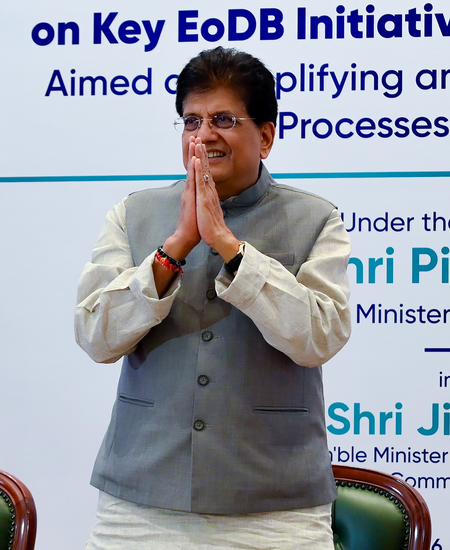
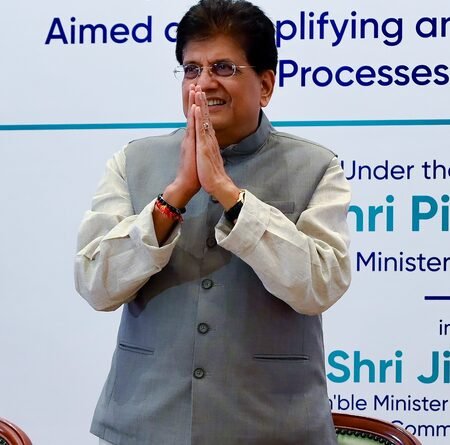
G20 trade talks open in Milwaukee; Piyush Goyal represents India

Milwaukee, Oct 1 (IANS) Trade ministers from the world’s major economies began two days of talks in Milwaukee, with India represented by Union Commerce and Industry Minister Piyush Goyal, as the United States pushed for coordinated action against global steel overcapacity and changes to some rules governing international trade.

The G20 Trade Ministerial, hosted by United States Trade Representative Jamieson Greer, opened on Wednesday (local time) against the backdrop of tariff tensions, concerns over excess industrial capacity and growing differences among major economies over the future of the global trading system.

The first concrete development came from a meeting of the Global Forum on Steel Excess Capacity, where participating countries agreed on a new framework for coordinated action against excess steel production.

Greer said the “Milwaukee Framework” would seek stronger coordinated action against excess capacity. The framework includes measures covering trade remedies, monitoring steel supply chains and greater scrutiny of transhipment.

Asked whether countries had agreed to increase tariffs on Chinese steel, Greer said individual governments would decide their own course.

“Well, every country will do what they think is appropriate,” Greer said. “We want to coordinate those measures. The United States has taken robust measures, and it probably makes sense for other countries to do that too.”

The steel issue is part of a broader US agenda for the ministerial that includes eliminating forced labour from global supply chains, updating the Most-Favoured-Nation principle, opposing the weaponisation of trade in food and addressing structural excess capacity and production.

Goyal is representing India at the ministerial and is also holding bilateral meetings with counterparts on its sidelines.

India has said it will work toward “a rules-based, open, inclusive, transparent, equitable and non-discriminatory multilateral trading system, with the World Trade Organization at its core, while ensuring adequate policy space for developing countries.”

The position is significant as the United States has put updating the Most-Favoured-Nation principle, one of the foundations of the WTO trading system, on the Milwaukee agenda.

The meeting also comes as New Delhi and Washington seek to advance negotiations for an India-US Bilateral Trade Agreement and finalise an interim trade deal.

The Commerce Ministry has said Goyal will engage bilaterally with his US counterpart “as part of ongoing efforts to advance a balanced and mutually beneficial India-US Bilateral Trade Agreement (BTA) and finalise an interim deal in line with the Joint Statement of 7 February 2026”.

The trade discussions received added political attention Wednesday after Prime Minister Narendra Modi and President Donald Trump spoke by telephone and discussed bilateral cooperation, including trade, defence, energy and emerging technologies.

Before the formal ministerial discussions, Goyal met CEOs and senior executives of American manufacturing and technology companies at a roundtable organised by the National Association of Manufacturers.

He invited American manufacturers to deepen their presence in India, work with Indian small and medium enterprises and explore co-investments in advanced manufacturing and resilient supply chains.

Goyal said the India-US economic relationship was expanding beyond traditional trade to include investment, manufacturing, technology, innovation and resilient supply chains.

The G20 ministers also visited Rockwell Automation in Milwaukee on Wednesday, part of an effort by the Trump administration to put American manufacturing at the centre of the gathering.

Greer has said Milwaukee was deliberately chosen to showcase US factories to visiting trade ministers.

“We thought it would be really helpful to bring trade ministers here, to Milwaukee, to be a showcase,” Greer said ahead of the formal talks. “I could take them to great places like Sun Valley or other things like that, but we wanted them to see American factories”, so they could “see what we’re trying to protect.”

The gathering has also become a venue for a series of bilateral trade discussions.

Canadian International Trade Minister Maninder Sidhu is attending the meeting and is expected to speak with Greer. Sidhu is also scheduled to meet India’s representative on Thursday as Ottawa seeks to advance an economic partnership agreement with New Delhi.

Canada has said it will use the Milwaukee meeting to present itself as an “open, predictable and rules-based” trading partner while seeking greater diversification of its trade relationships.

Russia is represented by Economic Development Minister Maxim Reshetnikov, while Japan is among the major economies participating in the discussions.

The Milwaukee meeting continues Thursday with further ministerial sessions. Greer is scheduled to hold a press conference in the afternoon before ministers return for their final session.

The G20 brings together the world’s major developed and emerging economies and has become an important forum for addressing tensions over trade, industrial policy and supply chains. This week’s meeting precedes the G20 leaders’ summit that the United States will host later this year.

–IANS

lkj/sd/

Read More
TOP STORIESWORLD

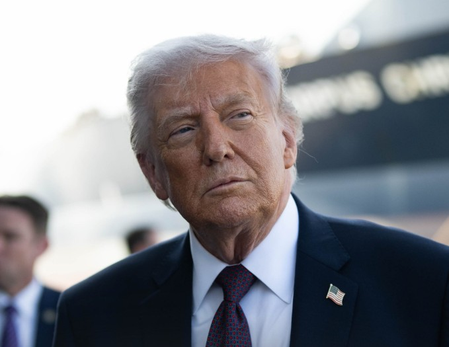
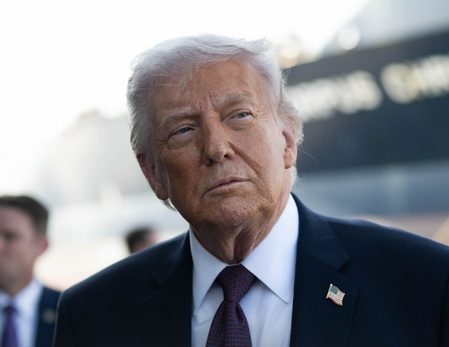
Iran’s been virtually destroyed, war will be won very quickly, says Trump

Washington, Oct 1 (IANS) US President Donald Trump has said that the United States would win its war with Iran “very quickly”, claiming Tehran’s military capabilities had been severely degraded and Washington had established “virtually total control” of the strategically vital Strait of Hormuz.

Trump made the remarks on Wednesday (local time) during a White House event marking National Hispanic Heritage Month, where he ranged across foreign policy issues including Iraq, Iran and Venezuela before turning to the theme of the celebration.

“Likewise in Iran, we have been there for six months with 18 killed. By the way, one is too many. But they lost 4,500. We lost 18,” Trump said.

“And we have very soon — you’ll see things happening very soon,” he added.

Trump claimed Iran had suffered extensive military and economic damage.

“But we have a nation that’s been virtually destroyed. Their economy is no good. They have 300 per cent-plus inflation,” he said.

“Their navy is gone. Their air force is gone. Their anti-aircraft equipment is gone.”

Trump then turned to the Strait of Hormuz, one of the world’s most important energy shipping routes.

“The last week in the Hormuz Strait, which we have almost total control — I would say total, but every once in a while they’ll drop a mine in there and disrupt things a little bit, but we have virtually total control of the Hormuz Strait,” he said.

Trump also claimed that oil movements through the waterway had reached a record level over the past three days.

“And in fact, in the last three days more oil has come out of the Hormuz Strait than at any time in the history of the Hormuz Strait,” he said.

“I’m not talking about since the war. I’m saying at any time in history. It’s been — it’s been pent up.”

Trump did not provide figures to support the claim during his remarks.

The President suggested that the conflict with Iran could soon reach a decisive stage, but did not spell out what actions the United States planned next.

“We have another one where we’re six months in. And we have — you know, their military is totally wiped out. And we’re going to have that war won very quickly, one way or the other,” Trump said.

“They’ll either be one way or the other. Does anyone know what that means? I don’t know.”

His remarks on Iran came immediately after he compared the conflict with US military operations in Venezuela and the long American military involvement in Iraq.

Trump announced at the same event that the last American forces were leaving Iraq, describing the withdrawal as the end of a 23-year US military involvement there.

“We came to fight a caliphate; and there is no longer a caliphate, so we are going home indeed,” Trump said.

He said the United States had lost more than 4,500 military personnel during the Iraq conflict and more than 31,000 had been injured.

Trump contrasted those figures with the casualties he cited from the conflict with Iran and repeatedly presented the comparison as evidence of a different approach to US military operations.

The Strait of Hormuz connects the Persian Gulf with the Gulf of Oman and the Arabian Sea. It is a critical route for oil and liquefied natural gas shipments from major Gulf producers to international markets, including Asian economies.

–IANS

lkj/sd/

Read More
TOP STORIESWORLD

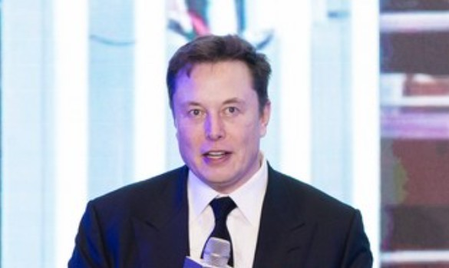
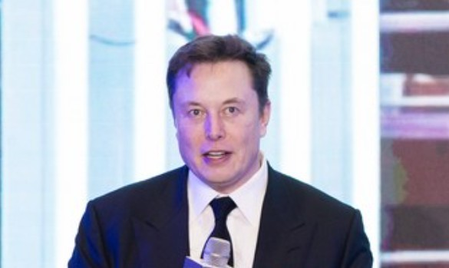
Elon Musk to co-lead Pentagon study on future of warfare

Washington, Oct 1 (IANS) Elon Musk, Palmer Luckey and former House Speaker Newt Gingrich will co-direct a Pentagon study on future warfare, with a public report due within 120 days, the US Department of War has announced.

Secretary Pete Hegseth commissioned Project Meridian to identify the capabilities the United States will need to maintain long-term military superiority. The study will examine potential battlefield requirements across a broad range of domains, including underground operations and the Earth-Moon region.

The department’s chief technology officer, Emil Michael, is facilitating the project. Its three co-directors will be supported by experts from academia, policy and industry, according to the official release.

The department said: “Project Meridian will examine the full spectrum of future warfighting domains, from subterranean depths to the cislunar frontier.”

Hegseth directed the project to be completed within 120 days of its establishment. The final report will be unclassified and released publicly, with a separate classified annex.

The department said the report would contain findings and recommendations on the advanced systems needed for future conflicts. It presented the exercise as an effort to identify technological requirements and accelerate the introduction of those systems into military service.

The department added: “Should deterrence fail, our warfighters must enter any future conflict with the technological advantage secured through today’s foresight, resolve, and preparation.”

Project Meridian was one of six initiatives Hegseth unveiled during a speech at Marine Corps Base Quantico in Virginia. He addressed active-duty officers and non-commissioned officers who would be involved in carrying out the changes.

The other initiatives cover autonomous warfare, officer training, domestic supply chains, military installations and religious support.

Hegseth announced plans to establish an Autonomous Warfare Command as a four-star functional combatant command by October 1, 2027. The department said the initiative would expand the use of autonomous systems across the joint force.

A separate programme, FORTRESS America, seeks to strengthen military installations against disruption and reduce dependence on foreign sources for critical materials and components.

Its stated priorities include independent power generation at major bases, domestic supply chains for rare earths and semiconductors, strategic reserves of essential supplies, and protection against cyberattacks, sabotage and drones.

The Next Great American Base project would create a new military installation with independent power generation, autonomous systems and advanced air defences. States would compete to host it by submitting proposals offering land and support.

The department also announced America’s Corps of Cadets, involving additional full-time programmes at five universities and colleges, and an Office of Religious Affairs reporting directly to Hegseth.

It said the religious affairs office would support the service chaplaincies and protect voluntary access to religious support, without compelling participation or favouring one faith.

Musk founded SpaceX in 2002. The company designs and launches rockets and spacecraft. Luckey founded Anduril Industries, a US defence technology company.

Gingrich, a Republican from Georgia, served as speaker of the US House of Representatives from 1995 to 1999. He held the position during the 104th and 105th Congresses.

–IANS

lkj/sd/

Read More
TOP STORIESWORLD

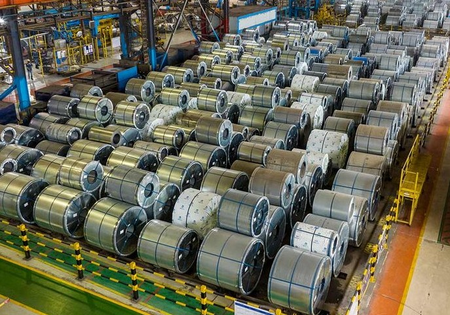
US-led steel forum targets global overcapacity

Milwaukee, Oct 1 (IANS) A US-led group of major steel-producing economies has agreed on a new framework to tackle rapidly rising global steel overcapacity, including stronger trade measures, scrutiny of subsidies, and coordinated action against circumvention of tariffs and other restrictions.

The Global Forum on Steel Excess Capacity (GFSEC), meeting in Milwaukee on Wednesday under the chairmanship of US Trade Representative Jamieson Greer, reached consensus on what it called the ‘Milwaukee Framework’ for joint action.

The agreement comes as global steel excess capacity is projected to rise from 601 million tonnes in 2024 to 745 million tonnes by 2028, its highest level in a decade. The forum said the projected surplus would exceed the current combined production of GFSEC members by 319 million tonnes.

The framework commits participating economies to work through their national legal systems to reduce and eliminate market-distorting subsidies and other government support that contributes to persistent steel overcapacity. Members also recommitted to World Trade Organisation agreements and a fair and rules-based trading system.

It calls for governments to improve supply-chain transparency, including by collecting “country of melt and pour” information that can help determine the origin of steel and identify possible circumvention and suspicious trade patterns.

The framework also envisages anti-dumping and countervailing duty investigations, global safeguard investigations and, where appropriate, other trade measures on steel and steel-containing products from sources of global excess capacity.

Members agreed to coordinate efforts to detect circumvention and monitor trade diversion so their markets do not become a “backdoor” for steel displaced from other countries.

“Under President Trump, the U.S. steel industry is undergoing a renaissance on the strength of tariffs, trade deals, favorable tax treatment, improved energy policy, and the American entrepreneurial spirit,” Greer said.

“If like-minded partners adopt similar policies, they can hold accountable those countries that are contributing to the problem of global overcapacity in steel,” he said.

Greer said the United States would work with other members to implement the framework and “restore a global level playing field for our workers and producers”.

The ministerial statement identified non-market policies and practices in some non-GFSEC economies as a major concern. Members agreed to collect information on such practices, identify possible responses and consider incorporating further measures into the framework.

China figures prominently in the forum’s assessment. OECD data cited by GFSEC said a typical Chinese steel firm receives subsidies through grants, tax concessions and below-market borrowing at a level about 15 times higher relative to its assets than a typical firm elsewhere. It said China’s steel subsidy rate has nearly doubled since 2019.

Chinese steel exports reached a record 131 million tonnes in 2025, according to the document, an increase of 153 per cent since 2020. Chinese steelmakers are also adding 70 million tonnes of new capacity abroad, particularly in Southeast Asia and Africa.

Kevin Dempsey, president and CEO of the American Iron and Steel Institute, welcomed the agreement, saying it would strengthen efforts against excess capacity and the circumvention and evasion of steel trade measures.

“It is critical to the long-term health of the global steel sector that GFSEC Members follow through on the commitments made today in Milwaukee,” Dempsey said.

The Milwaukee meeting included representatives from more than 30 economies, among them the United States, European Union, Canada, Japan, South Korea, Mexico, Brazil, Australia, the United Kingdom, Indonesia, Malaysia, Thailand and Vietnam.

–IANS

lkj/sd/

Read More
TOP STORIESWORLD

‘Injured Flydubai pilot stable’: Indian Mission in Saudi Arabia

New Delhi, Oct 1 (IANS) India’s Embassy in Riyadh and the Consulate General of India in Jeddah on Wednesday said they were closely monitoring the health condition of Captain Smit Machchhar, the Indian pilot of Flydubai flight FZ1073, who was injured after helping avert a major in-flight crisis that led to the aircraft being diverted to Tabuk in Saudi Arabia.

In a statement posted on X, the Indian Embassy in Riyadh said both Indian missions in Saudi Arabia had been following developments related to Captain Machchhar’s medical condition.

According to the embassy, the pilot is currently admitted to a hospital in Tabuk city in northwest Saudi Arabia and is receiving necessary medical treatment.

The mission said it was awaiting a detailed update on his health, but initial reports indicated he was stable.

“We hope that he recovers from his injuries at the earliest,” the embassy stated.

The Indian mission also said it was in touch with Captain Machchhar’s family and assured them it would extend all possible assistance in coordination with Saudi authorities.

“We are in touch with his family and assure them that we will continue to follow up on his health with Saudi authorities and extend all possible assistance for his well-being,” the statement added.

The embassy’s update came hours after senior Israeli leaders lauded Captain Machchhar’s role in preventing what they described as a potentially catastrophic incident aboard the aircraft.

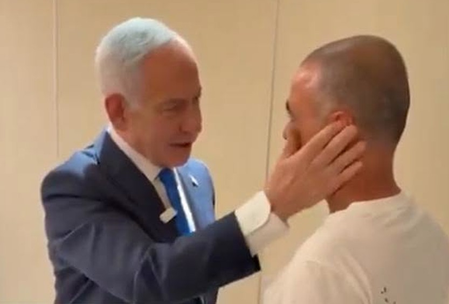
Israeli Prime Minister Benjamin Netanyahu described the Indian pilot as a “true hero” and praised his “extraordinary bravery”.

In a statement issued through the Prime Minister’s Office on X, Netanyahu said Captain Machchhar was stabbed and seriously injured during the incident but fought back and continued to act to protect those on board.

According to Netanyahu, the pilot resisted the attacker, opened the cockpit door, and enabled passengers and crew members to overpower the assailant, thereby preventing a major mid-air disaster.

“He saved the lives of 174 people, including Israeli citizens and other nationals,” Netanyahu said.

The Israeli Prime Minister also wished Captain Machchhar a speedy and full recovery.

Joining the praise, Israeli diplomat Reuven Azar said he was praying for the pilot’s recovery and described him as an experienced and gifted aviator.

Referring to Flydubai flight FZ1073, Azar said Captain Machchhar’s courage, along with that of Israeli and Emirati passengers and crew members, helped save everyone on board.

“His courage and the courage of other Israeli and Emirati passengers and crew members saved the lives of 180 souls,” Azar said.

He also called for a united stand against terrorism.

The statements from Indian and Israeli authorities came amid growing international recognition for Captain Machchhar, whose actions during the emergency have drawn praise from governments and passengers alike.

While Indian officials focused on his medical condition and welfare, Israeli leaders highlighted his role in helping avert a potentially devastating tragedy and safeguarding the lives of those on board the diverted Flydubai flight.

–IANS

scor/dan

Read More
TOP STORIESWORLD

US envoy calls Trump-PM Modi phone conversation ‘very good’

New Delhi, Oct 1 (IANS) After Prime Minister Narendra Modi and US President Donald Trump held a direct phone conversation on Wednesday, US Ambassador Sergio Gor offered a brief reaction the same day.

On his X account, he called the conversation “very good,” writing, “A very good call between President Trump and Prime Minister Modi!”

Both leaders covered practical areas of joint work, including trade flows, defence arrangements, energy supplies, and critical technologies. They also shared views on broader regional developments and steps to support global stability.

After the talk, PM Modi posted a brief note on X describing the exchange as productive. He listed the same sectors and noted that both sides would keep talking regularly to build on the existing comprehensive global strategic partnership.

The Prime Minister’s Office later released a matching summary, adding that the two leaders planned to stay in contact.

This latest contact sits against a larger backdrop of steady expansion in the relationship. Senior figures in the current US administration have already sketched an ambitious set of next steps.

They have indicated that a presidential visit to India is under active consideration for early next year and have described New Delhi as one of Washington’s closest strategic partners.

The ambassador’s quick public endorsement and earlier signals from senior officials suggest ongoing high-level contact. Practical cooperation across multiple domains continues to take centre stage, while both capitals keep an eye on broader international matters.

The conversation appeared straightforward and focused, with both leaders emphasising the need to keep the channels open for further discussion.

Back in June, both Secretary of State Marco Rubio and Ambassador Gor gave exclusive interviews to IANS at the White House. Each portrayed the ties as stronger than ever. They pointed to rising activity across trade, defence, energy, advanced technologies and Indo-Pacific coordination. Rubio confirmed that work was under way to arrange Trump’s trip to India in the coming year.

“India is such a close partner and ally of the United States, and the relationship between the Prime Minister and the President couldn’t be closer, which I think is really important in diplomacy,” Rubio had said.

While Gor had described the relationship between the two leaders as “one of the big anchors” of India-US ties.

“The President and Prime Minister are great friends, and that’s something that goes back years ago, and it’s something that will continue to go years ahead,” he had said.

–IANS

sktr/dan

Read More
TOP STORIESWORLD

Israeli PM hails Indian pilot Captain Smit Machchhar as ‘true hero’ after foiling mid-air attack

New Delhi, Oct 1 (IANS) Israeli Prime Minister Benjamin Netanyahu has praised Indian pilot Captain Smit Machchhar for his “extraordinary bravery” in preventing what he described as a potential mid-air catastrophe after the pilot was allegedly attacked during a flight but continued to act to safeguard passengers and crew.

In a statement posted by the Office of the Israeli Prime Minister on social media platform X, Netanyahu said Captain Machchhar displayed exceptional courage despite being seriously injured.

“My salute to the Indian pilot Captain Smit Machchhar for his extraordinary bravery,” Netanyahu said.

According to the Israeli Prime Minister, Captain Machchhar was stabbed and seriously wounded during the incident. However, he fought back, resisted the attacker, opened the cockpit door and enabled passengers and crew members to overpower the assailant.

Netanyahu said the pilot’s actions prevented what could have become a major aviation disaster.

“He saved the lives of 174 people, including Israeli citizens and other nationals,” the Israeli Prime Minister stated.

Expressing concern for the injured pilot, Netanyahu wished him a “speedy and full recovery” and described him as “a true hero”.

The remarks came amid growing international recognition of Captain Machchhar’s role in averting the threat aboard flydubai flight FZ1073.

Joining the praise, Israel’s Ambassador to Cyprus, Reuven Azar, also paid tribute to the Indian pilot and the passengers and crew members who helped neutralise the threat.

In a post on X, Azar said he was praying for Captain Machchhar’s recovery and described him as an experienced and gifted pilot.

“Together with nations, I pray for the life of Captain Smit Machchhar, the experienced and gifted hero Indian pilot of flydubai flight FZ1073,” Azar wrote.

The Israeli diplomat said the courage shown by the pilot, along with that displayed by Israeli and Emirati passengers and crew members, helped save all those on board the aircraft.

“His courage and the courage of other Israeli and Emirati passengers and crew members saved the lives of 180 souls,” he said.

Azar also used the occasion to call for unity against terrorism, declaring: “United against terrorism.”

The statements from senior Israeli leaders highlight the international attention generated by the incident aboard flydubai flight FZ1073 and the widespread praise being directed at Captain Machchhar for his actions during the emergency.

Netanyahu’s remarks focused on the pilot’s role in ensuring that passengers and crew were able to regain control of the situation despite the alleged attack, while Azar praised the collective efforts of the pilot, passengers and crew in preventing loss of life.

The messages also underscore the presence of Israeli citizens among those whose lives were allegedly saved during the incident.

As Captain Machchhar continues to receive treatment for his injuries, messages of support and appreciation have continued to pour in from across countries, with Israeli leaders describing him as a symbol of courage in the face of danger and crediting his actions with preventing a far more serious tragedy.

–IANS

scor/dan

Read More
TOP STORIESWORLD

Two Indian nationals convicted in US cargo theft scheme involving $2 million freight fraud

Los Angeles, Oct 1 (IANS) Two Indian nationals have been found guilty by a jury in the United States for their role in a cargo theft conspiracy that involved fraudulently obtaining shipping contracts, stealing freight worth millions of dollars and failing to deliver the consignments to their intended destinations, according to the U.S. Attorney’s Office for the Central District of California.

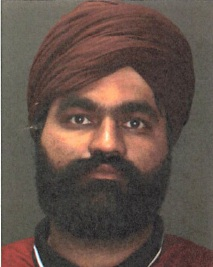
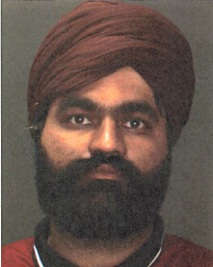
Arshpreet Singh, 28, of Sacramento, and Vikramjeet Singh, 31, of Fontana, were convicted after a seven-day trial of participating in a scheme that targeted warehouses and shippers across Southern California and other parts of the United States.

The jury found both men guilty of one count of conspiracy to commit theft from interstate or foreign shipments. Arshpreet Singh was also convicted of one count of conspiracy to commit wire fraud. Vikramjeet Singh was acquitted of the wire fraud conspiracy charge.

According to evidence presented during the trial, Arshpreet Singh and his co-conspirators operated the scheme between March 2024 and June 2025 by purchasing or fraudulently using legitimate trucking companies to bid for authentic freight contracts.

After securing the contracts, the conspirators allegedly took possession of cargo shipments but failed to deliver them to their destinations, instead stealing the goods.

Prosecutors said the stolen freight largely consisted of high-value consumer products, including televisions, laptops, household appliances and other electronics. Other items stolen during the conspiracy included vacuum cleaners, LED lights, footwear and tyres.

Authorities estimated losses resulting from the thefts at no less than $2 million.

The thefts were carried out across multiple locations in Southern California, including Fontana, Vernon, Santa Fe Springs, Perris, City of Industry, Long Beach, Compton, Commerce, Pico Rivera, Chino and Moreno Valley. Investigators also linked the scheme to activity in Grand Prairie, Texas.

Court records showed that the accused acquired established trucking companies to facilitate the operation.

In one instance cited during the trial, Arshpreet Singh met in March 2024 with the owner of Texas-based carrier Z&F Transportation LLC and agreed to purchase the company for approximately $22,000.

Later that month, a co-conspirator acting on behalf of Z&F Transportation LLC collected a shipment of televisions in Fontana. The cargo was never delivered to its intended destination in Florida.

Prosecutors further alleged that in May 2024, co-conspirators purchased another carrier company, Skyways Trucking LLC, and subsequently used it to steal shipments that included laptops, televisions, solar panels and other merchandise.

The conspirators allegedly booked freight loads through brokers, including Uber Freight, collected the consignments and then failed to transport them to the customers.

United States District Judge Anne Hwang has scheduled sentencing hearings for January 20, 2027.

Arshpreet Singh faces a statutory maximum sentence of 20 years in federal prison, while Vikramjeet Singh faces a statutory maximum sentence of five years in federal prison.

The investigation was conducted by the FBI’s Inland Violent Crime Suppression Task Force, IRS Criminal Investigation, the Fontana Police Department, the San Bernardino County Sheriff’s Department, the Riverside County Sheriff’s Department, the Los Angeles County Sheriff’s Department and the Fort Worth Police Department in Texas.

The case is being prosecuted by Assistant United States Attorneys Stephen Chang of the Transnational Organised Crime Section and Lloyd Masson of the General Crimes Section.

–IANS

scor/dan

Read More
TOP STORIESWORLD

US sanctions Pakistani defence firm CEO

Washington, Sep 30 (IANS) The United States has imposed sanctions on Waseem Pasha Tajammal, the CEO of a Pakistan-based defence company, and three businesses linked to him for allegedly helping Iran procure and distribute weapons.

The action has drawn fresh attention to Pakistan-based defence networks operating across several countries.

The US Treasury identified Tajammal as Chairman of the Cavalier Group, a privately owned defence company with operations in Pakistan and internationally.

The US Treasury alleged that Tajammal and the Cavalier Group acted as third-party intermediaries for Iran’s Ministry of Defence and Armed Forces Logistics, known as MODAFL.

They used Tajammal’s professional network to procure and distribute weapons on behalf of the Iranian Ministry, according to the US Treasury.

Tajammal is the majority shareholder and CEO of Pakistan-based Cavalier Dynamics Private Limited.

He is also a director of Saudi Arabia-based Cavalier Dynamics for Technologies Company. The Saudi company is wholly owned by Cavalier Dynamics Private Limited.

Tajammal additionally serves as director and sole shareholder of Turkey-based Cavalier Dynamics Teknoloji Ticaret Anonim Sirketi.

The US Treasury designated Tajammal under an executive order targeting proliferators of weapons of mass destruction and their means of delivery.

The three companies were sanctioned for being owned or controlled by Tajammal, or for acting on his behalf.

The action against the Saudi company was coordinated with the Saudi government, the US Treasury said.

“Under Operation Economic Outcast, Treasury will continue to target and disrupt those who provide material, technological, or financial support that allows the Iranian regime to sustain its terrorist enterprise,” US Treasury Secretary Scott Bessent said.

“US Treasury will not tolerate any support to the (Iranian) regime and will continue to identify, expose, and isolate Iran’s enablers,” he added.

The action also targeted an Iranian official based in Beijing and a procurement network operating through Iran, China and Hong Kong.

The US Treasury said Seyyed Asghar Alizadeh Tabatabai represented MODAFL in Beijing and coordinated the procurement of finished weapons systems and dual-use components in China.

It also designated Iran-based Kavoshcom Asia R and D Group.

The company allegedly procured electronics for the Iran Aircraft Manufacturing Industrial Company, which develops unmanned aerial vehicles and military aircraft.

Kavoshcom also supplied electronics to the Shahid Bakeri Industrial Group, according to the US Treasury. The organisation is responsible for Iran’s solid-fuel ballistic missile programme.

Hong Kong-based EC Mojo Technology Co Limited and its China-based representative, Li Fen, were sanctioned for allegedly supporting Kavoshcom’s procurement operations.

The US Treasury also designated Kavoshcom director Ali Fotowat Ahmady and representative Parisa Lali.

–IANS

int/lkj/khz

Read More
TOP STORIESWORLD

US: California expands immigrant protections

Washington, Sep 30 (IANS) California Governor Gavin Newsom has signed 21 measures designed to restrict some immigration-enforcement practices, increase oversight of detention centres and give residents greater ability to challenge alleged constitutional violations by federal officers.

The package places California in direct opposition to the Trump administration’s intensified immigration crackdown.

The laws cover detention facilities, enforcement transparency, civil rights, state property, public records, family services and law-enforcement equipment.

“Trump has put his political interests above the health, safety and livelihood of American families,” Newsom said.

“California is taking action to strengthen transparency, accountability, and oversight around immigration enforcement in our state,” he said.

“This is about stepping up where the federal government has failed our communities. We will continue protecting our people, upholding the rule of law, and making clear that if the federal government operates in California, we will hold them accountable,” Newsom said.

One measure imposes a 25 per cent tax on private detention facilities. The revenue will fund immigration-related services.

The legislation also closes a provision that allowed some detention facilities to claim tax-exempt status.

Other measures expand health, safety and oversight requirements for civil detention centres. They provide greater public access to records showing what happens inside privately operated facilities.

The California attorney general must develop and report on a proposed plan to oversee private civil detention centres.

The package includes additional planning, zoning and public-consultation requirements for proposed detention facilities.

California also enacted what the governor’s office described as a first-in-the-nation prohibition on shock gloves. The law places limits on wearable electroshock devices used by law-enforcement officers.

Another measure restricts the use of flash-bang grenades and explosive breaching charges, including during immigration operations.

Immigration officers found to have committed serious misconduct would be barred from subsequently becoming California peace officers or state employees.

The new laws also limit the use of state-owned facilities for immigration-enforcement staging, processing, detention or other operations.

Rental vehicles used by law-enforcement agencies for detention, arrest or transportation will generally be required to display temporary decals identifying the agency using them.

One of the most consequential provisions allows people to sue federal officials accused of violating their constitutional rights.

Another measure protects people travelling to or from courthouses for lawful activities from civil immigration arrest.

The legislation also seeks to prevent families from losing eligibility for California’s CalWORKs assistance programme when federal immigration authorities detain a child or other household member in specified circumstances.

California acknowledged that it cannot determine federal immigration policy.

“California cannot dictate federal immigration policy,” the governor’s office said. “But where federal immigration enforcement operates within California, the state can establish and enforce state-law requirements governing state property, state resources, detention facilities, public records, law-enforcement practices and access to state-administered programs.”

The package follows expanded federal immigration operations in Southern California and the deployment of National Guard personnel during enforcement-related protests.

California challenged the federalisation of its National Guard in court, arguing that the administration had exceeded its authority.

The latest measures could affect immigrant communities across California, including Indian professionals, students, entrepreneurs, and families living in technology centres such as the San Francisco Bay Area and metropolitan areas including Los Angeles, San Diego, and Sacramento.

–IANS

lkj/dan

Read More
TOP STORIESWORLD

Canada puts C$1.2 billion behind oceans

Washington, Sep 30 (IANS) Canada has announced a C$1.2 billion investment to protect its oceans as it expands ports, shipping infrastructure and energy exports along its Pacific coast.

Prime Minister Mark Carney said the programme would strengthen marine monitoring, scientific research, ecosystem protection and the country’s ability to respond to accidents and other emergencies at sea.

The investment is part of a national ocean strategy that Ottawa says will combine environmental protection with trade diversification and economic development.

Canada is expanding strategic infrastructure along its western coast, including the Port of Vancouver and the proposed Roberts Bank Terminal 2.

The government says the projects will increase trade capacity and reduce Canada’s economic dependence on the United States. They are also expected to place additional pressure on marine ecosystems.

“The further we reach in our ambitions, the greater our responsibility to protect what we have inherited,” Carney said.

“So as we build our economy, we are conserving our environment through one integrated plan. We can and will do both,” he said.

“We will build major infrastructure, diversify our trade, and create hundreds of thousands of jobs – safely, responsibly, and in ways that protect our oceans for generations to come,” Carney said.

The measures will expand monitoring systems and provide new tools for officials responsible for protecting coastlines, marine habitats and fisheries.

They will also strengthen Canada’s preparedness for oil spills, shipping accidents and other marine incidents.

Transport Minister Steven MacKinnon said safe shipping systems were essential to both environmental protection and reliable supply chains.

“Canada’s oceans are vital to our communities, our economy, and our way of life,” MacKinnon said.

“Together, we are building a safer marine transportation system that supports communities, safeguards our oceans for future generations, and keeps Canada’s supply chains moving reliably and sustainably,” he said.

Environment Minister Julie Dabrusin said protecting marine ecosystems was central to Canada’s broader biodiversity policy.

“Canada’s Nature Strategy recognises that protecting nature means protecting our oceans and the incredible ecosystems and species they support,” she said.

“Our oceans are essential to Canada’s biodiversity, economy, coastal communities, and way of life,” Dabrusin said.

Canada has the world’s longest coastline and borders the Atlantic, Pacific and Arctic oceans. Its marine territory is central to shipping, fisheries, energy development, sovereignty and national security.

The Arctic is warming at more than four times the global rate, according to the Canadian government, increasing the importance of ocean observation and climate forecasting.

Ottawa has invested C$3.2 billion in marine protection systems, scientific research and personnel. It aims to conserve 30 per cent of the country’s lands and oceans by 2030.

The government has also committed nearly C$260 million for measures intended to protect whales from vessel traffic and underwater noise.

Canada’s Pacific ports provide some of the country’s shortest maritime connections to India and other Asian markets. Ottawa’s efforts to expand trade with India could increase the commercial importance of those routes as both countries negotiate a comprehensive economic partnership agreement.

–IANS

lkj/dan

Read More