WORLD

TOP STORIESWORLD

US sues university over migrant tuition policy
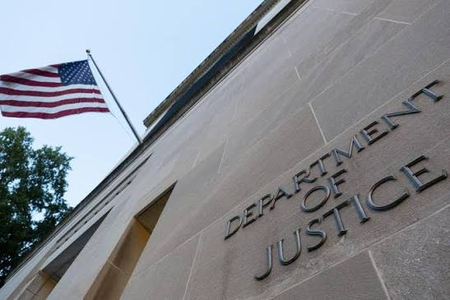
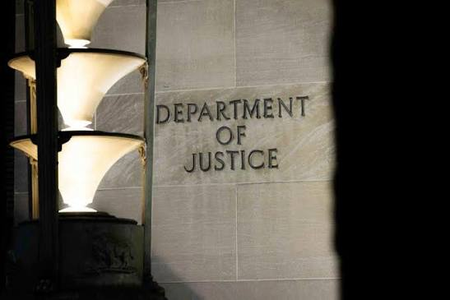
Washington, Oct 2 (IANS) The US Justice Department sued the University of Delaware, challenging a policy that allows some immigrants without lawful status to qualify for lower in-state tuition while US citizens living outside Delaware generally pay higher non-resident rates.

The lawsuit is the latest in a series of actions by the Trump administration challenging state and university tuition policies that extend resident rates to undocumented students.

The Justice Department alleged that the University of Delaware’s policy violates federal law by making a post-secondary education benefit available to people who are not lawfully present in the United States without providing the same benefit to US citizens regardless of their state of residence.

The allegations have not been adjudicated by a court.

“This Department of Justice’s efforts will not cease until we have challenged every state law or university policy that gives preferential treatment to illegal aliens over our Nation’s own citizens,” Associate Attorney General Stanley E. Woodward Jr. said.

“Congress long ago made clear that states cannot give reduced tuition to illegal aliens not available to all Americans,” he said.

The complaint asks a federal court to block the university from enforcing its policy allowing people residing in Delaware to receive in-state tuition rates regardless of whether they are lawfully present in the country.

The government also wants the court to prevent the university from adopting new tuition policies that it says would provide similar advantages based on immigration status.

“This is a simple matter of federal law: colleges cannot provide benefits to illegal aliens that they do not provide to U.S. citizens,” Assistant Attorney General Brett A. Shumate of the Justice Department’s Civil Division said.

“This Department of Justice will not tolerate American students being treated like second-class citizens in their own country,” he said.

The Justice Department said Thursday’s case brings to 26 the number of lawsuits it has filed challenging policies providing in-state tuition to undocumented immigrants.

It said six cases involving Texas, Kentucky, Oklahoma, Nebraska, Illinois and Kansas have resulted in court orders favourable to the federal government’s position.

Other lawsuits remain pending in states including California, New York, New Jersey, Massachusetts, Virginia, Minnesota, Maryland, Colorado, Connecticut, Vermont, Arizona, New Mexico, Oregon, Washington and Hawaii, according to the department.

The University of Delaware did not appear to have posted a substantive public response to Thursday’s lawsuit on its main public statements page by the time of this report.

For the 2026-27 academic year, the university lists undergraduate tuition for certain programmes at $656 per credit hour for Delaware residents and $1,770 for non-residents.

The legal dispute centres on a federal statute governing post-secondary education benefits based on residence. The Justice Department argues that the law prevents states or institutions from granting such benefits to undocumented immigrants unless US citizens are eligible for the same benefit without regard to where they live.

–IANS

lkj/rs

Read More
TOP STORIESWORLD

US Trade Representative calls for MFN reform, questions WTO

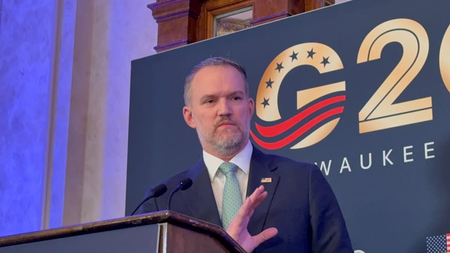
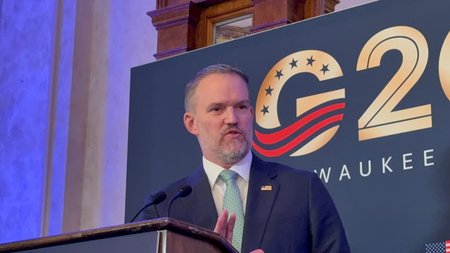
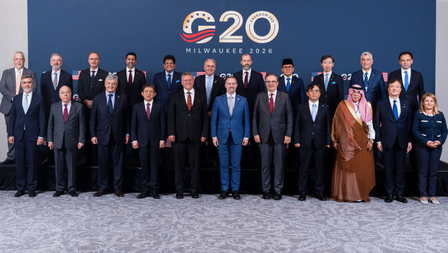
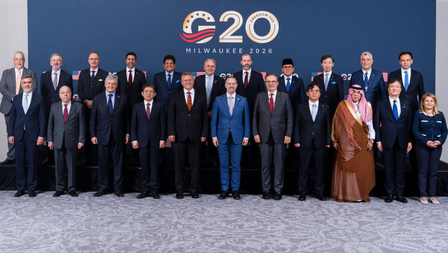
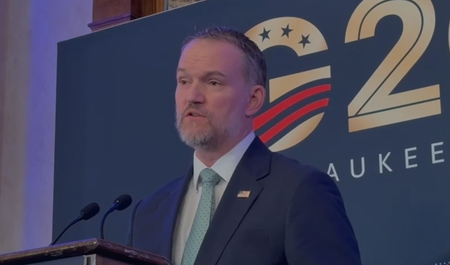
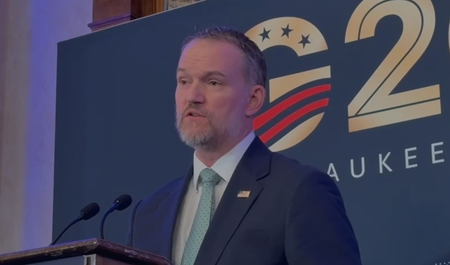
Milwaukee, Oct 2 (IANS) US Trade Representative Jamieson Greer called for reform of the unconditional most-favoured-nation principle that underpins global trade, arguing that countries with vastly different trading relationships should not automatically receive identical treatment.

Greer also delivered a sharp assessment of the World Trade Organization, saying the G20 Trade Ministers’ Meeting in Milwaukee had not changed his view about the organisation’s ability to tackle major problems confronting global trade.

“For us, we think that the principle of unconditional most favored nation warrants reform,” Greer told reporters at the conclusion of the ministerial.

“We think that it actually fails to promote reciprocity and balance in the trading system. It can actually create free riders,” he said.

The most-favoured-nation, or MFN, principle generally requires WTO members to extend the same trade treatment to other members.

Greer argued that such an approach did not sufficiently account for differences in America’s economic relationships with individual countries.

“In the US case, implementing MFN would mean that the UK and China should be treated the same or Vietnam and Ecuador should be treated the same or Switzerland and South Africa should be treated the same,” he said.

Countries could have different levels of reciprocity, trade balance and unfair practices affecting American companies, Greer said.

“We think that it hinders members’ efforts to reach agreements or take actions to address unfair practices either individually or in smaller groups,” he said.

Greer said WTO members were already departing from the MFN principle in practice while publicly supporting it.

The United States did not seek a formal G20 agreement on changing the principle during the Milwaukee meeting.

“We did not circulate a draft statement on this. We didn’t propose a joint statement,” Greer said.

“For us, it’s an important conversation to start, and it’s one that will continue maybe the G20, certainly another forum. It’s a robust conversation, and I think there’s gonna be some time before there is consensus on that as a general matter,” he said.

Greer was even more sceptical when asked whether discussions in Milwaukee had changed his view of the WTO.

“I would not say that this ministerial has changed my view on the World Trade Organization,” he said.

Greer said two or three countries had suggested taking the problem of structural excess capacity to the WTO and developing rules to address it.

“The WTO can’t even deliver on its current mandate. The idea that it could tackle this issue, I just don’t believe that at all because I live in the real world,” he said.

Greer cited what he described as shortcomings in transparency and compliance with existing WTO requirements.

“The WTO can’t even get people to notify their subsidies, to notify their trade measures,” he said. “There’s like no transparency. People don’t comply with that.”

He also pointed to difficulties reaching agreement on digital trade.

Greer said countries had followed a practice for three decades of not imposing taxes or tariffs on digital transmissions, but had still been unable to agree on formalising it earlier this year.

“So something the countries have been doing for 30 years, they can’t even agree, the idea that the WTO can take up this massive macroeconomic issue and solve it on a multilateral basis, that’s just crazy,” he said.

–IANS

lkj/rs

Read More
TOP STORIESWORLD

Trump warns Iran over Flydubai attack

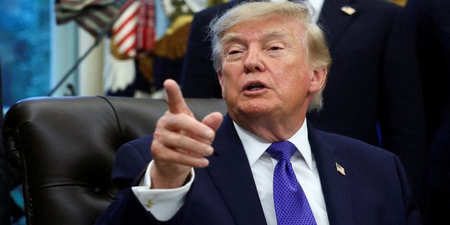
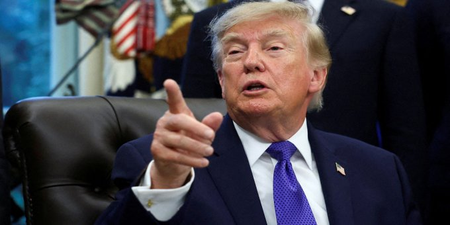
Washington, Oct 2 (IANS) US President Donald Trump warned that Iran would be hit “very hard” if Tehran is found to be behind the attack aboard a Flydubai passenger aircraft, while saying that information he was receiving suggested a possible Iranian link was being investigated.

Trump made the remarks while speaking to reporters before leaving the White House for Texas. He was asked whether he had been briefed on whether the co-pilot involved in the Flydubai incident was linked to Iran.

“We’re working on it right now. They’re being very open with us. Uh, I would say the answer based on what I’m hearing is yes, but we’re working on it right now,” Trump said.

Asked whether the man could have been placed aboard the aircraft by Iran’s Islamic Revolutionary Guard Corps or radicalised in some other way, Trump replied: “It could have been, yeah.”

Trump did not provide evidence of an Iranian connection and stressed that the matter was still being examined.

Later in the exchange, the President was asked directly whether the United States would retaliate against Iran if Tehran was found to have been behind the incident.

“Oh, they’ll be hit very hard. Don’t worry. You just ask them. They know what happened. They’ll be hit very hard,” Trump said.

He then broadened his remarks to Iran’s economy, military capabilities and the Strait of Hormuz.

“Look, Iran now has got 301 per cent inflation. Their money is valueless. Their economy is gone. They have no military. They have no anti-aircraft computers. They have very little going, and we control the strait,” Trump said.

The President also claimed the United States was moving more oil through the Strait of Hormuz than before the war.

“We took out more oil in the last two days than at any time in the history of the Strait, and that includes before the war,” he said.

Trump praised the US military and said he now faced a decision over Iran’s next steps.

“I tell you what, you know what it is, our Navy is incredible. Our military is incredible, the job they’ve done. Now I have to make a decision. They’ll either sign a very fair deal or they won’t exist any longer,” he said.

Earlier, Trump reiterated his position that Iran would not be permitted to possess nuclear weapons.

“They cannot have nuclear weapons and they won’t have, and they’re agreeing not to have,” he said.

Asked separately about the political impact of the Iran war in the United States, Trump acknowledged that it could affect the midterm elections but argued that preventing Tehran from obtaining nuclear weapons should help him politically.

“Well, it’s possible. I don’t — it should help because Iran will not have a nuclear weapon,” Trump said.

The Flydubai incident involved an Israel-bound flight from Dubai that was diverted to Saudi Arabia after the co-pilot allegedly attacked the Indian captain and attempted to crash the aircraft. The captain managed to unlock the cockpit, allowing others aboard to intervene and the aircraft to be landed safely. Authorities in several countries are investigating the incident. No evidence publicly establishing Iranian involvement had emerged as of Thursday.

The episode comes amid heightened tensions between Washington and Tehran following the Iran war and renewed US pressure over Iran’s nuclear programme. Trump’s comments on Thursday marked a significant warning but stopped short of saying that investigators had reached a definitive conclusion about Tehran’s involvement in the Flydubai incident.

–IANS

lkj/rs

Read More
TOP STORIESWORLD

Trump has remade global trade order: Greer

Milwaukee, Oct 2 (IANS) President Donald Trump has “essentially remade” the global trading order in a year, using tariffs and reciprocal trade agreements to rebalance US trade and secure greater market access, US Trade Representative Jamieson Greer said.

Greer said the Trump administration had secured trade deals covering more than 40 per cent of US goods trade and negotiations were continuing with additional partners.

“In just one year, President Trump has essentially remade a global trading order by imposing tariffs in pursuit of reciprocal treatment and balanced trade, and also addressing unfair trading practices that put American workers and producers at a disadvantage and have for many years,” Greer told reporters after the G20 Trade Ministers’ Meeting in Milwaukee.

“Here at the G20, we have furthered our negotiations with key partners as the world coalesces around an emerging trade, trade order led by the United States,” he said.

Greer said the United States had signed 10 agreements on reciprocal trade and nine joint statements with trading partners.

“Negotiations remain ongoing with many more trading partners,” he said.

The agreements had opened markets by reducing tariff and non-tariff barriers affecting US industrial and agricultural exports, Greer said. They were also intended to strengthen supply chains and economic security.

Greer cited automobiles, pharmaceuticals and digital trade as examples.

“As a result of our trade negotiations, 14 countries have agreed to accept US motor vehicle standards that makes it easier to export vehicles to the world,” he said.

Ten countries had agreed to accept US Food and Drug Administration approvals for new treatments and medicines, while 52 had agreed not to impose duties on electronic transmissions, he said.

Greer contrasted those results with what he described as the inability of the World Trade Organization to deliver comparable outcomes.

“With all of this, what the World Trade Organization could not deliver for America over decades, President Trump’s trade deals have delivered in the past year,” he said.

Greer said the administration was using trade policy to restore domestic manufacturing, rebalance trade and expand markets for American exports.

He also pointed to US exports of more than $1.4 trillion in goods through July and said the country was on track for its highest annual goods exports.

Greer defended the administration’s approach when asked about Canada and its efforts to expand trade relationships with India and the European Union.

Canada already had numerous trade agreements, including a comprehensive agreement with the European Union, he said.

“Our trade policy is not focused on any one country,” Greer said. “We just talk about domestic, domestic policy, domestic economic policy.”

Greer said Washington had no objection to Canada or other countries seeking additional markets for their production.

“So when people talk about Canada and the European Union somehow finding more demand in their countries, I mean, these are very low-growth jurisdictions, and low-growth plus low-growth is still low-growth,” he said.

“So we are actually totally fine with countries trying to find other people to take their surplus production.”

Greer said US technical discussions with Canada were continuing, but significant differences remained.

“We certainly have technical talks with the Canadians,” he said. “The reality is there are a handful of outstanding issues that are quite difficult to resolve.”

The comments came after a reporter noted that Canada had been holding meetings with India and the European Union during the Milwaukee ministerial while its negotiations with Washington remained unresolved.

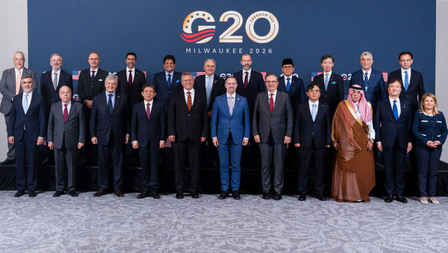
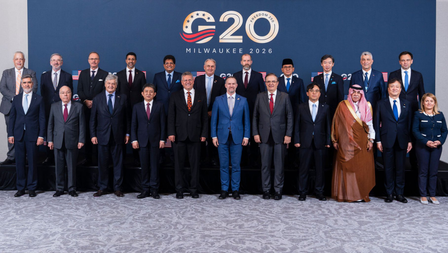
The United States is hosting the G20 in 2026, with trade policy forming a major part of its agenda. The Milwaukee ministerial brought together representatives of major advanced and emerging economies ahead of the G20 Leaders’ Summit in Miami later this year.

–IANS

lkj/rs

Read More
TOP STORIESWORLD

US Navy awards $24.4 billion to accelerate production of Standard Missile-6

Washington, Oct 2 (IANS) The US Navy has awarded Raytheon a contract valued at up to $24.4 billion to accelerate production of Standard Missile-6 interceptors, as the Pentagon moves to expand manufacturing capacity for critical missiles and strengthen its weapons stockpiles.

The five-year agreement, which includes two additional option years, is intended to increase manufacturing throughput and provide the defence industry with longer-term certainty to expand production, the Pentagon said Thursday.

The SM-6 is a multi-mission missile used for anti-air warfare, anti-surface warfare and missile defence.

“Our mission is to ensure our warfighters never enter a fair fight,” said Michael P. Duffey, Under Secretary of War for Acquisition and Sustainment.

“This multi-year award locks in the magazine depth and lethal dominance our forces need to prevail, while demanding our industrial base produce at war-speed,” he said.

The Pentagon said the agreement would drive faster production and generate cost savings across the defence industrial base.

The award is part of a wider US effort to increase production of key munitions and provide defence manufacturers with longer-term procurement commitments.

The Pentagon said the SM-6 agreement, together with a recent Tomahawk weapon-system award, would give the defence industry greater predictability to expand its workforce and secure critical supply chains.

“Together, these strategic investments ensure our warfighters remain equipped with the advanced capabilities required to maintain global maritime superiority,” the Pentagon said.

Raytheon, an RTX business, separately said the agreement would significantly increase the availability of SM-6 interceptors for the US Navy.

“SM-6’s multi-mission capability is vital to our customer, and Raytheon is intensely focused on meeting the demand,” Raytheon President Phil Jasper said.

“By continuously investing in our operations and facilities, we are removing constraints and boosting capacity to ensure we deliver this critical capability our sailors depend on,” he said.

Raytheon said it has invested in its operations and facilities, expanded its skilled workforce, strengthened partnerships across the defence industrial base and increased automation as it seeks to boost production.

The company describes the SM-6 as capable of conducting offensive strikes as well as missile-defence missions.

The missile can be fired from US Navy ships and land-based launchers, giving naval forces a weapon capable of responding to different categories of threats.

Thursday’s announcement follows another major missile-production agreement involving Raytheon.

Earlier this week, the Pentagon announced a multiyear arrangement valued at up to $20.7 billion to accelerate production of Advanced Medium-Range Air-to-Air Missiles, or AMRAAMs.

The large contracts reflect Washington’s effort to give weapons manufacturers greater visibility over future demand so they can invest in facilities, workers and supply chains needed to raise production rates.

–IANS

lkj/rs

Read More
TOP STORIESWORLD

US man charged in $300 million China tech case

Washington, Oct 2 (IANS) The owner of a California technology company has been arrested on federal charges of smuggling more than $300 million worth of export-controlled high-end computer servers containing US-made graphics processors to China, the Justice Department said.

Greg Lui, 38, also known as Yiu Kong Lui, of San Gabriel, California, was arrested on a three-count federal indictment alleging that servers containing graphics processing units, or GPUs, were routed through Malaysia and Singapore to evade US export controls.

The chips are used for advanced computing and artificial intelligence applications and are subject to US restrictions on exports to China because of their potential military applications.

Lui is expected to make his initial appearance and be arraigned Friday in federal court in Los Angeles.

He has been charged with conspiracy to violate the Export Control Reform Act and Export Administration Regulations, outbound smuggling and conspiracy to commit money laundering.

“Protecting America’s national security means keeping our advanced Super Intelligence technology from being used to strengthen our adversaries’ military capabilities,” First Assistant US Attorney Bill Essayli said.

“This defendant allegedly used false paperwork and shipments through third countries to smuggle more than $300 million in export-controlled computer servers to China,” he said.

The indictment was returned by a federal grand jury on Sept. 29 and unsealed following Lui’s arrest Thursday.

Prosecutors said Lui owns Earthmade Computer Inc., a technology company based in City of Industry, California.

From 2023 through 2024, Lui and alleged co-conspirators used Earthmade to purchase export-controlled equipment and send it to China without obtaining licences required by the US Commerce Department, according to the indictment.

Instead of shipping the servers directly to China, prosecutors allege the equipment was initially sent to countries including Malaysia and Singapore and then re-exported to China.

The government alleges Lui knew that the true end users were in China.

Prosecutors said Lui and his alleged co-conspirators provided false documentation to US manufacturers representing that the servers would be shipped to permissible end users and destinations that did not require export licences.

“The indictment unsealed today details alleged efforts to evade US export laws through false documents, staged dummy servers to mislead inspectors, and convoluted transshipment schemes, in order to obfuscate the true destination of restricted SI technology — China,” Assistant Attorney General for National Security John A. Eisenberg said.

From January through October 2024, Earthmade received more than $176 million from two Malaysia-based shipping companies as part of the alleged scheme, according to prosecutors.

The indictment describes one transaction in January 2024 in which Lui allegedly submitted an order to a US manufacturer for 27 servers worth about $7.6 million.

The servers were shipped from Los Angeles to Kuala Lumpur, Malaysia. Their packing list indicated that they contained export-controlled GPUs that could not be sent to China without a licence, prosecutors said.

In March 2024, an alleged co-conspirator emailed a Malaysian government official saying the 27 servers had been transshipped to a China-based buyer, according to the indictment.

The FBI alleged that Lui sold the Chinese government hundreds of millions of dollars worth of advanced American computing technology. That allegation has not been proven in court.

If convicted, Lui faces statutory maximum sentences of 20 years in prison on the export-control conspiracy charge, 20 years on the money-laundering conspiracy charge and 10 years on the smuggling charge.

–IANS

lkj/rs

Read More
TOP STORIESWORLD

G20 agrees to condemn weaponisation of food: Greer

Milwaukee, Oct 2 (IANS) G20 countries have reached consensus on condemning the weaponisation of food through coercive trade actions, US Trade Representative Jamieson Greer announced, calling it an important step towards preventing agricultural products from being used for economic or political pressure.

The agreement emerged after days of discussions at the G20 Trade Ministers’ Meeting in Milwaukee, where the United States put the issue on the agenda of the world’s major economies.

“After days of discussions, and a willingness on the part of the members to act, we are pleased to have reached consensus on the G20 statement on the weaponization of food through coercive trade actions, and we’ll release it later today,” Greer told reporters.

“This is an important step towards ensuring that agricultural products are not used as a tool for economic or political coercion,” he said.

Greer said the issue was taken up during the US presidency of the G20 because trade in food, agricultural products and agricultural inputs can be used to exert pressure on countries.

“Throughout the US presidency, we discussed in G20 sessions how trade and food, agricultural products, and agricultural inputs can be weaponized as a tool to exert coercive pressure for economic or political reasons, threatening livelihoods in targeted countries, distorting competition, and eroding trust in the global trading system,” he said.

Greer said weaponisation of food was a new subject for G20 discussions, but the problem itself was not new.

“G20 members had a unique opportunity this week to make a collective statement condemning food weaponization to bring more awareness to this important topic and help mitigate its use and effects globally,” he said.

The consensus on food stood in contrast to disagreements among G20 members on two other major issues pushed during the Milwaukee ministerial, forced labour and structural excess capacity.

Greer said the United States and other members could not secure consensus on a statement addressing forced labour in global supply chains.

“It is unfortunate that we could not reach consensus on the forced labor statements,” he said.

Greer said a smaller group of trading partners would instead issue a joint statement on eliminating forced labour from global supply chains.

“I will say that we will be able to release with a handful of trading partners a joint statement on eliminating forced labor in global supply chains, although it did not achieve consensus with all of the G20s,” he said.

The G20 also failed to agree on a statement addressing structural excess production, although Greer said there was broad recognition that the problem required action.

Excess capacity, he said, was widely recognised as a problem in steel and also affected automobiles, batteries, solar panels, chemicals and other sectors.

“We just came out of a session on this a little while ago, and nearly all countries agreed that this is an issue that requires action,” Greer said.

“And nearly all countries agree that our current system of trade remedies or responses is inadequate to solve this problem,” he added.

Greer said the United States would continue discussing excess capacity with like-minded trading partners after the Milwaukee meeting.

“It’s unfortunate we couldn’t reach consensus on a statement on this issue to address structural excess capacity and production, but this is the type of question we should be addressing at the G20, whether you can get consensus or not,” he said.

The United States is hosting the G20 in 2026. Greer said the grouping represents roughly 85 per cent of global GDP and two-thirds of the world’s population, giving it a potentially significant role in addressing problems in the global trading system.

The Milwaukee trade ministerial is part of preparations for the G20 Leaders’ Summit in Miami later this year. Trade ministers have discussed food security, forced labour, excess production and possible changes to established principles governing international trade.

–IANS

lkj/rs

Read More
TOP STORIESWORLD

UN chief condemns attack on FlyDubai flight

United Nations, Oct 2 (IANS) Secretary-General Antonio Guterres has strongly condemned the attack inside the FlyDubai aircraft on its way from Dubai to Tel Aviv on Wednesday, according to his Spokesperson Stephane Dujarric.

“The Secretary-General is grateful to all the authorities concerned for ensuring the safety of all passengers and for conducting their investigation”, he said.

“We will continue to monitor all developments related to this incident”, he said.

Guterres “strongly condemns” any acts that endanger civilian aviation and civilians, he said.

He is “deeply concerned” by the incident on FZ1073 and “is relieved that tragedy was averted”, Dujarric said.

India’s UN Mission lauded on X Captain Smit Machchhar, who fought back against an attempt by the Omani co-pilot to take over the aircraft and, despite serious stab wounds, managed to open the cockpit door to allow passengers in to overpower the attacker.

It called his action “a remarkable act of courage and bravery”, alongside a report of Prime Minister Narendra Modi’s post on X, “In the face of the gravest danger and despite being seriously injured, he showed immense courage and an unwavering resolve to protect the lives of others”.

Earlier on Thursday, the Ministry of External Affairs (MEA) said that it continues to closely follow the health condition of Captain Smit Machchhar, the Indian national and the brave pilot of FlyDubai flight FZ 1073.

“After receiving initial medical treatment in a hospital in Tabuk, Saudi Arabia, he has now been shifted to Abu Dhabi for continued medical attention and recovery. Our Ambassador in UAE met Captain Machchhar in hospital and enquired about his well being,” the MEA stated.

“Earlier, he also met his family and assured all possible support for the Captain’s health and well-being. Our Embassy in Abu Dhabi and Consulate in Dubai are in close touch with the local authorities in the matter. We once again salute Captain Smit Machchhar’s valour and courage. We also convey our deep appreciation for the admiration and support he has received from across the world for his act of gallantry,” the statement added.

India’s Ambassador to the United Arab Emirates (UAE), Deepak Mittal, met Machchhar and his family at a hospital in Abu Dhabi and said the Indian pilot, who was injured while preventing a mid-air attack on Wednesday, was speaking openly and remains in good spirits.

–IANS

al/rs

Read More
TOP STORIESWORLD

India-US trade deal in ‘short strokes’: Greer

Milwaukee, Oct 2 (IANS) The India-US trade deal is in the “short strokes” and negotiations are nearing the end, US Trade Representative Jamieson Greer said, while cautioning that an agreement was not imminent.

Greer said he had a “very constructive” conversation with Commerce and Industry Minister Piyush Goyal on the sidelines of the G20 Trade Ministers’ Meeting in Milwaukee and officials from the two countries were continuing negotiations.

“Our staff is meeting right now, since they’re in the country and we’re here,” Greer told reporters at a press conference.

“We are continually trying to finish the trade deal with India. I would characterize it as we say in the US. We’re in the, we’re in the short strokes, so I think we’re toward the end of it,” he said.

Greer’s comments offered one of the clearest assessments yet from the US side on the state of negotiations between New Delhi and Washington.

But the US trade representative cautioned against expectations of an immediate announcement.

“At the same time, there’s no, you know, I don’t think there’s something imminent, but we truly have identified the universe of items that are sticking points,” Greer said.

“We’re working diligently toward them,” he added.

Greer was responding to a question about his bilateral meeting with Goyal and whether President Donald Trump’s conversation with Prime Minister Narendra Modi a day earlier had provided fresh direction to the negotiations.

He described the Trump-PM Modi conversation as “a very constructive call”.

Greer also indicated that the two leaders could speak again soon as negotiators work through the remaining issues.

“My sense is that the president and prime minister may have another call very soon on this just to assess progress and where we are,” he said.

Greer did not identify the remaining sticking points during his response. Nor did he provide a timeline for completing the agreement.

His comments came as Goyal held a series of bilateral meetings with his counterparts on the sidelines of the G20 trade ministerial in Milwaukee.

The India negotiations formed part of a broader series of trade talks being conducted by the Trump administration with major US trading partners.

Greer said during the press conference that the United States had signed 10 agreements on reciprocal trade and nine joint statements with trading partners, while negotiations continued with others.

He said the Trump administration had secured trade deals covering more than 40 per cent of US goods trade.

Greer also defended the administration’s wider tariff policy, saying US trade measures were aimed at supporting American production and supply chains rather than targeting individual countries.

“When we impose tariffs and trade measures, these are not, these are not anti-any country. Our trade policy is pro-American,” he said.

“We’re trying to support our supply chains in the US. We’re not trying to create excess production. We’re not trying to corner global markets on a certain good or commodity,” Greer said.

The Milwaukee ministerial brought together trade officials from the world’s major advanced and emerging economies under the US G20 presidency. Discussions included structural excess production, forced labour in global supply chains, the most-favoured-nation principle and the weaponisation of food through coercive trade actions.

India and the United States have been engaged in negotiations aimed at resolving outstanding trade issues and reaching a bilateral agreement. The latest round of high-level engagement in Milwaukee has put those negotiations back at the centre of the bilateral economic relationship.

–IANS

lkj/rs

Read More
TOP STORIESWORLD

Piyush Goyal pushes UK, Australia trade ties at G20

Milwaukee, Oct 1 (IANS) Commerce and Industry Minister Piyush Goyal on Thursday pushed for faster expansion of India’s trade ties with the UK and Australia, holding separate meetings with his counterparts from the two countries on the sidelines of the G20 Trade Ministers’ Meeting here.

Goyal reviewed the implementation of the India-UK Comprehensive Economic and Trade Agreement with UK Secretary of State for Business, Innovation, Science and Trade Jonathan Reynolds and discussed ways to use the agreement to double bilateral trade.

The agreement has been in force since July 15, 2026.

“Reviewed the implementation of the India-UK CETA, in force since 15th July 2026, and discussed ways to unlock its full potential and double bilateral trade,” Goyal said in a post on X after the meeting.

The talks focused on implementing the trade agreement and efforts by the two countries to translate the pact into greater commercial flows.

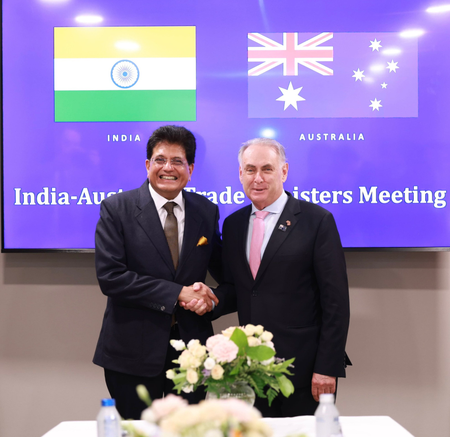
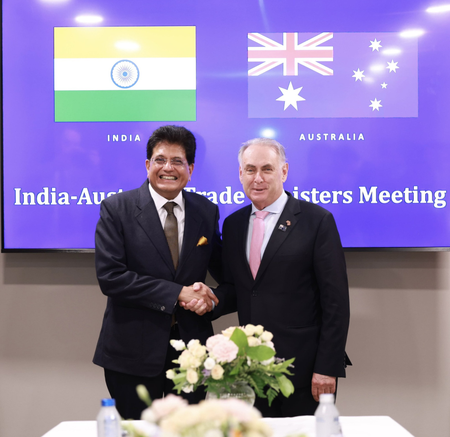
Goyal also met with Australian Minister for Trade and Tourism Senator Don Farrell, and the two sides discussed efforts to expedite negotiations on the India-Australia Comprehensive Economic Cooperation Agreement.

The meeting covered pharmaceuticals, services, investment, agri-tech and critical minerals, according to Goyal.

“Discussed expediting the India-Australia Comprehensive Economic Cooperation Agreement and key areas of collaboration across pharmaceuticals, services, investment, agri-tech and critical minerals,” he said.

Goyal and Farrell also reviewed progress under the India-Australia Economic Cooperation and Trade Agreement, or ECTA.

The Indian minister said the discussions included ensuring that Indian businesses make full use of duty-free access available in the Australian market.

“Also reviewed the progress of the India-Australia Economic Cooperation and Trade Agreement (ECTA), ensuring Indian businesses fully leverage duty-free access to the Australian market,” Goyal said.

The two meetings put India’s existing and proposed trade agreements with major partners at the centre of Goyal’s engagements during the G20 ministerial.

With the UK, the emphasis was on extracting the full commercial potential of an agreement already in force and working towards doubling bilateral trade.

The Australia talks had two tracks. One was implementing the existing ECTA and encouraging Indian businesses to use its market-access provisions more. The other was the proposed Comprehensive Economic Cooperation Agreement, which would take the economic relationship beyond the existing pact.

The sectors identified during the Australia meeting also point to a wider economic agenda. Pharmaceuticals and services are important areas for Indian businesses, while investment, agri-tech and critical minerals offer scope for broader cooperation between the two economies.

Critical minerals have become increasingly important to global supply chains, particularly for advanced manufacturing, clean-energy technologies and other strategic industries.

The meetings with Reynolds and Farrell were part of Goyal’s series of bilateral engagements on the sidelines of the G20 Trade Ministers’ Meeting in Milwaukee.

–IANS

lkj/dan

Read More
TOP STORIESWORLD

No defence industry without steel: Canada

Milwaukee, Oct 1 (IANS) Canada has warned that global steel overcapacity is putting domestic producers under severe pressure, with International Trade Minister Maninder Sidhu arguing that maintaining a strong steel industry has become essential to national sovereignty and defence.

Sidhu said the issue was being discussed at the G20 trade ministers’ meeting in Milwaukee as governments grapple with excess capacity, distorted supply chains and pressure on domestic manufacturing.

“Of course, you know, our steel industry is under tremendous stress,” Sidhu told reporters on the sidelines of the G20 Trade Ministers’ Meeting.

“And as you all understand, without a steel industry, you won’t have a defence industry.”

Canada, he said, has taken measures to protect its domestic producers because of overcapacity elsewhere in the world.

“We’ve taken actions to protect our industry, because of some of the overcapacity around the world,” Sidhu said.

He said Canada was not alone in confronting the problem and pointed to measures taken by the United Kingdom and European Union.

“I think we need to find a solution,” he said.

Sidhu also raised concerns about steel products being dumped into markets, saying such practices were putting additional pressure on industries already dealing with disrupted supply chains.

“There are some countries out there that, you know, with supply chains the way they are, the dumping of certain steel products is not helpful,” he said.

The minister did not identify the countries he was referring to.

Sidhu said discussions among trade partners were focused on protecting workers and maintaining industrial capacity.

“Part of that is the conversation with closed doors, of how we can support each other, how we can support our workers, and how we can support the steel industry, frankly,” he said.

The Canadian minister linked the debate directly to national sovereignty.

“I think for sovereignty, you need a steel industry,” Sidhu said.

“You need a steel industry in your country to, to push up and, and ramp up your defence industry, and that’s what we’re focused on in Canada.”

The comments underscored the growing overlap between trade policy, industrial policy and national security as governments seek to secure domestic capacity in strategic sectors.

Sidhu said steel was also needed for major Canadian projects outside the defence sector, including energy infrastructure and the electricity grid.

“The projects that we’re building in energy or vertical minerals or an electricity grid, we’re doing well with our steel industry so they can, you know, build more domestically,” he said.

He also linked the effort to Canada’s economic relationship with the United States.

Canada and the US have highly integrated manufacturing supply chains, including in steel and automobiles. Sidhu said separately during the press conference that workers on both sides of the border were experiencing some of the same pressures and argued that the two countries should work together.

“I strongly believe the auto sector is stronger when we’re able to work together,” he said.

Steel overcapacity has emerged as a recurring issue in international trade discussions, with major producing and consuming economies debating how to respond to excess production, subsidies and the movement of lower-priced steel across markets.

–IANS

lkj/ksk/dan

Read More
TOP STORIESWORLD

Canada urges US to work together on autos

Milwaukee, Oct 1 (IANS) Canada has urged the United States to work with it to address pressures on the deeply integrated North American auto industry, with Canadian International Trade Minister Maninder Sidhu saying workers on both sides of the border are facing similar challenges.

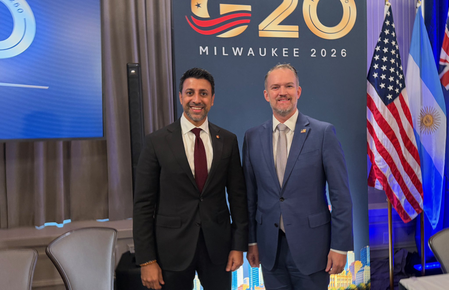
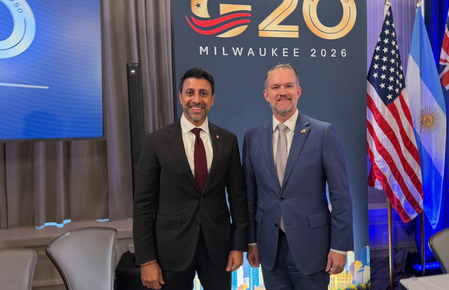
Sidhu said he raised the auto sector and interconnected supply chains during talks with US Trade Representative Jamieson Greer on the sidelines of the G20 Trade Ministers’ Meeting in Milwaukee.

The Canadian minister said he had encountered auto workers in Milwaukee who had been laid off. He drew a parallel with job losses in his own constituency, which has operations of automaker Stellantis.

“I came across some workers here in Milwaukee that were laid off in the auto sector,” Sidhu told reporters.

“And I represent the constituency of where we have Stellantis, hundreds of folks laid off in the auto sector.”

Sidhu said the experience underscored the extent to which the Canadian and American automobile industries were connected.

“I strongly believe the auto sector is stronger when we’re able to work together,” he said.

“And so that was my message that, you know, you’re facing some of the same challenges that we’re facing. Let’s help each other and let’s work through something.”

Sidhu said the discussion with Greer came as G20 trade ministers examined broader pressures on global supply chains.

“Here we’re talking a lot about supply chains,” he said, pointing to steel and food among the issues being discussed.

Sidhu said supply chains between Canada and the United States were particularly intertwined in the automobile industry.

He said Canada’s minister responsible for relations with the United States was leading those discussions.

“My job as the international trade minister is to continue to support Canada diversification efforts and work with counterparts and colleagues all around the world to increase our access to new markets,” he said.

Asked separately about US tariffs, export restrictions and prospects for reducing tensions between the two neighbours, Sidhu said he had known Greer for some time and respected him.

“I think there’s an understanding,” Sidhu said.

He said the two had previously worked together in international trade forums, including the World Trade Organisation and G7.

Sidhu said many of the economic pressures facing Canada and the United States were also confronting other G20 economies.

“I think it’s important when you look at some of the problems that we face, and this is what G20 economies are dealing with, the prices, the impacts on energy, the impacts on inflation, the impacts on supply chains and critical minerals,” he said.

“And so many of us are dealing with the same challenges, and I think it’s imperative that as partners, we continue to work together to find solutions for our citizens.”

Sidhu declined to identify the most significant remaining differences in the Canada-US negotiations.

“Of course we want to close the gaps, that’s the whole point of negotiations,” he said.

But he made clear that Ottawa was seeking an agreement that protected Canadian workers and industries.

“I think at the end of the day, you want a good deal for your workers and industries and Canada won’t accept anything less than that,” Sidhu said.

“When you negotiate with Canada, it has to be mutually beneficial,” he added.

Canada and the United States have one of the world’s most closely integrated automotive manufacturing systems, with vehicles and components routinely crossing the border during production. The sector supports manufacturing and supply-chain employment in both countries.

–IANS

lkj/ksk/dan

Read More