WORLD

TOP STORIESWORLD

Trump threatens to ‘charge’ S. Korea more if it rejects Alaska LNG project
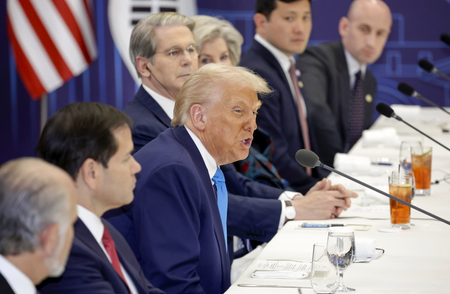
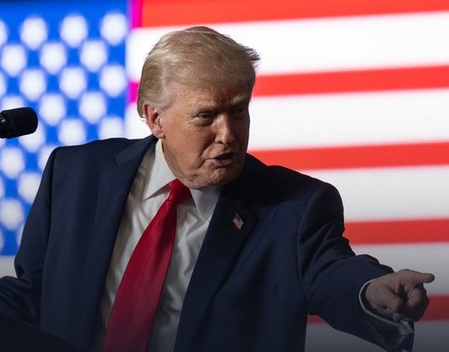
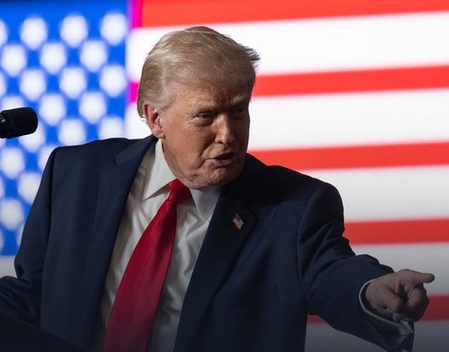
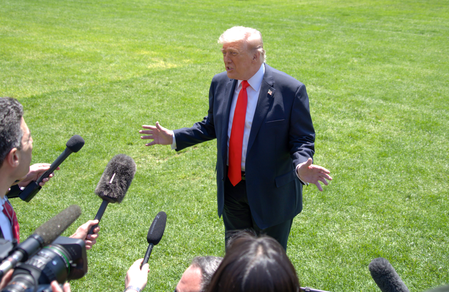
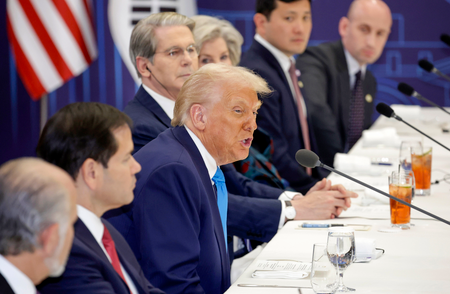
Washington, Oct 3 (IANS) US President Donald Trump has threatened to “charge” South Korea “more” if it does not agree to invest in a liquefied natural gas (LNG) project in Alaska, which he has claimed the Asian country will participate in.

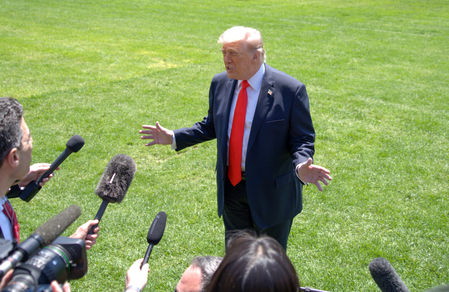
Trump made the remarks during a press availability at the White House, two days after he unveiled the first package of Korea’s U.S. investment projects under last year’s bilateral trade deal, which he said consists of the LNG project, the construction of a gas-fired power plant in Texas and eight large-scale nuclear power plants.

On the LNG project, Seoul has said that it has not yet finalised a decision on whether to participate, reports Yonhap news agency.

“I didn’t jump the gun. I mean, they were there ‌and they were ‌represented,” he told reporters. “And let’s ‌see, if they don’t want to do it, that’s okay with me. I’ll just charge them more.”

After asking a reporter, “They said they didn’t sign it?,” Trump said, “Tell them if they don’t sign shortly, I’m going to double it up.”

It remains unclear what he will “charge” South Korea should Seoul not agree to invest in the Alaska project.

US Commerce Secretary Howard Lutnick has said that South Korea will invest over $50 billion in the Alaska project.

The LNG project involves the construction of a 1,298-kilometre-long pipeline from the North Slope, which has massive proven natural gas reserves, to southern Alaska to transport natural gas that will be cooled into liquid form for shipments to Asia.

Meanwhile, a senior White House official underscored the need for shipbuilding cooperation with South Korea and Japan, as U.S. President Donald Trump’s administration strives to rebuild the United States’ shipbuilding industry and its Navy.

Russell Vought, director of the White House Office of Management and Budget, made the remarks during a forum in Washington, also highlighting the need to reward companies that come to the United States and make investments there.

—IANS

na/
Read More
TOP STORIESWORLD

Hindu temple in US Ohio attacked with bricks

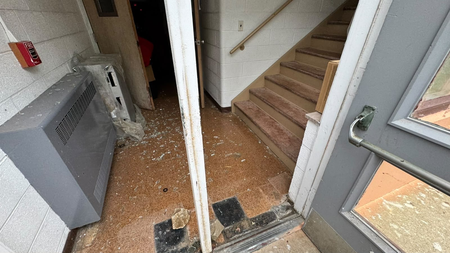
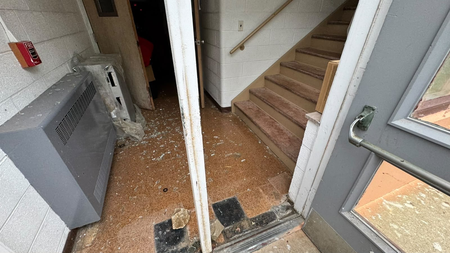
Washington, Oct 3 (IANS) A Hindu temple in Ohio’s Greater Cleveland area was attacked with bricks that shattered windows while priests and devotees were inside, the Coalition of Hindus of North America (CoHNA) said.

COHNA said the attack on the Shree Swaminarayan Hindu Temple Vadtaldham happened Friday afternoon. It did not report whether anyone was injured or specify how many windows were damaged.

The organisation urged Richmond Heights Mayor Kim Thomas and city authorities to condemn the incident and called for swift police action.

“We call upon Mayor Kim Thomas and @RichmondHtsOH to condemn such bigotry and @PoliceRichmond to take swift action against the perpetrator,” it wrote.

The post did not identify a suspect or provide details about arrests. It also did not describe evidence establishing a religious motive.

The organisation said the incident came as Hindus in Ohio began celebrating Hindu Heritage Month. It also referred to upcoming Navratri observances.

Hindu Heritage Month is observed in October by Hindu community organisations in the United States.

CoHNA has warned of rising hate and violence against Hindus in the United States and documented repeated incidents involving temples.

Its published chronology includes the vandalism of a Gandhi statue at Shri Tulsi Mandir in Queens, New York, in August 2022 and graffiti at the SMVS Shri Swaminarayan Temple in Newark, California, in December 2023.

The chronology records individual incidents rather than establishing a nationwide annual rate of increase.

BAPS temples in Melville, New York, and the Sacramento area of California were vandalised in September 2024.

In March 2025, the BAPS temple in Chino Hills, California, was defaced with hateful mesaged.

The incident followed similar vandalism at its New York and Sacramento temples.

–IANS

lkj/rs

Read More
TOP STORIESWORLD

G20 debate exposes doubts over WTO tools

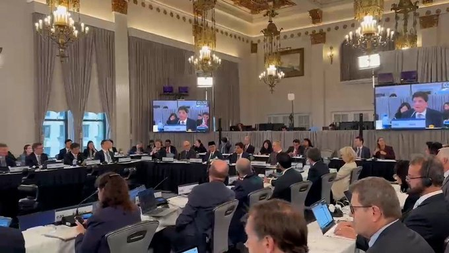
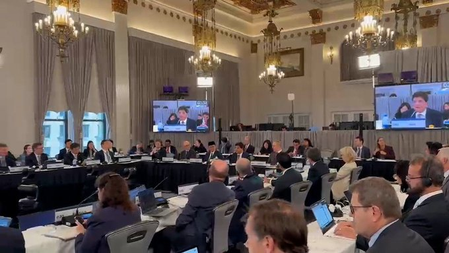
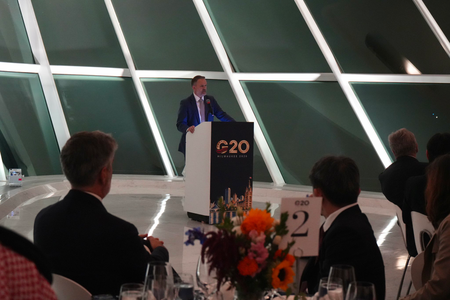
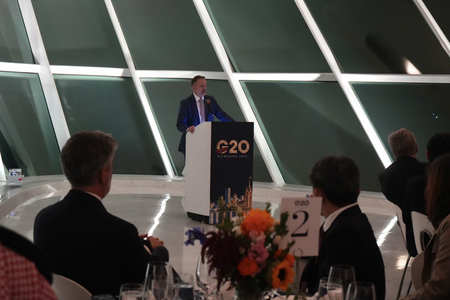
Milwaukee, Oct 3 (IANS) Majority of G20 members have raised doubts about the effectiveness of existing World Trade Organization-authorised measures in tackling structural excess capacity, saying current trade remedies are too slow and fail to address policies responsible for market distortions.

The unusually pointed assessment emerged from the G20 Trade Ministerial held here under the US presidency on Sept 30 and Oct 1.

Trade ministers discussed structural excess capacity and production as one of four major issues confronting the global trading system, alongside the weaponisation of food, forced labour in global supply chains and reform of the Most-Favoured Nation principle.

According to the chair’s statement, G20 members examined cases in which production persistently exceeded global demand and would not have existed under normal market conditions.

They also discussed capacity created, sustained or contributed to by government policies or interventions.

Several members distinguished such structural excess capacity from cyclical changes in production capacity caused by normal market movements in supply and demand.

The discussion then turned to whether existing international trade rules were capable of dealing with the problem.

“A significant majority of members noted that although trade defense instruments have been authorized under WTO rules, they are ineffective at addressing the underlying policies and practices that contribute to the problem,” the chair’s statement said.

“Existing trade remedy tools are too slow and do not sufficiently target the source of the structural excess capacity and production.”

The statement also recorded a stark assessment of the WTO’s ability to produce a multilateral solution.

“At the same time, it was noted that the WTO is unlikely to deliver any progress on that issue, given it is unable to deliver solutions on relatively simple issues in the trading system,” it said.

The United States sought G20 consensus on a ministerial statement that would have called on countries to eliminate structural excess capacity and production in their economies, including by ending non-market policies and practices that distort markets.

The proposal also sought agreement to establish new, dedicated sectoral platforms where G20 economies could examine excess capacity and take complementary action in sectors of concern.

But consensus proved elusive.

The draft was supported by all but “a handful of members,” according to the chair’s statement. A few members “firmly rejected” creating a pathway towards cooperative action.

US Trade Representative Jamieson Greer said after the meeting that many countries nevertheless supported addressing the issue.

“Many G20 members expressed resolve to address structural excess capacity and production in key sectors of concern,” Greer said. “I am disappointed that a handful of members rejected creating a pathway toward cooperative action.”

The disagreement came a decade after the G20 had addressed the same problem.

At their 2016 meeting in Shanghai, G20 trade ministers expressed concern about excess capacity in certain industries and its impact on trade and workers. That process contributed to the establishment of the Global Forum on Steel Excess Capacity.

Later that year, G20 leaders meeting in Hangzhou unanimously recognised excess capacity in steel and other industries as a global problem requiring collective responses. They also acknowledged that subsidies and other government support could cause market distortions and contribute to excess capacity.

The US G20 presidency said in its Milwaukee chair’s statement that, despite those earlier commitments and actions by some members, structural excess capacity and production had worsened since 2016 and was affecting domestic industries and their supply chains.

The United States holds the G20 presidency this year. The United Kingdom is scheduled to assume the presidency in 2027.

–IANS

lkj/rs

Read More
TOP STORIESWORLD

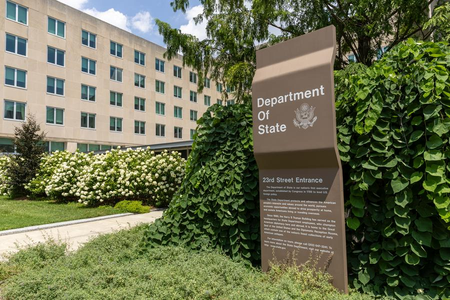
US visa bonds apply to 50 countries, India excluded

Washington, Oct 3 (IANS) The United States has listed 50 countries whose nationals are subject to visa bonds of up to $20,000 for business and tourist visas, with India excluded from the requirement but Bangladesh, Bhutan and Nepal among the South Asian countries covered.

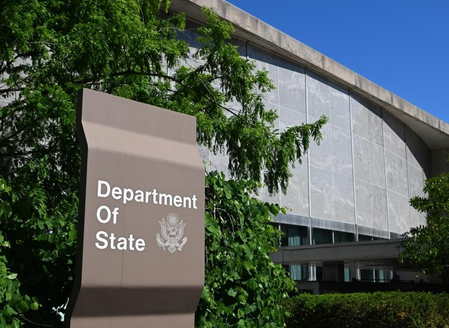
The State Department published an updated list Friday of countries whose nationals are required to post bonds if they are otherwise found eligible for B1/B2 visas.

Under the programme, an applicant travelling on a passport issued by one of the listed countries must post a bond of $10,000, $15,000 or $20,000. The amount is determined by a consular officer during the visa interview, according to the State Department.

The requirement does not apply to Indian passport holders.

Bangladesh and Nepal have been subject to the requirement since January 21, while Bhutan has been covered since January 1, according to the State Department list.

The list also includes several countries in Africa, the Caribbean, Central Asia and the Pacific.

The State Department said the programme operates under Section 221(g)(3) of the Immigration and Nationality Act, which allows a consular officer to require a bond before issuing a visa.

The current programme was established under a final rule that took effect on August 3. The department said countries are identified using B1/B2 visa overstay rates contained in the Department of Homeland Security’s Entry/Exit Overstay Report.

Applicants subject to the requirement must also submit DHS Form I-352 and agree to the terms of the bond through Pay.gov, the Treasury Department’s online payment platform.

The State Department cautioned applicants against making payments before receiving instructions from a consular officer.

“Applicants should submit Form I-352 to post a bond only after a consular officer directs them to do so,” the department said.

A bond can be paid by the visa applicant or a third party, including a friend, relative or business associate. The person who posts the money will receive the refund if the bond conditions are met.

The State Department also stressed that payment of a bond does not guarantee that a visa will be issued.

Travellers who have posted a visa bond face additional restrictions on how they enter and leave the United States.

They must use commercial airports, including Customs and Border Protection preclearance locations. They cannot use charter aircraft, general aviation, land crossings or seaports for entry or departure under the terms of the programme.

Possible violations are referred to US Citizenship and Immigration Services for a determination on whether the bond has been breached.

The visa-bond programme is aimed at addressing overstays by visitors entering the United States on temporary business and tourist visas. The government uses DHS overstay data in determining which nationalities are subject to the requirement.

–IANS

lkj/rs

Read More
TOP STORIESWORLD

Trump warns Seoul over Alaska pipeline

Washington, Oct 3 (IANS) US President Donald Trump warned South Korea that it could face a higher price if it does not sign on to the Alaska pipeline project soon, after being told that Seoul was still studying the proposal.

Trump initially said he was comfortable if South Korea decided not to participate. But he sharpened his response after a reporter told him that Seoul had said it had not yet signed off on the project.

“Tell ’em if they don’t sign shortly, I’m going to double it up. Okay?” Trump told reporters at the White House before leaving aboard Marine One.

The exchange began when Trump was asked about South Korea’s position on the Alaska pipeline.

“South Korea said they have not signed off on this Alaska pipeline yet. They’re still studying it. Did you jump the gun?” a reporter asked.

Trump rejected the suggestion.

“Well, I didn’t jump the gun. I mean, they were there and, uh, they were represented, and let’s see. If they don’t wanna do it, that’s okay with me,” he said.

“I’ll just charge ’em more.”

Trump then stopped and sought clarification about Seoul’s position.

“Wait, no. Wait, they said they didn’t sign off?” he asked.

The reporter responded that South Korea had said it was still studying the proposal.

Trump then issued his warning that the price could be doubled if Seoul did not sign soon.

He did not explain what specifically would be doubled or give a deadline for South Korea to make a decision.

The Alaska LNG project is designed to transport natural gas from Alaska’s North Slope through a pipeline across the state to an LNG facility in southern Alaska, from where liquefied natural gas could be exported to overseas markets. Asian economies have been viewed as potential customers for the project because of their demand for imported energy.

–IANS

lkj/rs

Read More
TOP STORIESWORLD

US senators warn of China silicon carbide push

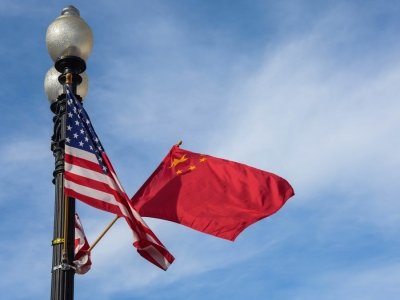
Washington, Oct 3 (IANS) A bipartisan group of US senators has urged the Trump administration to act quickly to protect domestic production of silicon carbide, warning that China is rapidly expanding its control over a semiconductor material considered essential for advanced weapons, artificial intelligence infrastructure and the electric grid.

Senators Tom Cotton, John Boozman, Chuck Schumer, Thom Tillis, Ted Budd and Mark Kelly called on Defence Secretary Pete Hegseth and Commerce Secretary Howard Lutnick to use federal authorities to strengthen American and allied production.

The senators said Chinese producers had increased their share of the global silicon carbide wafer market from less than 5 per cent to nearly 50 per cent over the past five years.

“We write to draw your attention to a critical matter at the intersection of national security, economic competitiveness and trade policy: the accelerating Chinese government effort to dominate the global silicon carbide semiconductor industry and supply chain, and the urgent need for a whole-of-government response to preserve and strengthen trusted domestic and allied manufacturing of silicon carbide,” they wrote.

The letter, dated October 1 and released Friday, highlights growing concern in Congress about US dependence on China for materials and technologies considered critical to national security.

Silicon carbide is a foundational material for a class of next-generation semiconductors. According to the senators, it is used in advanced defence systems, AI data centres, electric grid infrastructure, 5G telecommunications and the automotive industry.

Its ability to withstand high voltages and temperatures while providing rapid switching makes the material particularly important for sophisticated military technology.

The senators said silicon carbide was “irreplaceable in high-performance air, land and sea propulsion systems, directed energy weapons, and air and missile defense systems.”

They linked China’s expansion in the sector to Beijing’s Made in China 2025 industrial initiative, saying the country had identified silicon carbide’s military and economic significance and made dominance of the sector a national priority.

“Clearly, China intends to undermine another strategically important industry built on American technology and ingenuity,” the senators wrote.

They warned that continued erosion of domestic manufacturing could eventually leave the United States dependent on Chinese supply chains for components needed for advanced weapons and critical technological infrastructure.

“If this campaign succeeds, the United States will find itself dependent on adversary supply chains for materials essential to our most advanced defense systems and critical technological infrastructure,” the letter said.

The senators said the American supply chain was already facing significant pressure and warned that the country risked losing manufacturers capable of competing globally.

“The time to act is now, before we reach the crisis stage where remedies are impossible or far more expensive and time-consuming,” they wrote.

The lawmakers asked Hegseth and Lutnick to consider a range of federal tools rather than proposing a single remedy.

“We encourage you to leverage Defense Production Act authorities, critical minerals designations, Buy America requirements, and any other authorities at your disposal to ensure the US can protect its silicon carbide supply chain,” they wrote.

The appeal brings together Republicans and Democrats from several states. Cotton and Boozman represent Arkansas, while Schumer represents New York. Tillis and Budd represent North Carolina, and Kelly represents Arizona.

–IANS

lkj/rs

Read More
TOP STORIESWORLD

Trump rules out US diesel export ban

Washington, Oct 3 (IANS) US President Donald Trump ruled out a ban on American diesel exports after European countries agreed to put more diesel into the market, saying the additional supply would help bring down energy prices.

Trump told reporters at the White House before departing aboard Marine One that he had personally asked Europe to make more diesel available.

“Europe has a lot of diesel, and they’re, they’re gonna be making a major world contribution, and so are we,” Trump said.

“And we’re not gonna be, uh, doing the export ban. We’re gonna be doing what we’re supposed to do,” he added.

The President linked the expected increase in supply to the conflict involving Iran and predicted that oil prices would fall once the situation was resolved.

“We’re gonna have a lot of oil very shortly, as soon as Iran ends, which won’t be long,” Trump said.

“Not gonna be long, and you’re gonna have oil go down to the price it was before, maybe even lower than I got it at the beginning.”

Asked later whether a diesel export ban was officially off the table following the European move, Trump went further and said his administration had not intended to impose one.

“No, we were never gonna do it. I don’t think we ever, but basically, Europe was great because they’re putting a lot of diesel oil out there. They have diesel,” he said.

Trump said European countries were able to contribute because of their relatively high use and stocks of the fuel.

“They use diesel disproportionately more than most, and they did a great thing,” he said.

The President said the United States maintained a strong relationship with Europe and portrayed the move as a response to his request for additional supplies to enter the market.

“Oh, we have a very good relationship with Europe, and, uh, they wanted to do it because they have a lot of diesel,” Trump said.

“I said, ‘It would be great if you put it out in the market.’”

His remarks came as energy supplies and prices have become closely tied to developments in the Middle East and disruptions affecting global oil and refined-product markets.

The Group of Seven countries on Friday agreed to a coordinated release through the International Energy Agency of 100 million barrels of oil and fuel products over four months. The G7 said the programme would begin immediately and include a substantial release of diesel during the first 20 days.

The International Energy Agency said pressure on diesel supplies remained particularly severe. It said Middle Eastern crude exports had recovered significantly, but flows of refined products remained constrained. The agency said around 325 million barrels from an earlier 400-million-barrel collective action announced in March had already been released, helping cover supply shortages and reassure global markets.

–IANS

lkj/rs

Read More
TOP STORIESWORLD

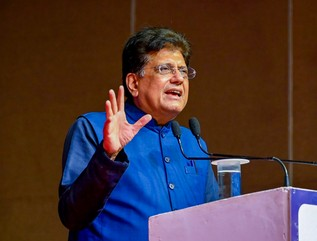
India is ‘watching your back’: Goyal to diaspora in US

Washington, Oct 3 (IANS) India will stand behind its people wherever they face difficulty or distress around the world, Commerce and Industry Minister Piyush Goyal has told the Indian diaspora in the United States, declaring that the country is “watching your back”.

Addressing members of the Indian community in the Chicago area, Goyal cited crises in Yemen and Ukraine as examples of situations in which India had remained concerned about the safety of its people overseas.

“As you know that India is like one country and any Indian is in any difficulty, any distress, anywhere in the world. We back home are watching your back,” Goyal said.

“We care for you and you will always have us as a support whether you are in Yemen, at the peak of the crisis, whether you are in Ukraine, when the war breaks out,” he said.

The minister said he could cite several such examples of India standing behind its people during difficult circumstances overseas.“Your nation, your motherland will always stand by you, will be there for you, for your families, for your children,” Goyal said.

His remarks came as he paid tribute to Mahatma Gandhi at the Mahatma Gandhi Memorial Sculpture in Skokie, Illinois, on Gandhi Jayanti.

Goyal used the occasion to speak directly to Indian-Americans about their responsibilities towards the United States as well as their continuing relationship with India.

He described members of the diaspora as a vital connection between the two democracies.

“Each one of you are the living bridge between the United States and India. Each one of you is an ambassador of India to the United States,” he said.

Goyal thanked the community for its contribution to the United States and urged Indian-Americans to serve their adopted country with honesty and commitment.

“Be loyal to it, be honest to it, work hard for your nation,” he said, referring to the United States. “This has given you your wealth, your family, this has given you your future.”

At the same time, he asked them to maintain their emotional connection with India.

“But always keep in your mind, in your heart, a little place for your mother and for all the people,” he said.

Goyal also invoked Gandhi’s philosophy of non-violence and concern for all sections of society. He said Gandhi’s ideas had left an indelible mark on India and influenced people beyond the country.

In a separate post on X after paying floral tributes at the Skokie memorial, Goyal said Gandhi’s ideals continued to have global relevance.

“Mahatma Gandhi ji’s timeless ideals of non-violence, simplicity and truth, deeply rooted in India’s civilisational ethos, continue to guide and inspire humanity across generations,” he said.

Goyal’s Chicago programme also included a visit to Fullerton Hall at the Art Institute of Chicago, where Swami Vivekananda delivered his historic address at the World’s Parliament of Religions in September 1893.

Speaking about the Indian diaspora, Goyal referred to about 40 million people of Indian origin across the world and said they remained in India’s thoughts. He urged members of the community in the United States to preserve the values of honesty and integrity while serving their adopted country.

–IANS

lkj/rs

Read More
TOP STORIESWORLD

G20 weighs changes to cornerstone MFN rule

Milwaukee, Oct 3 (IANS) G20 trade ministers have opened a potentially far-reaching debate over changing the Most-Favoured Nation principle, a cornerstone of the global trading system, with some members signalling willingness to consider treating trading partners differently under certain circumstances.

The issue was one of four major subjects taken up by trade ministers during their Sept 30-Oct 1 meeting in Milwaukee under the US G20 presidency.

The US presidency argued that the MFN principle had failed to promote reciprocity and balance and could prevent countries from negotiating arrangements designed to address what they regard as unfair trade practices.

The discussions, however, revealed differing views among G20 economies.

Many members described MFN as a cornerstone of the multilateral trading system. But an increasing number of countries “across the development spectrum” indicated that they saw merit in considering how the principle had evolved in practice and how it could be improved, according to the G20 chair’s statement.

A number of members said there could be justification for treating different trading partners differently. The reasons raised included economic security, an unlevel playing field, value-based standards and the development of high-standard marketplaces.

The discussions went beyond a general review of MFN and included several possible ways of changing how the principle operates.

Some members expressed willingness to consider targeted changes to MFN to achieve rebalancing, expanding exceptions to unconditional MFN and issuing legal interpretations that could permit greater use of existing exceptions.

Reviewing Article XXIV of the General Agreement on Tariffs and Trade was also among the possibilities discussed.

Another proposal involved so-called “closed” plurilateral agreements.

Under that approach, countries undertaking stronger commitments would receive MFN treatment, while the benefits of an agreement would accrue only to countries participating in it.

Several members also proposed making trade remedies faster, more automatic and more directly targeted at the source of trade distortions.

US Trade Representative Jamieson Greer said after the ministerial that the discussions indicated growing interest in examining the principle.

“I’m encouraged that members across the development spectrum indicated that they see merit in considering how the MFN principle might be improved to address today’s global trade environment,” Greer said.

The chair’s statement described the Milwaukee discussions as the beginning rather than the conclusion of the process.

“Overall, the wide range of views expressed by G20 members underscored that these sessions marked the beginning of a serious and necessary deliberation about MFN reform,” it said.

The MFN debate formed part of a broader examination of the international trading system at the Milwaukee ministerial. The other three priorities were the weaponisation of food through coercive trade measures, structural excess capacity and production, and eliminating forced labour in global supply chains.

Under the MFN principle, WTO members generally extend the same trade advantage granted to one member to other WTO members, subject to permitted exceptions. The Milwaukee discussions did not produce an agreement to change the principle. Instead, they recorded a range of proposals and differing views that could form the basis for further deliberations.

The United States holds the G20 presidency in 2026. The chair’s statement said Washington looked forward to the United Kingdom assuming the presidency in 2027.

–IANS

lkj/rs

Read More
TOP STORIESWORLD

Trump predicts short-lived Iran conflict, says situation ‘working out very well’

Washington, Oct 3 (IANS) US President Donald Trump declined to reveal his next move on Iran, saying the situation was “working out very well” and predicting that the conflict would not last long.

Trump made the remarks while speaking to reporters at the White House before departing aboard Marine One.

Asked what his next step regarding Iran would be, Trump initially suggested that disclosing it would make major news.

“That’s very, oh, it’s — well, if I told you, you’d have a major story, right? But you’ll see. Working out very well. Iran is not doing well,” Trump said.

The President did not elaborate on what action his administration was considering or provide a timetable.

But later in the same exchange with reporters, Trump again referred to Iran while discussing global energy supplies and his efforts to get Europe to put more diesel into the market.

Trump predicted that oil prices would return to earlier levels once the situation involving Iran ended.

“We’re gonna have a lot of oil very shortly, as soon as Iran ends, which won’t be long,” Trump said.

“Not gonna be long, and you’re gonna have oil go down to the price it was before, maybe even lower than I got it at the beginning.”

Trump’s comments came as reporters questioned him about the availability of diesel and whether his administration was considering restrictions on US exports.

The President said he had asked Europe to put more diesel into the global market.

“Europe has a lot of diesel, and they’re, they’re gonna be making a major world contribution, and so are we,” Trump said.

“And we’re not gonna be, uh, doing the export ban. We’re gonna be doing what we’re supposed to do.”

Trump later made clear that he did not consider a US diesel export ban to have been a serious option.

“No, no. We were never gonna do it. I don’t think we ever, but basically, Europe was great because they’re putting a lot of diesel oil out there. They have diesel,” he said.

Trump said Europe was in a position to make more fuel available because of the region’s diesel consumption.

“They use diesel disproportionately more than most, and they did a great thing,” he said.

The President also said Washington continued to have a good relationship with Europe and indicated that European countries had responded positively to his request to release more diesel into the market.

“Oh, we have a very good relationship with Europe, and, uh, they wanted to do it because they have a lot of diesel,” Trump said.

“I said, ‘It would be great if you put it out in the market.’”

Trump did not provide further details about what he meant when he said Iran was “not doing well” or what developments he expected before oil prices could return to their earlier levels.

–IANS

lkj/rs

Read More
TOP STORIESWORLD

G20 talks may bring more diesel to global market

Milwaukee, Oct 3 (IANS) Discussions on global diesel supplies held on the sidelines of the G20 Trade Ministers’ meeting in Milwaukee contributed to an anticipated release of more diesel into the global market, US Trade Representative Jamieson Greer said, highlighting an energy-security outcome from the two-day gathering.

Greer, who chaired the ministerial under the US G20 presidency, disclosed the development in his statement on the outcome of the meeting, which concluded Thursday.

“We also had constructive meetings on the sidelines regarding global diesel supplies which contributed to the anticipated release of more diesel into the global market,” Greer said.

The USTR statement did not identify the countries involved in the discussions, specify the source of the additional diesel or indicate how much fuel could enter the market.

It also did not provide a timetable for the anticipated release.

The carefully worded statement stopped short of describing the move as a formal G20 agreement, saying instead that discussions on the sidelines had contributed to the expected increase in diesel supplies.

The disclosure adds an energy dimension to a ministerial largely focused on some of the most contentious issues confronting the global trading system.

Commerce and Industry Minister Piyush Goyal represented India at the meeting and held a series of bilateral discussions on its margins, including with Greer.

The two-day ministerial brought together trade ministers from the world’s major economies for discussions ranging from food security and industrial overcapacity to forced labour and reform of the Most-Favoured Nation principle.

Greer said the meeting had produced consensus among all G20 members on condemning the weaponisation of food through coercive trade actions.

“This week’s G20 Trade Ministerial in Milwaukee was a success,” Greer said.

“It is especially significant that the entire G20 was able to reach consensus on the statement on the weaponization of food through coercive trade actions,” he added.

But consensus proved more difficult on some of the other issues put forward by the United States during its G20 presidency.

The United States, Mexico and Argentina issued a separate statement on eliminating forced labour in global supply chains after the broader G20 membership failed to reach agreement on the issue.

Greer said he was disappointed by the lack of consensus but hoped discussions would continue.

“In addition, I commend Mexico and Argentina in joining the United States in a statement on eliminating forced labor in global supply chains,” Greer said.

“While I am disappointed that the G20 Trade Ministers did not reach consensus on this issue, I am hopeful that discussions on this topic will continue and that other economies will join us in taking increased action to combat forced labor in global supply chains.”

The ministers also discussed structural excess industrial capacity, another issue Washington had placed high on the Milwaukee agenda.

Greer said many G20 members showed a willingness to address excess capacity and production in sectors of concern, although some countries opposed developing a pathway for joint action.

The meeting also opened discussion on possible changes to the Most-Favoured Nation principle, a foundation of the multilateral trading system under which World Trade Organization members generally extend comparable tariff treatment to other members.

Greer said members at different levels of economic development saw merit in examining how the principle could be adapted to current global trading conditions.

The Milwaukee ministerial was held as the United States prepares to host the G20 Leaders’ Summit later this year. Washington had identified forced labour, food-related trade coercion, structural excess capacity and the MFN principle as the principal trade issues for ministerial discussion.

–IANS

lkj/rs

Read More
TOP STORIESWORLD

US expands social media checks for visas

Washington, Oct 3 (IANS) The United States has expanded social media screening of visa applicants to foreign journalists and some professionals, requiring them to make their social media profiles public as part of enhanced vetting that already covers H-1B workers and international students.

The new requirement took effect on October 1 and covers applicants for I visas issued to foreign media representatives, as well as TN visas for eligible Canadian and Mexican professionals and TD visas for their dependents.

The State Department announced the expansion last month, but the measure became effective Wednesday.

“To support this vetting process, all applicants for I, TD, and TN nonimmigrant visas are instructed to set the privacy settings on all of their social media profiles to ‘public’ or ‘open,’” the State Department said.

The change is particularly significant for foreign journalists travelling to the United States for professional assignments because I-visa applicants are now explicitly covered by the expanded online presence review.

The measure also adds to a wider screening regime affecting several visa categories heavily used by Indians travelling to, studying in or working in the United States.

The State Department said online vetting already applies to H-1B temporary workers and H-4 dependents, as well as H-3 trainees.

It also covers F-1 and M-1 students and their F-2 and M-2 dependents, J-1 and J-2 exchange visitors, and several other non-immigrant categories.

Other visa classifications already covered include certain diplomatic and official visas, visas for religious workers, international cultural exchange participants and fiancé visas.

The State Department said it uses information available to it when screening applicants to determine whether they are eligible to enter the country.

“The Department relies on every available source of information during visa screening and vetting to identify applicants who may be inadmissible to the United States, including those who pose a threat to national security or public safety,” it said.

“We apply this rigorous vetting standard consistently across all visa applicants,” it added.

The department did not say in the announcement precisely how applicants’ social media activity would be evaluated or what individual posts or online activity could affect a visa decision.

The requirement to make social media accounts public, however, gives consular officials greater ability to examine applicants’ online presence during the adjudication process.

The State Department described visa adjudication as a national security decision and said applicants must demonstrate their eligibility for the category for which they are applying.

“Every visa adjudication is fundamentally a national security decision,” it said.

“The United States remains vigilant throughout the visa issuance process to confirm that applicants do not intend to cause harm to Americans or threaten US interests, and that each applicant can credibly demonstrate eligibility for the visa requested—including a genuine intent to abide by the terms of admission.”

The department added that receiving a US visa is “a privilege granted at the government’s discretion, not an entitlement.”

The expansion comes as US authorities have increasingly incorporated applicants’ online presence into immigration and visa screening. The latest change extends that review to another group of people whose work frequently requires travel to the United States, including correspondents and other representatives of foreign media organisations.

–IANS

lkj/rs

Read More