
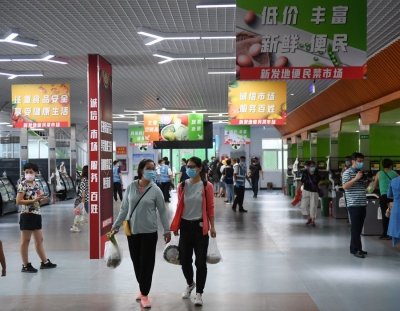
Consumer demand fails to pick up in China despite deep festive discounts: Report
New Delhi, Oct 21 (IANS) The ‘2026 Mid-Autumn Festival’, traditionally one of China’s biggest consumption seasons, reported some of the weakest sales in years as consumers largely stayed away from holiday spending, according to a report in Nepal’s Hamrakura news portal.
What made this year’s collapse particularly striking was that heavy discounts, promotions and price cuts failed to attract buyers. Chinese consumers have become increasingly cautious about spending amid concerns over slower economic growth, weak income expectations, employment pressures and the lingering property market slowdown. Analysts have repeatedly pointed to weak domestic demand and falling consumer confidence as major challenges facing China’s economy, the report states.
For years, the ‘Mid-Autumn Festival’ consumption was driven by corporate gifting, business networking, and social expectations. This year, many consumers rejected expensive gift boxes and chose either cheaper alternatives or no purchase at all. Sales of high-end mooncake gift boxes reportedly plunged while consumers increasingly preferred affordable or loose-packed mooncakes, according to the report.
Another major factor behind weak sales was a growing crisis of confidence in product quality. Multiple viral incidents circulated online showing mooncakes that appeared alarmingly substandard. Consumers reported finding screws, metal nuts, blades, and nails inside mooncakes.
The incidents reignited public debate over food safety standards, manufacturing oversight and quality control. Consumers who once bought mooncakes as festive gifts increasingly began questioning whether these products were worth purchasing at all.
China’s largest electric vehicle giant, BYD, also found itself at the centre of a social media storm during the festival. Workers criticised the company’s ‘Mid-Autumn Festival’ benefits package after receiving what many viewed as inexpensive gifts consisting of a small number of mooncakes and drinks. Some employees publicly complained that a company generating billions in revenue should provide better holiday benefits. The complaints highlighted concerns about declining workplace morale and reduced spending power among ordinary employees.
Beijing has spent several years attempting to revive domestic consumption through various stimulus measures, including subsidies. Yet, the latest ‘Mid-Autumn Festival’ highlighted a deeper structural problem.
While the government has encouraged spending, many households remain worried about jobs, housing prices, and future income prospects. Weak consumer confidence has limited the effectiveness of policy support. Economists continue to point to subdued domestic demand as one of the biggest challenges facing the Chinese economy.
The gap between production and consumption appears to be widening. China continues to excel in manufacturing, exports and industrial output, but domestic consumers remain reluctant to spend freely, the report added.
–IANS
sps/na