
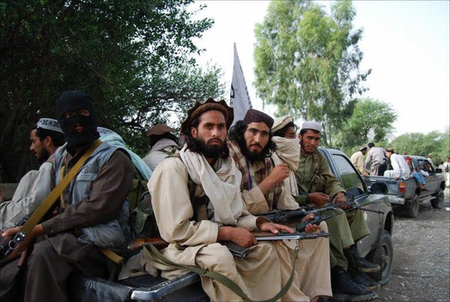
Days after celebrating 5 years of uninterrupted rule in Afghanistan, Taliban reiterates call for UN inclusion
New Delhi, Aug 19 (IANS) Afghanistan has lately renewed its demands to be included among countries being represented at the United Nations, terming reports of the Taliban regime forbidding women from taking up jobs as “propaganda outside the country”, say recent reports from Kabul.
The regime has yet to be granted official recognition by the world body or its member-states, except Russia. Moscow officially recognised the Taliban government in Afghanistan in 2025, remaining the only country to do so since Kabul fell to the regime on August 15, 2021. Russia’s recognition followed a series of diplomatic steps, including the removal of the Taliban from Russia’s list of terrorist organisations in April 2025 and the acceptance of a Taliban ambassador in Kabul.
About two dozen countries yet continue to directly maintain de facto diplomatic ties with the Taliban, though at different levels. Some nations, such as Russia and China, host accredited Taliban diplomats and maintain embassies in Kabul, where Beijing is yet to grant official recognition to Afghanistan’s current regime.
India, too, has representation in Kabul and its representative in New Delhi, though without official recognition for the regime. Several Western nations, including the United States of America, still hold the Taliban as a terrorist organisation, with Afghanistan’s assets in the millions remaining frozen and its representatives under a travel ban abroad without prior UN clearance.
Afghanistan’s Administrative Deputy Prime Minister Abdul Salam Hanafi told TOLOnews this week that with security ensured and poppy cultivation and drug trafficking brought to an end in Afghanistan, Kabul has the right to have its representative at the United Nations. A United Nations Assistance Mission in Afghanistan (UNAMA) report, released last week, also highlighted these issues.
“A reduction in conflict has brought tangible benefits for many Afghans and created opportunities to focus on recovery, development and regional economic cooperation, with positive steps taken including a ban on opium poppy cultivation,” it observed.
“Afghanistan has experienced a period of improved security, while calling on the de facto authorities to take significant steps that could contribute to lasting stability for the Afghan people,” added the report. However, it also pointed out significant challenges, “particularly the increasingly damaging restrictions on women and girls and ongoing terrorism concerns”.
Hanafi, in his statement, rejected reports about restrictions on women’s employment in Afghanistan, claiming that they were working in the healthcare and education sectors, as well as in a number of government institutions, while observing Islamic hijab.
Referring to Afghanistan’s security and political situation, he said the country has an established government and that Afghan territory is not being used to threaten the security of other countries. It is mainly Pakistan that has been accusing the regime of harbouring organisations like the Tehrik-e-Taliban Pakistan (TTP), also known as the Pakistani Taliban, claiming that the group is behind strikes within its territory.
Islamabad has conducted several airstrikes within Afghanistan, claiming to have targeted militant hideouts, while Kabul claims the bombing killed civilians and struck a Kabul hospital in March, leading to over 400 deaths and several hundred injuries. The neighbours also continue to be involved in intermittent border skirmishes, triggering concerns over a larger regional security threat.
Meanwhile, TOLOnews quoted an earlier statement from Farhan Haq, Deputy Spokesperson for the UN Secretary-General, that decisions regarding the recognition of governments and Afghanistan’s seat at the United Nations fall within the authority of its member states, not the organisation itself. He added that, so far, no country has recognised the regime for the purpose of taking Afghanistan’s seat at the United Nations, and there is no process underway among member states in this regard.
An Afghan political analyst, identified as Maiwand Jurrat, claimed that countries, led by the United States, that have influence at the United Nations, “have exerted pressure” and thus Kabul remains unrepresented at the world body. But a women’s rights activist called on the current rulers to pay attention, stressing, “We cannot under any circumstances ignore half of society. For more than four years, our future has remained uncertain, and we have been living in uncertainty”.
UN Secretary-General Antonio Guterres recently appointed Rabab Fatima, a Bangladeshi diplomat, as his Special Representative for Afghanistan and head of UNAMA. But questions are being asked if the new head of UNAMA will be able to play an effective role in expanding engagement between Kabul and the United Nations and advancing the issue of Afghanistan’s representation.
In an interview earlier this month, Afghanistan’s Second Political Director at the Islamic Emirate’s Ministry of Foreign Affairs, Zakir Jalali, told the news agency that engagement between Kabul and the United Nations “is effective”, but “should be expanded at all levels”, including the country’s representation at the UN.
As the debate continues, millions of Afghans spend their life bereft of basic amenities as support groups struggle to offer humanitarian assistance, and a handful of nations have stepped in lately.
–IANS
jb/uk