EAM Jaishankar warns of more uncertain global order
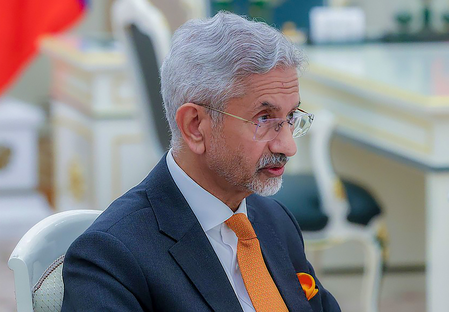
New York, Sep 29 (IANS) External Affairs Minister S. Jaishankar has described a world shaken by wars, economic pressure and the growing use of trade and other forms of dependence as weapons, saying diplomats now face unusually high risks as countries compete for advantage.
Speaking at an event in New York, EAM Jaishankar pointed to two major ongoing conflicts, turmoil in West Asia, fighting in parts of Africa and mounting pressure on developing countries. Food, fuel, fertilisers and finance were all under strain, he said, while supply chains were becoming more vulnerable.
He called the tension between competition and dependence “the paradox of our times”. Countries remained deeply connected, yet were increasingly inclined to use those connections as sources of leverage.
“The interdependence is the reality, the competition is the sentiment,” EAM Jaishankar said. Policy choices reflected the difficulty of reconciling the two, he added.
When one country depended on another for a critical need, intense competition created an incentive to turn that dependence into a tool of pressure, he said. The result was a more hazardous environment for governments trying to protect their interests while keeping relationships intact.
“Diplomacy has become an extreme sport,” EAM Jaishankar said. Diplomats had to respond to high-risk decisions and their consequences, while retaining the patience needed to work through longer disputes.
He identified a range of what he called “choke points”: geographical routes, sanctions, travel restrictions and access to markets. Countries with influence over any of them were more willing to exercise it against rivals or competitors, he said.
Energy and technology had changed the calculations further. EAM Jaishankar said disruption in a major energy-producing region had raised prices and forced countries to adjust. Advances in military technology could also give governments greater confidence in taking risks.
The world had become more impatient, he argued. Where deterrence had once been a common approach, countries with new capabilities could feel a temptation to use them. He described it as a “use it or lose it” mindset.
EAM Jaishankar also pointed to a shift in economic and political power among countries. Rising economies and those that felt their influence declining were both adjusting to the change, he said. The resulting uncertainty was affecting domestic politics as well as international relations.
Questioning whether institutions created under an earlier balance of power could adapt, he noted the UN began with 51 members in a very different world. Its future relevance depended in part on how it responded to present-day realities, he observed.
EAM Jaishankar said countries were seeking new partners, diversifying their relationships and looking for ways to reduce risk. New understandings could emerge, though he expected negotiations to be difficult.
“I’m not pessimistic about the world,” he said during a subsequent discussion. Countries had an interest in finding stable and reliable arrangements even as competition intensified.
The United Nations was established in 1945, after the Second World War. Its membership and work have expanded substantially since then, while debate has continued over whether its decision-making structures adequately reflect today’s world.
India has called for reform of international institutions and a greater voice for developing countries. It also works through forums with different memberships, including the G20, BRICS and the Quad.
–IANS
lkj/rs