
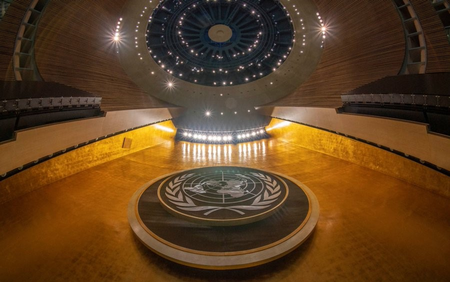
Global crises frame India’s UNGA agenda
United Nations, Sep 23 (IANS) India is set to place multilateral reform, terrorism, peacekeeping and the priorities of the Global South at the centre of its engagement as world leaders gather in New York for the 81st session of the UN General Assembly.
The annual general debate began on Tuesday at a time of prolonged wars, humanitarian emergencies, economic instability and widening divisions among major powers.
This year’s theme is “Restoring trust, managing transformation: A United Nations that delivers for all”. The debate will continue until September 26 and conclude on September 28.
The UN said leaders are expected to address conflicts, humanitarian crises, artificial intelligence, climate action, sustainable development and economic resilience. The discussions will test demands for renewed international cooperation at a time when the multilateral system is under growing strain.
India’s formal statement is expected to draw attention to the need for institutions that reflect current geopolitical and economic realities. New Delhi has repeatedly argued that developing countries cannot remain under-represented in bodies that make decisions affecting international peace, finance, development and technology.
Two Indian interventions at the Security Council in the days before the general debate offered an indication of the issues New Delhi is likely to highlight during the high-level week.
During a Council meeting on Afghanistan, India warned that “Al-Qaida’s terror ecosystem established its strategic depth beyond Afghanistan”.
India’s representative said many leaders who directed the September 11 attacks were “not fugitives hiding in caves” and were instead apprehended in residential areas or urban locations.
“The same permissive environment that sheltered the architects of 9/11 has in the years since continued to provide space, support and impunity to affiliates of Al-Qaida,” the Indian delegate said.
The remarks placed terrorism and the continued presence of extremist organisations in Afghanistan at the heart of India’s security concerns.
The meeting was told that more than 20 terrorist groups remain present in Afghanistan. UN officials also warned that the country’s recovery is being undermined by the exclusion of women and girls, weak economic growth and a continuing humanitarian crisis.
India also used a separate Security Council debate on peace operations to demand a greater role for countries that provide personnel for UN missions.
Its representative said mandates must be matched with resources when missions are authorised “so peacekeepers are not asked to do more with less”.
India called for troop- and police-contributing countries to have a structured voice in shaping mandates before they are adopted or reviewed. It also warned that peacekeepers increasingly face asymmetric and technologically enabled threats.
Several high-level meetings alongside the general debate will cover subjects with direct relevance to India. They include climate action and a just transition, pandemic prevention and preparedness, the right to development, sea-level rise and the elimination of nuclear weapons.
India has long demanded expansion of both permanent and non-permanent membership of the Security Council. It says the present structure reflects the geopolitical circumstances of 1945 rather than the distribution of population, economic influence and political power in the 21st century.
New Delhi has also sought to present itself as a voice of developing countries, particularly on climate finance, food and energy security, digital access and debt. Its engagement at this year’s General Assembly will be watched for how it links those priorities with its calls for action against cross-border terrorism and reform of global institutions.
–IANS
lkj/rs


