
Iran says conclusion reached on several issues with US, but agreement not imminent
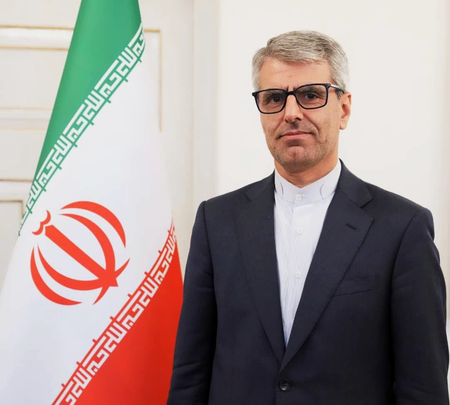
Tehran, May 25 (IANS) Iran’s Foreign Ministry spokesperson Esmaeil Baqaei on Monday said that a conclusion has been reached on a large portion of issues under discussion with the US although no specific timeframe has been set for finalising any understanding, local media reported.
Addressing a press conference on Monday, Baqaei said no one can claim that the signing of an agreement is imminent, adding that political behaviour in the US was somewhat inconsistent, Iran’s semi-official Tasnim News Agency reported.
Baqaei stated that US’ contradictory stance within hours complicates any negotiation process. He said that decision making in Washington is disorganised. He spoke about several resignations, congressional opposition, public opinion, and internal contradictions in the US, adding that this situation has created space for the influence of certain actors, including those from the Israeli regime.
Regarding reports on timeframe for discussions, Baqaei said that no specific deadline has been set to finalise the understanding. He expressed Iran’s commitment to reaching a result that secures the rights of Tehran, emphasising that what matters most for Iran is protecting its national interests and that any outcome will be announced after it is achieved.
On discussions within a 60-day framework, he said that the plan is to discuss certain details regarding the memorandum and other issues within that period, stressing that one of the topics is connected to nuclear matters. He stated that Iran is not discussing nuclear details at this stage and the 14-article memorandum is focused on ending the war, Tasnim News Agency reported.
On Sunday, US Secretary of State Marco Rubio said that “significant progress” has been made in diplomatic efforts involving the US and Iran, while indicating that a “good news” regarding the Strait of Hormuz could emerge soon.
Addressing a joint press conference with External Affairs Minister (EAM) S Jaishankar in New Delhi, Rubio had said, “I do think perhaps there is the possibility that over the next few hours the world will get some good news, at least with regards to the straits and with regards to a process that can ultimately leave us where the President wants us to be and that is a world that no longer has to be in fear or worry about an Iranian nuclear weapon and so, I do think there’s some good news on that front, but not final news on that front. But, perhaps a little bit later today, we’ll have more to say. But, some progress has been made. I don’t want to downplay that. But I also want to caveat it by saying we still have some work to do, we will see.”
Rubio reiterated US President Donald Trump’s stance that Iran can never possess a nuclear weapon. He said, “… The ultimate goal is that Iran can never have a nuclear weapon. Iran can never possess a nuclear weapon. The President has been clear about that they will never possess a nuclear weapon, certainly not as long as Donald Trump is President of the United States.”
He stressed that the US and its partners in the Gulf region have been working on an outline that could lead to a completely open Strait of Hormuz without tolls. However, he mentioned that it requires that Iran fully accepts and implements it.
“Related to that is this issue of the straits. This is an international waterway. They don’t own it. It’s an international waterway and what they are doing now is basically they are threatening to destroy commercial vessels using an international waterway, that is illegal under any concept of international law that governs us. But, if we allowed that to become normal, we would be normalising an unacceptable status quo and setting a dangerous precedent that could be replicated here in this region and in multiple places around the world. So, the desire, the President has, his preference is to find a diplomatic way that these problems can be solved that’s always the President’s preference. He would have much rather have me and the Department of State solve this problem than the Department of War having to solve this problem but the problem is going to be solved one way or the other,” he added.
–IANS
akl/as