
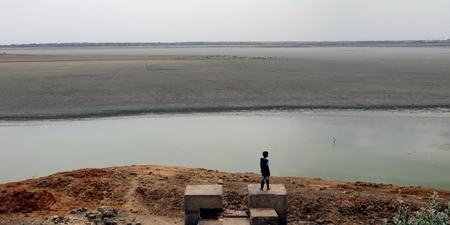
TN faces worsening drinking water crisis as several reservoirs dry up
Chennai, July 27 (IANS) Tamil Nadu is facing a deepening drinking water crisis as prolonged failure of the southwest monsoon has left reservoirs, lakes and groundwater sources severely depleted across large parts of the state.
With water levels falling rapidly, complaints are mounting that the Tamil Nadu Water Supply and Drainage (TWAD) Board has failed to put in place adequate alternative arrangements to ensure uninterrupted drinking water supply in the worst-affected districts.
According to official data, the Water Resources Department, which manages 90 major dams and over 14,000 irrigation tanks across Tamil Nadu, has reported an alarming decline in available water. Of the State’s 90 dams, 59 have already dried up completely, while another 16 retain only between 25 and 50 per cent of their storage capacity.
The situation has been compounded by the drying up of irrigation tanks, with 3,489 tanks completely dry and another 6,158 nearing depletion.
The impact of the failed monsoon has not been confined to Tamil Nadu alone, with neighbouring southern states also witnessing below-normal rainfall. As a result, inflows into reservoirs have dropped sharply, affecting both irrigation and drinking water supplies.
Water bodies under the control of the Municipal Administration Department and the Rural Development Department have also witnessed significant depletion. The TWAD Board operates several combined drinking water supply schemes that draw water from rivers, reservoirs and lakes to cater to urban and rural areas across the state.
However, with surface water sources shrinking and groundwater levels declining, many of the borewells installed by the Board are no longer yielding adequate water. Officials and local residents say pumps are being operated for extended periods to extract limited quantities of water, leading to higher electricity consumption without improving supply.
Several districts are already experiencing acute shortages. The worst-affected areas include Virudhunagar, Tiruvannamalai, Tirunelveli, Tiruchi, Thoothukudi, Thanjavur, Namakkal, Perambalur, Madurai, Sivaganga, Dharmapuri, Cuddalore and Dindigul. In many places, drinking water that was earlier supplied once every week is now being distributed only once every ten days, forcing residents to depend on private water tankers and other temporary sources.
Concerns are also growing over the deteriorating groundwater situation in Tiruvallur and Kancheepuram districts, which are among the principal sources of drinking water for Chennai.
Officials in the Water Resources Department have reportedly shared details of the declining water availability with the TWAD Board. However, allegations have surfaced that the Board has yet to implement effective alternative water sourcing plans despite repeated warnings about the worsening situation, raising fears that the crisis could intensify further if rainfall remains deficient.
–IANS
aal/dpb


