
US report flags gaps in civilian oversight of Pakistan’s military spending
Jerusalem, Aug 21 (IANS) The recent US State Department’s 2026 Fiscal Transparency Report has highlighted serious gaps in parliamentary and civilian oversight of Pakistan’s military and intelligence budgets, recommending greater scrutiny of their spending. The findings raised an uncomfortable question about Pakistan’s democratic system, particularly why its elected representatives are unable to effectively scrutinise military and intelligence expenditures, a report has stated.
Pakistan’s defence allocation for 2026–27 stands at around Pakistani rupees PKR 3 trillion, marking a 17.6 per cent increase over the previous year’s initial allocation. However, this figure does not reflect the military establishment’s entire cost, as military pensions and certain other defence-related expenditures are accounted for separately in the budget, Sergio Restelli, an Italian political advisor, author and geopolitical expert, wrote in ‘The Times of Israel’.
Stressing that the central issue is control over public funds, Restelli noted that while Pakistan has a National Assembly, Senate, parliamentary committees, a finance ministry and an auditor general, the institution that has ruled the country directly for nearly half its history remains largely shielded from civilian scrutiny.
“This matters even more because Pakistan is once again dependent on the IMF. Ordinary Pakistanis are being asked to accept higher electricity tariffs, new taxes, subsidy cuts and other painful measures to repair the country’s finances. The IMF scrutinises Pakistan’s economy minutely. Pakistani taxpayers are asked to account for every rupee. The military should not be an exception,” he detailed.
The expert noted that the State Department report raised concerns over the limited disclosure of government debt, including liabilities incurred by state-owned enterprises, alongside delays in making budget information public. The shortcomings, he said, assume greater significance given Pakistan’s repeated reliance on international financial assistance.
“There is some irony in Washington making this argument. For decades, the United States helped reinforce the system it now questions. Whenever Pakistan became strategically useful, from the Cold War and the Afghan jihad to the post-9/11 war on terror, Washington invariably found Rawalpindi more convenient than Islamabad,” Restelli mentioned.
“American administrations spoke of strengthening Pakistani democracy while treating successive army chiefs as indispensable political interlocutors. The message was difficult to miss. The military’s political power made it valuable internationally, and its international importance strengthened its position at home,” he noted.
The Fiscal Transparency Report explicitly urged Pakistan to subject military budgets to parliamentary oversight, warning that fiscal opacity undermines investor confidence and increases corruption risks. Pakistan stands to risk alienating international partners and deterring foreign investment, on which it leans on Washington.
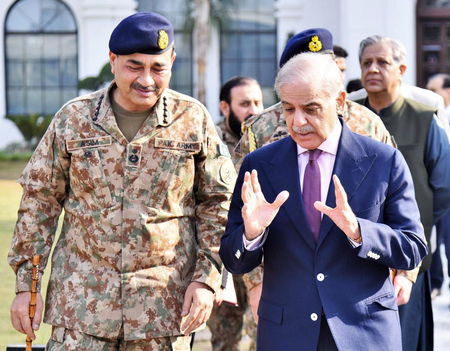
Pakistani Army Chief Asim Munir is again the person who leads Pakistan’s diplomatic exercise, including those involving meetings in the White House.
The US report further exposed how secrecy in defence spending mirrors the broader militarisation of civilian policy under Munir. This model sacrifices transparency, accountability, and democratic legitimacy for short-term control.
–IANS
scor/ksk/as

