WORLD

TOP STORIESWORLD

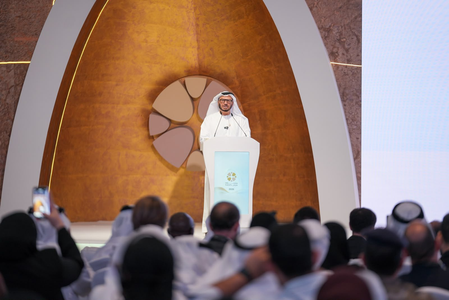
Netanyahu says Flydubai attacker underwent Islamist radicalisation, intended to crash plane
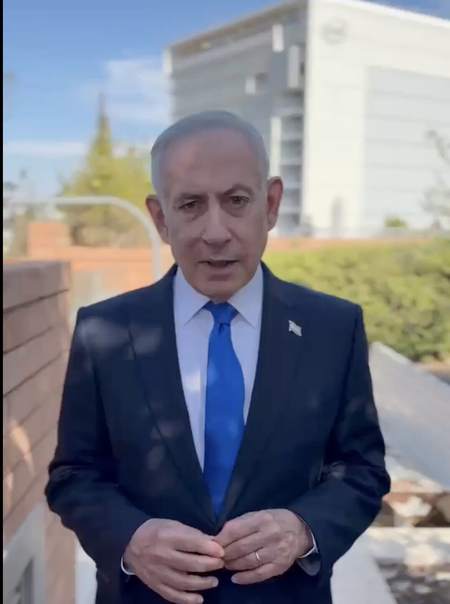
Jerusalem, Oct 2 (IANS) Israel’s Prime Minister Benjamin Netanyahu on Friday said that the attacker in the Flydubai incident underwent Islamist radicalisation and intended to crash the plane with all its passengers on board.

“As time passes, the picture is becoming clearer. Yaniv and his heroic companions prevented a disaster on the scale of 9/11. The attacker underwent Islamist radicalisation. He intended to crash the plane with all its passengers on board,” the Office of the Prime Minister of Israel stated on X, quoting Netanyahu.

“We are now investigating whether he was sent, and whoever sent him will pay a very heavy price,” Netanyahu highlighted in the video message shared by his office.

Earlier, Advisor to the United Arab Emirates (UAE) President Mohammed bin Zayed praised Indian Flydubai pilot Smit Machchhar for his courage and professionalism during what he described as Wednesday’s “dangerous terrorist act”.

“The Indian pilot at ‘Flydubai,’ Smit Machchhar, deserves every bit of appreciation, for he embodied the meaning of courage and responsibility in the face of a dangerous terrorist act and a potential disaster. His professionalism and moral sense in the darkest of circumstances make him a true hero,” Gargash wrote on X.

“Far from the easy reduction of what happened or the adoption and promotion of conspiracy theories, vigilance and caution remain essential in confronting the risks of extremism and terrorism,” he added.

UAE’s Ministry of Foreign Affairs stated on Thursday that a specialised team of public prosecutors have been tasked with investigating the incident and determining its circumstances and causes.

“The Ministry emphasised that the UAE judicial authorities have jurisdiction over the investigation, in accordance with applicable legislation, as the aircraft is registered in the UAE and flies its flag. Consequently, UAE law applies to crimes committed on board, even if they occur outside the country’s territory,” read the statement.

The ministry also indicated that the investigation will examine all aspects of the incident, its motives, and whether there was any connection to terrorist activity or intent, or any prior planning or direction.

“The UAE also expressed its gratitude and appreciation to the Saudi authorities, commending their cooperation and handling of the incident,” said the ministry.

–IANS

ksk/as

Read More
TOP STORIESWORLD

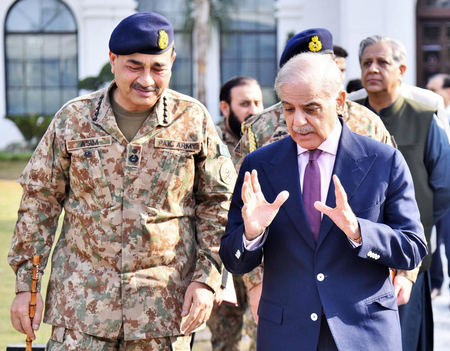
Pakistani military’s push to redraw provinces risks disintegration of country

Jerusalem, Oct 2 (IANS) Pakistan’s military establishment has long sought to divide provinces in the name of restructuring, with critics alleging that the move is driven by a lust for centralised power to subjugate distinct nationalities and sub-nationalities inhabiting resource-rich lands, a report has detailed.

“The Pakistani military establishment and the political leadership of Sindh, spearheaded by President Asif Ali Zardari and his party, the Pakistan Peoples Party (PPP), remain deeply divided over the contentious issue of provincial restructuring and the proposed administrative separation of Karachi. This widening rift carries the dangerous potential to trigger the disintegration of Pakistan, threatening a repetition of the 1971 birth of Bangladesh,” Hasan Mujtaba, an award-winning journalist and human rights defender, wrote in ‘The Times of Israel’.

“A catastrophic, unprecedented genocidal pogrom is feared if the stubborn military establishment remains bent on hacking the country’s historic provinces into over a dozen pieces. To mask this dismemberment, the establishment labels these fractured territories ‘Administrative Units’. In reality, they would function as the new provinces of a severely diminished Pakistan—assuming the state could even survive such a drastic, forced ‘surgery’,” he added.

According to Mujtaba, Pakistan’s 18th constitutional Amendment has emerged as the main flashpoint between Sindh and the military establishment under Army Chief General Asim Munir, with the military pushing to annul these protections through the proposed 28th Constitutional Amendment, which could significantly erode the provinces’ financial and administrative autonomy.

He highlighted that the 18th Amendment, passed during Zardari’s first tenure as President with a two-thirds majority in both Pakistan’s Senate and National Assembly, significantly expanded provincial powers and checked central authority.

“The root cause of the generals’ frustration is the National Finance Commission (NFC) Award, which guarantees that a major portion of federal revenues is distributed directly to the provinces. The military, which already consumes a massive portion of the national budget under the banner of defense, desires to divert these NFC funds back into federal coffers,” Mujtaba mentioned.

“Through political proxies and aligned media figures, the establishment continues to exert intense pressure on President Zardari to compromise on the 18th Amendment and back their provincial restructuring plots. Seasoned political analysts warn that capitulating to these demands would sign a death warrant for the PPP’s immense popularity and voting bloc in Sindh—the party’s core bastion of power for nearly two decades,” he noted.

He further said that by aggressively redrawing Pakistan’s internal boundaries, the Pakistani military appears to be presiding over the country’s potential disintegration.

–IANS

scor/as

Read More
TOP STORIESWORLD

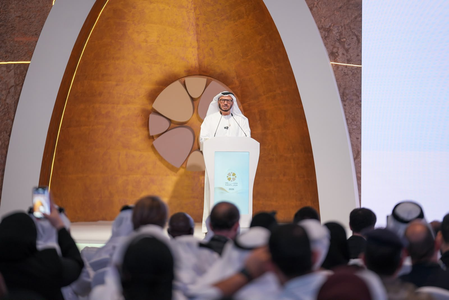
Top UAE official lauds Indian pilot’s courage during ‘dangerous terrorist act’

Abu Dhabi, Oct 2 (IANS) Anwar Gargash, an Advisor to the United Arab Emirates (UAE) President Mohammed bin Zayed, on Friday praised Indian Flydubai pilot Smit Machchhar for his courage and professionalism during what he described as Wednesday’s “dangerous terrorist act”.

“The Indian pilot at ‘Flydubai,’ Smit Machchhar, deserves every bit of appreciation, for he embodied the meaning of courage and responsibility in the face of a dangerous terrorist act and a potential disaster. His professionalism and moral sense in the darkest of circumstances make him a true hero,” Gargash wrote on X.

“Far from the easy reduction of what happened or the adoption and promotion of conspiracy theories, vigilance and caution remain essential in confronting the risks of extremism and terrorism,” he added.

UAE’s Ministry of Foreign Affairs stated on Thursday that a specialised team of public prosecutors have been tasked with investigating the incident and determining its circumstances and causes.

“The Ministry emphasised that the UAE judicial authorities have jurisdiction over the investigation, in accordance with applicable legislation, as the aircraft is registered in the UAE and flies its flag. Consequently, UAE law applies to crimes committed on board, even if they occur outside the country’s territory,” read the statement.

The ministry also indicated that the investigation will examine all aspects of the incident, its motives, and whether there was any connection to terrorist activity or intent, or any prior planning or direction.

“The UAE also expressed its gratitude and appreciation to the Saudi authorities, commending their cooperation and handling of the incident,” said the ministry.

Israeli Prime Minister’s spokesperson David Mencer said the attempt to bring down a Flydubai flight on Wednesday seemed similar to the September 11 attacks in the United States.

“That’s what it certainly looks like. This could have been very similar to 9/11. There is a detail that may have been missed. When an Israeli passenger and a crew member managed to get into the cockpit, they found that the Omani pilot was not sitting in the pilot’s seat. He was standing over the controls and appeared to be trying to sabotage the controls and destroy the aircraft’s control systems while attacking the brave Indian pilot. Let’s be clear: this man wanted to bring down the aircraft. You cannot help but make the comparison between 9/11 and this attack,” Mencer told IANS in an exclusive interview.

–IANS

ksk/as

Read More
TOP STORIESWORLD

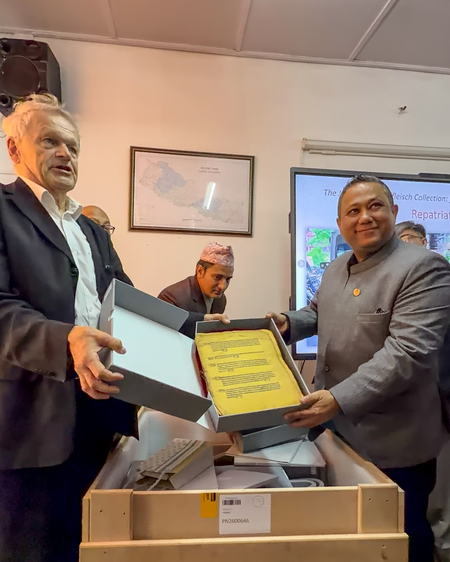
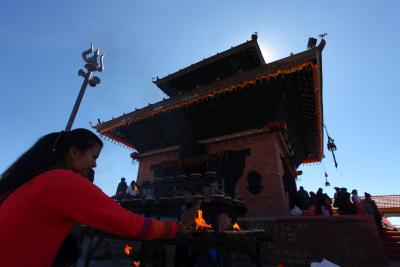
Historical 13th century Nepali documents returned from Germany

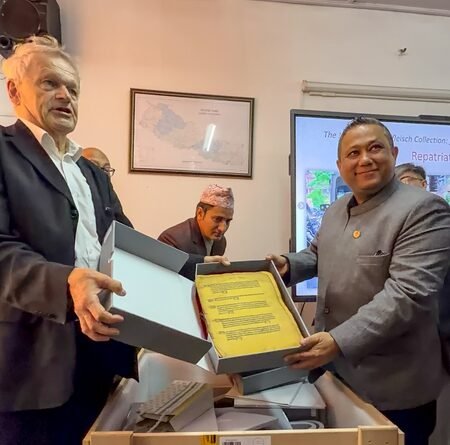
Kathmandu, Oct 2 (IANS) More than 800 historical documents relating to Nepal’s political, legal, intellectual and cultural heritage, which had been housed in a private museum in Germany, have been handed back to the Himalayan nation.

The documents, some of which date back to the 13th century, were handed over to the National Archives of Nepal on Friday at a function in Kathmandu, according to a statement issued by Nepal’s Ministry of Foreign Affairs.

Ancient palm-leaf manuscripts, royal decrees, court orders, legal documents, Sanskrit texts and historical travel accounts are among the documents repatriated to Nepal from Germany before their formal handover on Friday.

The collection was originally part of the private holdings of the late Joseph Peter Rindfleisch.

His son, Walter Rindfleisch, handed the documents to Professor Axel Michaels of the Heidelberg Academy of Sciences and Humanities under Heidelberg University. Michaels and his team members, Dr. Manik Bajracharya and Rajan Khatiwada, subsequently handed over the documents to Nepal’s Foreign Minister Shishir Khanal.

Michaels and Walter Rindfleisch were friends, which paved the way for Michaels to take the lead in facilitating the return of the documents to Nepal.

According to the Foreign Ministry’s statement, the documents were collected from Nepal between the 1780s and the 1990s.

During the handover ceremony, Foreign Minister Khanal said the return of the documents represented the restoration of Nepal’s cultural rights and sovereign ownership over its civilisational heritage.

“Our art, literature, traditions and sacred scriptures are not merely physical remnants; they are the living soul of our civilisation. They carry centuries of philosophical thought, political governance, legal knowledge and spiritual life,” he said.

Khanal recalled the late Rindfleisch’s wish to return more than 800 important Nepali documents from his private collection and praised his respect for Nepal’s cultural heritage.

The collection, gathered from Nepal between the 1780s and the 1990s, comprises more than 800 royal and official documents, including palm-leaf manuscripts, rukkas (official orders) and lal mohars (royal decrees bearing a red seal).

The collection was preserved and catalogued by the Heidelberg University Library and the Heidelberg Academy of Sciences and Humanities before being repatriated to Nepal in cooperation with the Government of Nepal.

According to the catalogue, the collection includes 465 palm-leaf manuscripts from the Malla period, including lal mohars; 312 legal decrees and royal documents from the Shah and Rana periods, including documents bearing clay seals; 18 manuscripts and travel diaries from the offices of Rana prime ministers; and 11 manuscripts covering various subjects, according to the ministry’s statement.

Some of the palm-leaf manuscripts are among the oldest surviving documents from Nepal.

Khanal praised Professor Michaels and his research team for their role in identifying, documenting and repatriating the materials, saying their academic integrity, research and sustained efforts had made the return possible.

The repatriation was carried out through collaboration among the Embassy of Nepal in Germany, Heidelberg University, the Heidelberg Academy of Sciences and Humanities, the Saraf Foundation and the National Archives.

Khanal also noted that Nepal and Germany are both parties to the 1970 UNESCO Convention on the Means of Prohibiting and Preventing the Illicit Import, Export and Transfer of Ownership of Cultural Property.

He said the handover demonstrated the two countries’ shared commitment to the principles of the international convention.

“Today’s handover is an important example of our shared international commitment. We highly appreciate the active support extended by the German government, the German Embassy in Kathmandu and Heidelberg University in facilitating the smooth return of these documents,” he said.

–IANS

scor/as

Read More
TOP STORIESWORLD

South Korea warns of ‘additional measures’ if Ukraine refuses to apologise over POW transfer disclosure

Seoul, Oct 2 (IANS) South Korean President Lee Jae Myung warned Friday that South Korea will take “additional measures” should Ukraine continue to refuse to officially apologise for denying its agreement to keep the transfer of North Korean prisoners of war (POWs) secret.

The South Korean president issued the warning on his X account amid a diplomatic wrangle with Ukraine over Ukrainian President Volodymyr Zelensky’s surprise disclosure last week of the transfer of two North Korean POWs to South Korea.

Seoul has since accused Ukraine of breaching a bilateral agreement to keep the transfer secret, but Ukraine has denied the existence of the confidentiality agreement, Yonhap News Agency reported.

“If (Ukraine) continues to deny the fact and refuse to offer an official apology, (Seoul) will take additional measures,” Lee said.

Lee affirmed that Ukraine unilaterally disclosed the transfer despite having previously demanded confidentiality from South Korea, and then made the head of state of the counterpart country a “liar” by saying the nondisclosure agreement did not exist.

“In response to a demand to acknowledge the agreement and apologise, it has instead mentioned (the possibility of) an imminent inter-Korean military conflict,” Lee said, accusing Ukraine of attempting to bring “war on the Korean Peninsula” and expressing “serious regret.”

“As it is a matter related to the dignity of the South Korean people and the country, I cannot remain silent on it,” the president said.

Lee’s warning came shortly after a social media message by Kyrylo Budanov, Zelensky’s chief of staff, referring to the mine incident.

“The situation is becoming more tense by the day. And it is only a matter of time before a trigger event could occur, leading to uncontrollable consequences,” Budanov wrote.

South Korean sources said the additional measures Lee warned of may include recalling the country’s Ambassador to Ukraine Park Ki-chang as an expression of protest.

Appearing on a radio program earlier in the day, Lee’s new special adviser for peace diplomacy Rep. Song Young-gil indicated that the next step would be to recall the country’s ambassador after lodging a complaint with the Ukrainian envoy in Seoul earlier this week, if Kyiv does not respond.

–IANS

ksk/as

Read More
TOP STORIESWORLD

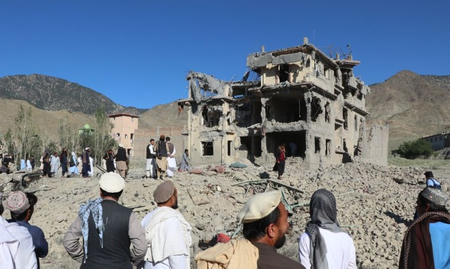
Pakistani attacks on Afghan territory expose failing strategy to regain lost leverage in Kabul

Islamabad, Oct 2 (IANS) Pakistan’s repeated attacks on Afghanistan, despite their limited effectiveness, reflect a troubling sense of impunity and expose serious shortcomings in Islamabad’s counterterrorism strategy, a report has stated.

It noted that in most cases, the strikes have triggered angry reactions from the Taliban officials, threats of retaliation, and occasional cross-border firing.

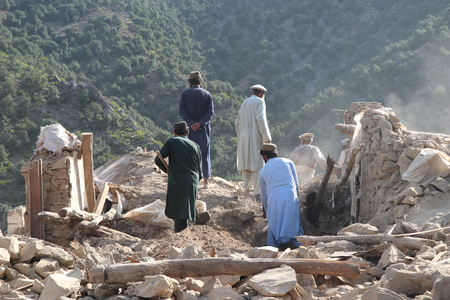
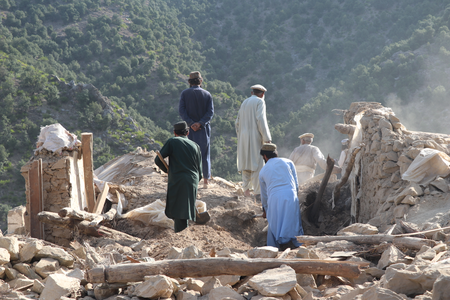
In the latest incident early Thursday morning, the Pakistani military carried out airstrikes on civilian homes in Kunar and Helmand provinces.

Taliban administration’s spokesperson Zabihullah Mujahid claimed that the bombing killed nine people, including women and children, while 11 others were wounded in the attacks, and three houses were also destroyed.

In the early hours of September 24, Pakistan launched air and drone strikes against 10 locations inside Afghanistan. Afghan media later reported that the strikes targeted Kandahar — the base of Taliban Supreme Leader Hibatullah Akhundzada (Amir-al-Mu’minin) — along with Khost and Paktia provinces.

On September 21, Pakistani air strikes in the Afghan provinces of Kunar and Paktika killed three civilians — a man, a woman and a girl. While Islamabad claimed the operation killed 28 militants, UNAMA confirmed the civilian casualties, triggering protests in Kabul and elsewhere in Afghanistan, a report in ‘The Diplomat’ highlighted.

“This Pakistani strike was in response to an attack on a police compound in Khyber Pakhtunkhwa’s Kohat, killing at least 16 police officers on September 18. On that day a vehicle-borne explosive device breached the police compound during Friday prayers. This was followed by an armed assault by militants. The attack was claimed by the Ittihadul Mujahideen Pakistan (IMP), an alliance led by the Hafiz Gul Bahadar (HGB) group, which shares close linkages with the Tehreek-e-Taliban Pakistan (TTP). Pakistani authorities identified one of the attackers as an Afghan national,” the report mentioned.

“Pakistan has carried out air and drone strikes inside Afghanistan on at least 15 occasions between October 2025 and September 2026. Private estimates suggest that more than 1,100 civilians have been killed or injured by cross-border violence in Afghanistan this year. An attack on a drug rehabilitation center in Kabul in May killed 269 people, leading to calls for the attack to be investigated as a war crime,” it added.

Beyond containing the TTP and IMP, Pakistan appears to be pursuing a broader strategic goal: reclaiming the leverage it has lost in Kabul. In Islamabad’s calculus, the former ally Taliban has become a “rogue”, leaving coercive force and backing anti-Taliban resistance groups as the path forward. The ultimate objective is “ a weak and client state in Afghanistan,” an outcome the Pakistani establishment has pursued for decades, The Diplomat detailed.

Criticising Pakistan’s approach, it said, “The Taliban seem to have learnt from their former sponsor’s playbook the art of cultivating strategic assets and using them as leverage. Attempting to bomb them into submission could be a myopic and counterproductive strategy if there are any lessons learned from the last two decades of American intervention in Afghanistan.”

–IANS

scor/as

Read More
TOP STORIESWORLD

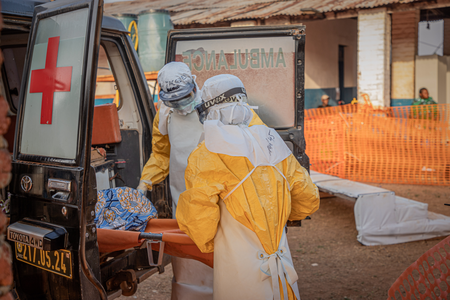
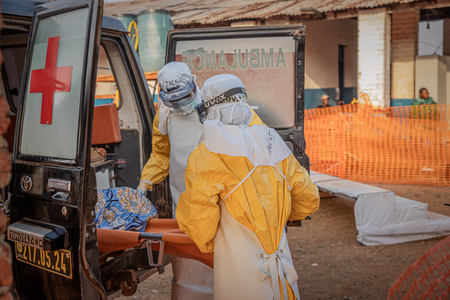
Ebola death toll in DR Congo tops 4,000

Kinshasa, Oct 2 (IANS) The death toll from the ongoing Ebola outbreak in the Democratic Republic of the Congo (DRC) has surpassed 4,000, with 4,018 deaths reported among 8,300 confirmed cases across seven provinces, the latest figures released Friday by Congolese health authorities showed.

A total of 2,162 patients have recovered, while the overall case fatality rate stands at 48.4 per cent, according to the latest update from the Ministry of Health, Xinhua News Agency reported.

The actual toll of the ongoing outbreak is likely higher than officially reported, international medical charity Medecins Sans Frontieres (MSF) warned Thursday. “The true toll (is) likely higher due to gaps in surveillance and case detection,” the organisation said.

The outbreak has become the largest and deadliest ever recorded in the DRC and the second-largest Ebola outbreak worldwide, after the 2014-2016 epidemic in West Africa.

Meanwhile, the Africa Centres for Disease Control and Prevention (Africa CDC) warned Thursday that a recent decline in reported Ebola cases in the DRC may reflect disruptions to disease surveillance rather than a sustained reduction in transmission, as the outbreak has claimed nearly 4,000 lives.

Speaking at an online press briefing, Africa CDC official Wessam Mankoula said that the outbreak has spread from three health zones in mid-May to 63 health zones across seven provinces, with 45 health zones still reporting active transmission.

Although the epidemic curve has largely plateaued over the past four to five weeks and reported cases declined in the latest week, the agency cautioned against interpreting the drop as a sign of sustained progress.

“Falling in this curve doesn’t mean that the outbreak is totally under control,” Mankoula said.

Insecurity and community resistance in multiple areas have hampered surveillance and response activities, raising concerns that some infections may be going undetected.

–IANS

ksk/as

Read More
TOP STORIESWORLD

Kim Yo-jong again rejects blame for DMZ blast, mocks Seoul’s call to ease tensions

Seoul, Oct 2 (IANS) Kim Yo-jong, the sister of North Korean leader Kim Jong-un, on Friday again rejected blame for the recent mine blast inside the Demilitarised Zone (DMZ) and derided Seoul’s call to reduce tensions.

In a statement carried by the Korean Central News Agency (KCNA), she repeated her earlier denial this week, rejecting the South Korean military’s findings that blamed the North for the blast, which wounded three South Korean soldiers.

South Korea’s military urged Pyongyang to offer an apology and stop fortification work on the border, Yonhap News Agency reported.

“Explaining in a simple and clear way, this is aimed at shutting down the door forever so that we will have nothing to do with the ROK and even wild animals cannot come and go,” she said. ROK stands for the Republic of Korea, South Korea’s official name.

North Korea wants to “cut off the relationship forever” with the South, she added.

South Korean President Lee Jae Myung vowed Thursday to keep pressing for practical ways to ease military tensions with North Korea, even as the two Koreas remain at odds over the blast.

“My administration will consistently pursue practical measures to reduce military tensions between the two Koreas,” Lee said at a ceremony marking the 78th Armed Forces Day.

“For the sake of peace on the Korean Peninsula, the two Koreas must find a way to win together and build trust,” he said.

She, however, derided President Lee’s remarks as “the climax of the farce that everyone should watch.”

“Those who wrote the playbook for the farce, directed it and played the actors deserve the precious ‘citation,'” Kim said.

South Korean Defence Minister Kang Shin-chul said Tuesday a North Korean land mine found at the site of last week’s explosion inside the DMZ was a mine buried by North Korean forces, not the one that was washed away.

Kang’s remarks come as the South Korean military on Tuesday found one North Korean resin antipersonnel mine near the site of the September 21 blast south of the Military Demarcation Line (MDL) separating the two Koreas. The incident left three South Korean soldiers injured, two of them with severe wounds.

“(It was) buried,” Kang said in response to an inquiry by Rep. Yu Yong-weon of the main opposition party, who asked whether the land mine was buried in the ground or the one deemed to have been washed away.

–IANS

ksk/as

Read More
TOP STORIESWORLD

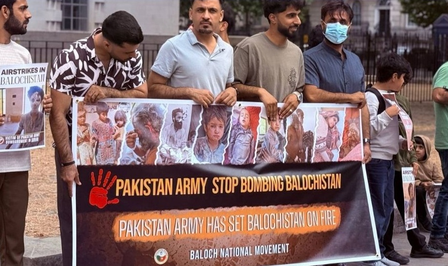
From Balochistan to PoK: Pakistan’s human rights record draws scrutiny

Brussels, Oct 2 (IANS) The current phase of the conflict in Pakistan’s Balochistan province resurfaced in the early 21st century, driven by longstanding disputes over political autonomy, representation and control of the region’s rich natural gas and mineral resources, while its strategic importance has grown with the Gwadar port and its role as a crucial hub of the so-called China–Pakistan Economic Corridor (CPEC), a report has stated.

It noted that the roots of the Balochistan crisis stretch back to Pakistan’s formative years, when Kalat was incorporated in 1948, triggering successive cycles of insurgency, the deadliest of which unfolded between 1973 and 1977.

From restive Balochistan to Pakistan-occupied Kashmir (PoK), geography shapes more than where people live; it also influences the security prism through which the state views them. As these peripheral regions seek greater political space, the centre has moved towards an increasingly concentrated system of military command, a report in the ‘European Times’ mentioned.

According to it, Pakistan’s policy of enforced disappearances in Balochistan has left behind families who have waited years for answers.

Baloch activist Sammi Deen Baloch was just 10 when her father, Deen Mohammed Baloch, disappeared in 2009. Her years-long search for him turned her into one of the most recognisable voices of families of the disappeared. Yet the disappearances have continued. In April 2026, Dad Shah, the brother of activist Fozia Baloch, disappeared from his home in Karachi, the European Times highlighted.

Restrictions in PoK long predate 2026. US-based advocacy group Human Rights Watch documented curbs on political expression and activity as early as 2006, while UN reports in 2018 and 2019 raised concerns over freedom of expression and assembly, the use of counterterrorism laws, and allegations of enforced disappearances in the occupied territory, the report detailed.

In 2026, however, those restrictions took a new turn. On June 5, Pakistani authorities banned the Joint Awami Action Committee (JAAC) under counterterrorism legislation, followed by telecommunications disruptions and arrests ahead of planned protests, it stated.

Highlighting that significant efforts have been made to bring greater international attention to human rights concerns in areas under Pakistani occupation, it said, “In March 2026, serious allegations of human rights violations in Balochistan, including the repression of ethnic and religious communities, were explicitly raised before the United Nations Human Rights Council in Geneva.”

The report stated that deadly clashes during protests in PoK in June 2026 also drew international attention to allegations of police violence and the deaths of protesters, with growing calls for greater scrutiny and accountability.

It further said, “One can only hope that the international community, too, will mobilise in response to the daily human rights violations” taking place in Balochistan and PoK.

–IANS

scor/as

Read More
TOP STORIESWORLD

Foreign tourist arrivals in Nepal rise 12.1 per cent in September despite floods

Kathmandu, Oct 2 (IANS) Devastating floods on August 26 did not deter foreign tourists from visiting Nepal, as foreign tourist arrivals in the country grew by 12.1 per cent in September, the Nepal Tourism Board (NTB) stated.

A total of 88,248 foreign tourists from various countries visited Nepal in September, compared with 78,711 in the same month last year.

Deadly floods along the Bhotekoshi and Trishuli river corridors, triggered by an avalanche near the Nepal-China border, killed at least 1,453 people, while 5,285 people, including 636 foreigners, remain missing.

Images of washed-out roads, collapsed bridges, stranded people and bodies recovered from rivers in northern Nepal travelled far beyond Rasuwa, creating an impression among potential visitors that the disaster had affected the entire country.

As prospective visitors began cancelling hotel bookings in Nepal in the aftermath of the disaster, government agencies and the private sector launched the #NepalCalling campaign to counter flood-driven tourism cancellations. Under the campaign, the message that much of Nepal remained safe, except for the river corridors devastated by the floods, was highlighted.

The peak September-November tourism season accounts for nearly 40 per cent of Nepal’s annual tourist arrivals.

According to the NTB, India recorded the highest number of tourist arrivals during the month, with 17,425 visitors, an increase of 12 per cent year-on-year. It was followed by China with 11,212 visitors, with the number of Chinese tourists rising by 114.1 percent.

The United States ranked third with 8,299 arrivals, followed by Sri Lanka with 7,108 and Australia with 4,842 visitors.

By region, 30,085 tourists arrived from South Asia, accounting for 34.09 per cent of total arrivals. Another 19,888 tourists came from other Asian countries, while 15,148 arrived from Europe. Tourist arrivals from Europe, however, fell by 8.7 per cent compared with September last year.

Similarly, arrivals from the Oceania region declined by 25.9 per cent, while arrivals from the Americas fell by 12.3 per cent, according to NTB data.

–IANS

scor/as

Read More
TOP STORIESWORLD

Global leaders condemn Pak airstrikes in Afghanistan causing civilian deaths

New Delhi, Oct 2 (IANS) With Pakistan carrying out more aerial bombing inside Afghanistan, world leaders continue to condemn these attacks, urging an end to the killing of innocent Afghans and stressing that those responsible must be held accountable, say reports from Kabul.

UN Special Rapporteur on the situation of human rights in Afghanistan Richard Bennett has condemned the airstrikes, saying there is no justification for killing civilians and that those responsible must be held accountable, Pajhwok Afghan News reported on Friday, quoting his social media post.

“Accountability is paramount after another airstrike that has killed civilians, most of them children. Is this incompetence, negligence or worse? Whatever, there is no justification for doing such irreparable harm to civilians, and it appears to violate international human rights and humanitarian law,” he wrote on ‘X’.

He tagged a post from the United Nations Assistance Mission in Afghanistan (UNAMA) that confirmed: “At least 10 civilians were killed, most of them children, and 9 people injured in airstrikes carried out in #Afghanistan’s Kunar and Helmand provinces earlier today (Thursday)”.

In a separate ‘X’ post, former US Special Representative for Afghanistan Reconciliation Zalmay Khalilzad, too, condemned Pakistan’s latest attacks on Afghanistan and called upon the country to stop the killing of innocent Afghans.

“Terrible news from #Afghanistan. Pakistani air strikes have once again killed civilians, including several children. As in the past, I strongly condemn these attacks. The killing of innocent Afghans must stop. #Pakistan,” he wrote on the day of the bombing.

Several governments, international organisations, and human rights groups have criticised or condemned the air raids, particularly following reports of civilian casualties.

In the latest incident early Thursday morning, the Pakistani military reportedly carried out airstrikes on “civilian homes in Kunar and Helmand provinces”, added the news reports.

Taliban administration’s spokesperson Zabihullah Mujahid claimed that the bombing killed nine people, including women and children, while 11 others were wounded in the attacks, and three houses were also destroyed.

Tensions between the neighbours have deep historical origins, primarily from disputes over the Durand Line that the Raj drew to define British India’s border with Afghanistan.

Relations deteriorated after the Taliban regained control of Afghanistan in 2021, with Pakistan repeatedly accusing the Kabul regime of harbouring militants who carry out attacks across the border, particularly the Tehrik-e-Taliban Pakistan (TTP) and ISIS–K.

Afghanistan insists that it does not shelter such elements and blamed Pakistan for holding it responsible for their internal problems.

The Pak-Afghan border has remained closed since October 2025 following cross-border violence causing significant economic losses, with increased prices of goods, restricted medical travel, and adversely affected livelihoods on both sides of the border.

It also strained diplomatic relations and encouraged businesses to seek alternative regional trade routes.

–IANS

jb/skp

Read More
TOP STORIESWORLD

US recovers more than $2 million from Pakistan-based firm in fraud probe

New Delhi, Oct 2 (IANS) A Pakistan-based company has been ordered to repay more than $2 million after allegedly fraudulently obtaining U.S. federal grants meant to support businesses operating in economically disadvantaged American communities, according to federal authorities.

The case is among the first major actions highlighted by the newly created Fraud and Asset Recovery Division in the U.S. Attorney’s Office for the District of Columbia, according to the local ABC affiliate for the greater Washington DC area WJLA report.

U.S. Attorney Jeanine Pirro described the matter as an example of the type of civil fraud her office is targeting and warned that similar cases could emerge in the future, the report said.

According to Pirro, Enterprise Technology Solutions (ETS) secured two grants from the Small Business Administration (SBA) under a programme designed to assist businesses located in underserved communities.

The company allegedly represented that its headquarters were located in College Park and that at least half of its workforce lived in the surrounding area, the report noted.

However, federal authorities contended that the firm’s principal operations were actually based in Pakistan, making it ineligible for benefits intended for U.S.-based businesses and workers.

Pirro said the grants were funded by American taxpayers and were intended to support economic development within the United States. She described the company’s conduct as a scheme that diverted funds away from their intended purpose.

Because the matter was pursued as a civil fraud case, no criminal charges were filed and no prison sentences are involved. Instead, the company has been required to repay more than $2 million to the federal government, the report said.

The U.S. Attorney’s Office is also encouraging whistleblowers to come forward with information about suspected fraud involving federal funds.

Individuals who provide information leading to successful recoveries may be eligible for a share of the recovered money under applicable whistleblower provisions.

In the case involving Enterprise Technology Solutions, authorities said the whistleblower’s share amounts to more than $330,000, reflecting a portion of the funds recovered by the government, as per the report.

–IANS

pk

Read More